

China has just brought online the world's largest single building dedicated to AI data centers, a 120,000-square-meter facility in Ulanqab, Inner Mongolia. The project, called Galaxy Campus, is developed by Envision and is designed to eventually house up to one million AI accelerators, according to the company.
While the campus has already entered service, the full deployment of that maximum capacity remains a future goal. The announcement highlights how the race for artificial intelligence is increasingly being fought not just over models and algorithms, but over physical infrastructure—electricity, cooling, and connectivity at an unprecedented scale.
Find Original Home Decor sparking conversation at Grand Goldman Shop.

What Is the Galaxy Campus AI Data Center?
The Galaxy Campus is a sprawling complex whose centerpiece is a single building of about 120,000 square meters dedicated to AI computing. Envision claims it is the largest individual building in the world built specifically for an AI data center. The facility is located in Ulanqab, a city in Inner Mongolia that has become a hub for large-scale data centers thanks to its cool climate and access to renewable energy.
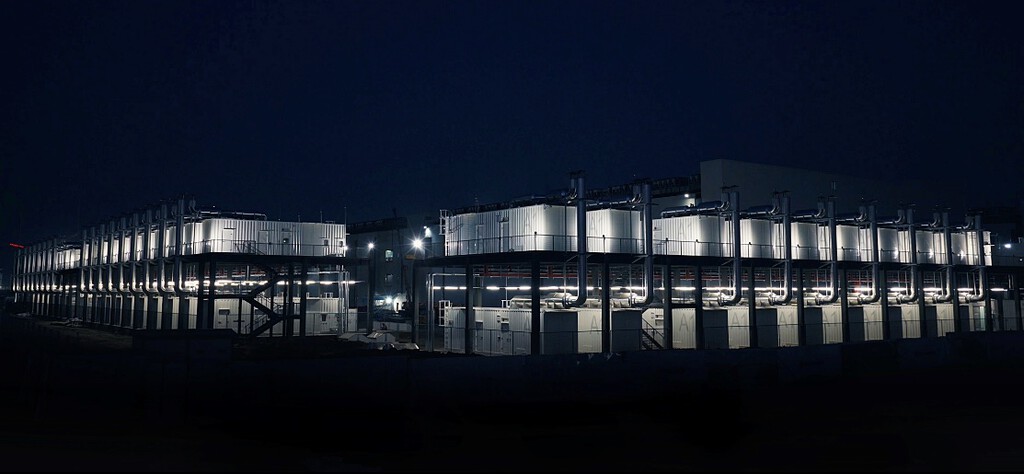
The project is not yet fully built out. While the campus is operational, the capacity to host one million accelerators represents the eventual maximum once all phases are complete. This distinction matters: the building exists, but the full hardware deployment is still in progress.
Why China's AI Infrastructure Push Matters
Training and deploying large AI models requires massive amounts of compute power. As models grow in size and complexity, the demand for specialized accelerators—chips designed to handle AI workloads—has skyrocketed. Concentrating hundreds of thousands or even millions of these accelerators in one place creates enormous challenges for power supply, cooling, and network bandwidth.
China's investment in facilities like Galaxy Campus signals that it intends to compete at the highest level of AI development. By building infrastructure at this scale, the country aims to support its domestic AI companies and reduce reliance on foreign technology. The move also puts pressure on other nations and companies to ramp up their own data center capabilities.
Key Takeaways from the Galaxy Campus Project
- Scale: The main building covers 120,000 square meters, making it the largest single AI data center building in the world, according to Envision.
- Capacity: When fully deployed, the campus could host up to one million AI accelerators.
- Status: The campus has entered service, but the full build-out is still ongoing.
- Location: Ulanqab, Inner Mongolia, offers cool temperatures and renewable energy access, ideal for energy-intensive data centers.
- Developer: Envision, a Chinese company, is behind the project.
How Galaxy Campus Compares to Other AI Data Centers
To put the scale of Galaxy Campus into perspective, consider how it stacks up against other notable AI infrastructure projects. The table below compares key metrics.
| Project | Location | Building Size | Max Accelerators | Status |
|---|---|---|---|---|
| Galaxy Campus | Ulanqab, China | ~120,000 m² | Up to 1 million | Operational, expanding |
| Typical hyperscale AI data center | Various | 10,000–50,000 m² | Tens of thousands | Operational |
| Meta's AI Research SuperCluster | USA | Not disclosed | ~16,000 GPUs (phase 2) | Operational |
While exact comparisons are difficult due to differing designs and disclosure levels, Galaxy Campus stands out for its sheer size and planned accelerator count. Most existing AI data centers house thousands to tens of thousands of accelerators, not millions.
The Challenges of Building at This Scale
Housing a million accelerators in one facility is not just a matter of real estate. Each accelerator consumes significant power, and the collective heat generated requires advanced cooling systems. Ulanqab's cold climate helps, but the engineering required to distribute power and cooling efficiently across such a massive building is formidable. The background to this story is set out in Ulanqab: The Chinese City Powering AI Data Centers. A related thread runs through Google's AI Chip in Space: Testing Data Center Viability. Earlier coverage in Spain Softens Data Center Rules to Attract AI Investment shows how the argument developed.
Network connectivity is another hurdle. Training large AI models often requires high-speed interconnects between accelerators, and any latency can bottleneck performance. Envision has not disclosed details on the networking architecture, but it will be a critical factor in whether the campus can deliver on its promised capacity. A closer look at the same subject appears in Nokia's AI Transformation: From 3310 to Data Center Powerhouse. Anyone following the wider picture can start with Microsoft AI Chip Shortage Threatens Data Center Expansion. The same theme surfaces in Nokia CEO: Data Center Construction Is Far Too Slow for AI, which takes a different angle.
What to Watch Next for China's AI Ambitions
The Galaxy Campus is a statement of intent. As China continues to invest in AI infrastructure, the world will be watching to see how quickly the facility reaches full capacity and what kind of AI models it enables. The project also raises questions about energy consumption and sustainability, given the massive power needs of AI data centers.For now, the opening of Galaxy Campus underscores that the AI race is as much about concrete and steel as it is about code and data. The countries and companies that can build and power the largest clusters will have a significant advantage in the next wave of AI innovation. Context on how this played out before sits in Amazon Pushes Back as Data Center Opposition Grows. A companion piece, China's AI Infrastructure Leap: Quadrupling Compute Power by 2030, approaches the same subject from another angle.
FAQ
What is the Galaxy Campus?
The Galaxy Campus is a large AI data center complex in Ulanqab, Inner Mongolia, China. Its main building covers about 120,000 square meters and is described by developer Envision as the largest single building in the world dedicated to an AI data center.
How many AI accelerators can it hold?
Envision says the campus will be able to host up to one million AI accelerators once fully deployed. However, the facility is not yet at that capacity; the full build-out is still in progress.
Why is Ulanqab a good location for AI data centers?
Ulanqab offers a cool climate, which helps reduce cooling costs, and access to renewable energy sources. These factors make it attractive for energy-intensive data centers like those needed for AI.
What does this mean for the global AI race?
It shows that China is investing heavily in the physical infrastructure needed to train and deploy large AI models. This could accelerate its domestic AI development and increase competition with other countries and companies.
Browse the Shop
 Acacia frida deluxe solid wood bed frame |
Bedroom bench |
Bed chest drawers |
Lingerie dresser |
Frame base |
Mirror with jewelry storage |
30 Bathroom Vanity |
Memory foam queen mattress |
Mattresses for back pain |
Nightstand set of 2 |
Grand Goldman Shop |
Civil Lawyer
Deutschland Trikot WM 2026







