

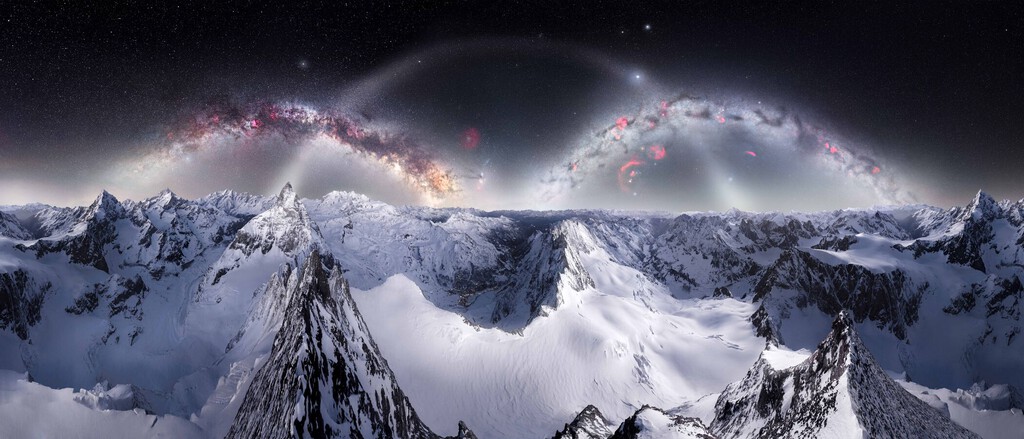
Astrophotographer Angel Fux captured a rare double Milky Way arch after ascending to 4,200 meters in the Alps at -28°C. The image, taken under brutal conditions, has been hailed as one of the most impressive astrophotography shots of the year.
Fux, a Paris-born photographer specializing in night landscapes and mountain portraits, has spent years chasing dark skies across the Andes, Pyrenees, and Dolomites. Her latest expedition pushed her to the limit, requiring technical skill, physical endurance, and a bit of luck.
Find Original Home Decor sparking conversation at Grand Goldman Shop.

The Challenge of Photographing the Milky Way at Extreme Altitudes
Shooting the Milky Way is never easy, but at 4,200 meters in the Alps during winter, the challenges multiply. Temperatures plummeted to -28°C, and wind gusts made it feel even colder. Fux had to contend with icy cornices and treacherous terrain where a single misstep could be fatal.
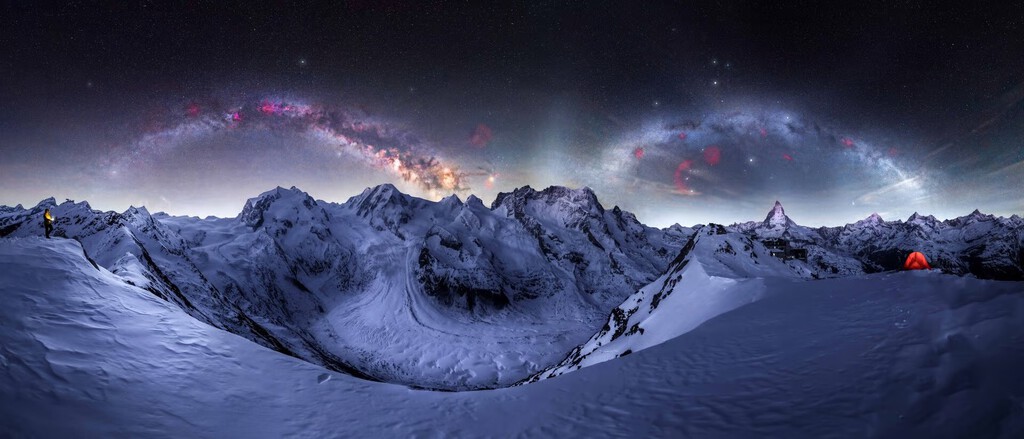
Despite the risks, Fux's preparation and experience paid off. She captured a double arch of the Milky Way—a phenomenon where the galaxy appears to curve twice across the sky, creating a stunning visual effect. This rare alignment occurs only under specific conditions and requires precise timing and location.
Who Is Angel Fux?
Angel Fux (born 1998 in Paris) is not your average photographer. Over the years, she has specialized in astrophotography and night landscape portraits, driven by a deep obsession with dark skies. Her journeys have taken her to some of the most remote and challenging environments on Earth.
In 2025, she ascended Gornergrat in the Pennine Alps to capture the night sky at 3,000 meters. Each expedition has fueled her ambition, leading to the question that sparked this latest adventure: why not go higher?
Why the Double Milky Way Arch Matters
The double arch is a rare sight. It requires a specific latitude, time of year, and unobstructed horizon. Fux's image not only showcases the beauty of the cosmos but also highlights the importance of preserving dark skies.
Light pollution is increasingly threatening our view of the stars. Photographers like Fux play a crucial role in raising awareness about this issue, reminding us of the wonders that disappear when we lose the night. The background to this story is set out in Photographer's 365-Day Project Captures Lonely Beach Machine. A related thread runs through Nasa Eclipse Air Mission: Rare Data Captured at 50,000 Feet. Earlier coverage in Astrophotographer's Viral Satellite Image Sparks AI Accusations shows how the argument developed.
Key Takeaways from This Expedition
- Extreme altitudes and cold temperatures demand rigorous preparation and gear.
- The double Milky Way arch is a rare phenomenon requiring precise conditions.
- Astrophotography combines art, science, and adventure.
- Dark sky preservation is essential for future generations.
Comparing Astrophotography Conditions
| Location | Altitude (m) | Temperature (°C) | Notable Feature |
|---|---|---|---|
| Alps (this shot) | 4,200 | -28 | Double Milky Way arch |
| Gornergrat | 3,000 | -15 | Panoramic night sky |
| Andes | 4,500 | -10 | Dark skies |
What's Next for Fux?
Fux's blog hints at future expeditions to even more remote locations. Her quest for darker skies continues, and with each journey, she pushes the boundaries of what's possible in astrophotography. A closer look at the same subject appears in Photographer Perfectly Captures The Fearless Expressions Of Stray Cats. Anyone following the wider picture can start with Ian Berry: Legendary Photojournalist Who Captured Sharpeville Massacre. The same theme surfaces in Best World Cup Photos: Top 30 Images That Captured the Tournament, which takes a different angle.
As for the double arch image, it stands as a testament to human determination and the beauty of the universe. It also serves as a reminder of the fragile balance between adventure and safety in extreme environments. Context on how this played out before sits in Cycling Norway's Milky Way: A Mountain Gravel Adventure. A companion piece, Cycling Norway's Milky Way: A Mountain Adventure in Valdres, approaches the same subject from another angle.
FAQ
What is a double Milky Way arch?
A double Milky Way arch is a rare optical phenomenon where the Milky Way appears as two distinct arches in the sky. It occurs due to the galaxy's structure and the observer's latitude, requiring dark skies and a clear horizon.
How did Angel Fux manage to shoot at -28°C?
Fux used specialized cold-weather gear, including insulated clothing and camera equipment designed to operate in extreme temperatures. She also carefully planned the shoot to minimize exposure time and risks.
Why is astrophotography important?
Astrophotography not only captures the beauty of the cosmos but also raises awareness about light pollution and the need to preserve dark skies for scientific and cultural reasons.
Where can I see more of Angel Fux's work?
Angel Fux shares her photography on her blog and social media platforms. Her portfolio includes stunning night landscapes from around the world.
Browse the Shop
 Acacia frida deluxe solid wood bed frame |
Bedroom bench |
Bed chest drawers |
Lingerie dresser |
Frame base |
Mirror with jewelry storage |
30 Bathroom Vanity |
Memory foam queen mattress |
Mattresses for back pain |
Nightstand set of 2 |
Grand Goldman Shop |
Civil Lawyer
Deutschland Trikot WM 2026







