

Nvidia is making a bold move to bring its AI computing prowess to laptops with the new RTX Spark family, which includes both laptops and desktops running Windows 11 on ARM. This follows the October 2025 launch of the DGX Spark, a compact AI workstation that Nvidia called "the world's smallest AI supercomputer." While the DGX Spark was a niche product for AI enthusiasts, the RTX Spark aims for a much broader audience.
The shift to Windows on ARM is significant. The DGX Spark ran Linux, limiting its appeal to developers and researchers. By adopting Windows, Nvidia opens the door to mainstream users who want AI capabilities alongside everyday productivity, creative apps, and gaming. This strategic move could reshape the laptop market, but Nvidia faces stiff competition and technical hurdles.
Find Original Home Decor sparking conversation at Grand Goldman Shop.

What Is the Nvidia RTX Spark?
The RTX Spark is Nvidia's attempt to replicate its data center dominance in the client computing space. Unlike traditional x86 laptops, these devices use ARM-based processors, likely combining Nvidia's GPU expertise with ARM CPU cores. The goal is to deliver AI performance that rivals dedicated workstations while maintaining portability and battery life.
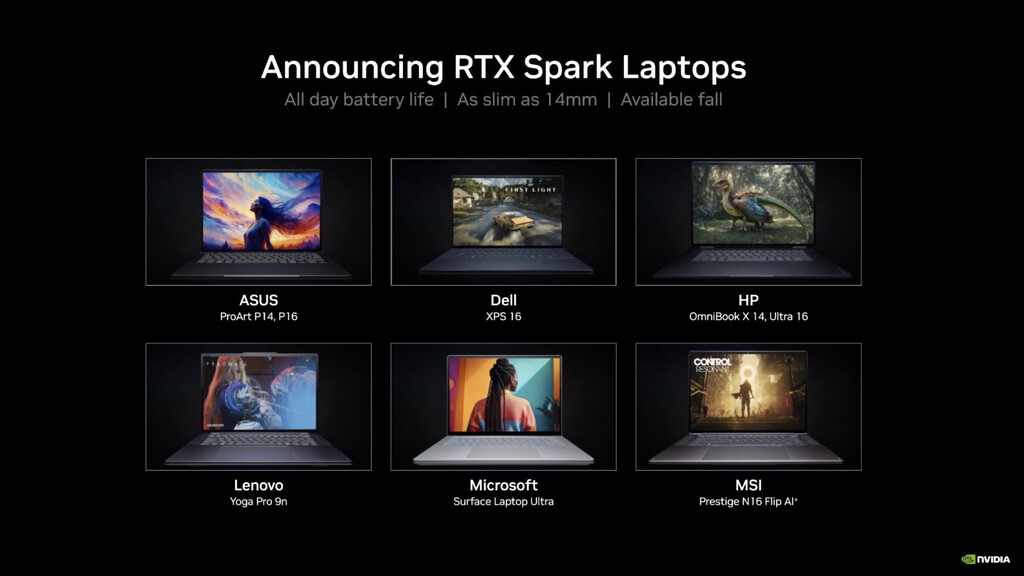
Nvidia hasn't revealed full specifications, but early hints suggest the GPU performance is roughly equivalent to an RTX 5070. That's a strong indicator that these machines are serious about graphics-intensive tasks, including gaming and content creation. However, the ARM architecture introduces compatibility considerations, especially for legacy Windows applications.
Why Windows on ARM Matters
Windows on ARM has been around for years, but adoption has been slow due to performance and compatibility concerns. Nvidia's entry could change that. By leveraging its GPU technology, Nvidia can potentially deliver a smoother experience for AI workloads and creative software that benefit from hardware acceleration.
Moreover, Windows 11 on ARM supports emulation for x86 apps, but performance varies. Nvidia's involvement might push developers to optimize for ARM, especially for AI and gaming titles. The company's influence could accelerate the ecosystem's maturity, making ARM laptops a viable alternative to traditional x86 machines.
Performance and Use Cases
Nvidia positions the RTX Spark for three main audiences: AI enthusiasts, creative professionals, and gamers. For AI, the laptop can run local models, fine-tune datasets, and perform inference without relying on cloud services. Creative users can benefit from GPU-accelerated rendering, video editing, and 3D modeling. Gamers, meanwhile, can expect performance in line with an RTX 5070, though actual frame rates will depend on optimization.
It's important to note that these are early claims. Nvidia hasn't provided benchmarks, and real-world performance may vary. The ARM architecture also means that some games and applications may not run natively, requiring emulation or cloud streaming. Nvidia's DLSS and other AI-enhanced features could help bridge the gap, but widespread adoption will require buy-in from software vendors.
- AI workloads: Local AI training and inference, potentially reducing cloud costs.
- Creative apps: GPU acceleration for Adobe, Blender, and other tools (pending ARM optimization).
- Gaming: RTX 5070-level performance, but ARM compatibility is a question mark.
- Portability: ARM's power efficiency could lead to longer battery life and thinner designs.
- Ecosystem: Success hinges on developer adoption and Windows on ARM improvements.
Challenges Ahead for Nvidia
Nvidia's biggest challenge is the software ecosystem. Windows on ARM has struggled to gain traction because many popular apps are x86-only. While emulation exists, it can incur performance penalties. Nvidia will need to work closely with software developers to ensure native ARM versions of key applications, especially in gaming and creative sectors.
Another challenge is competition. Qualcomm already offers Snapdragon X Elite chips for Windows on ARM, and AMD and Intel are not standing still. Nvidia's advantage lies in its GPU technology, but integrating a powerful GPU into a laptop without compromising battery life or thermals is difficult. The company's success will depend on striking the right balance. The background to this story is set out in Nvidia RTX Spark: The ARM Windows Laptop Chip Challenging Qualcomm. A related thread runs through Nvidia RTX Spark: A New Era for Windows PCs and AI. Earlier coverage in NVIDIA RTX Spark Laptops: 8 New Models Coming Soon shows how the argument developed.
Market Impact and What to Watch
If Nvidia executes well, the RTX Spark could legitimize Windows on ARM as a platform for high-performance computing. It could also pressure competitors to innovate, leading to better ARM chips and more optimized software. For consumers, this means more choices and potentially better AI experiences on laptops. A closer look at the same subject appears in Lenovo Yoga Laptops and Tablets Bring Local AI and 4K Screens to Creatives. Anyone following the wider picture can start with Dell XPS 16 Creator Edition: Agentic AI and NVIDIA RTX Spark. The same theme surfaces in NVIDIA RTX Spark: Productivity Boost for Users, Creators, Developers, which takes a different angle.
However, Nvidia must avoid the pitfalls that plagued previous ARM Windows devices: poor performance, limited app compatibility, and high prices. The company's brand strength and GPU leadership give it an edge, but the laptop market is fiercely competitive. Pricing and availability will be critical, as will real-world reviews. Context on how this played out before sits in ASUS ProArt P16 RTX Spark Review: Nvidia's ARM Laptop. A companion piece, ASUS ProArt P14 and P16: NVIDIA RTX Spark for Local AI, approaches the same subject from another angle.
| Feature | Nvidia RTX Spark (Rumored) | Qualcomm Snapdragon X Elite | Traditional x86 Laptop (e.g., Intel/AMD) |
|---|---|---|---|
| Architecture | ARM (Windows 11) | ARM (Windows 11) | x86 (Windows 11) |
| GPU Performance | ~RTX 5070 | Integrated Adreno | Varies (dedicated GPUs available) |
| AI Capabilities | High (local AI training/inference) | Moderate (AI acceleration) | Depends on GPU |
| App Compatibility | ARM native + x86 emulation | ARM native + x86 emulation | Full native support |
| Battery Life | Potentially good (ARM efficiency) | Excellent | Varies |
FAQ
What is the Nvidia RTX Spark?
The Nvidia RTX Spark is a new family of laptops and desktops that run Windows 11 on ARM. It aims to bring Nvidia's AI and graphics performance to a broader audience, building on the DGX Spark workstation.
How does the RTX Spark compare to the DGX Spark?
The DGX Spark is a Linux-based AI workstation for developers, while the RTX Spark runs Windows and targets general users, including gamers and creatives. The RTX Spark also offers laptop form factors.
Will the RTX Spark run all Windows applications?
Windows on ARM supports x86 emulation, but performance may vary. Native ARM versions are ideal, and Nvidia is likely working with developers to optimize key apps, especially for gaming and creative work.
When will the RTX Spark be available?
Nvidia has not announced a release date or pricing. Given the early stage of the announcement, expect more details in the coming months.
The RTX Spark represents Nvidia's most ambitious push into client computing yet. If successful, it could redefine what users expect from laptops, blending AI, gaming, and productivity in a single device. But Nvidia has much work to do to overcome software and hardware challenges.
Browse the Shop
 Acacia frida deluxe solid wood bed frame |
Bedroom bench |
Bed chest drawers |
Lingerie dresser |
Frame base |
Mirror with jewelry storage |
30 Bathroom Vanity |
Memory foam queen mattress |
Mattresses for back pain |
Nightstand set of 2 |
Grand Goldman Shop |
Civil Lawyer
Deutschland Trikot WM 2026







