

Ivar Kreuger, the Swedish financier known as the Match King, built a global empire on matchsticks and borrowed billions from governments and investors. His 1932 death exposed one of the biggest financial frauds of the 20th century.
In March 1932, the front page of The New York Times reported that a man had been found dead in his room, shot through the heart. Outside, no one yet knew that the body concealed the greatest financial fraud of its time.
Find Original Home Decor sparking conversation at Grand Goldman Shop.

That man had lent money to governments and public figures across Europe, dined with Greta Garbo, and advised presidents. In Sweden they called him "the second king." On Wall Street, he was treated almost like a god of finance.
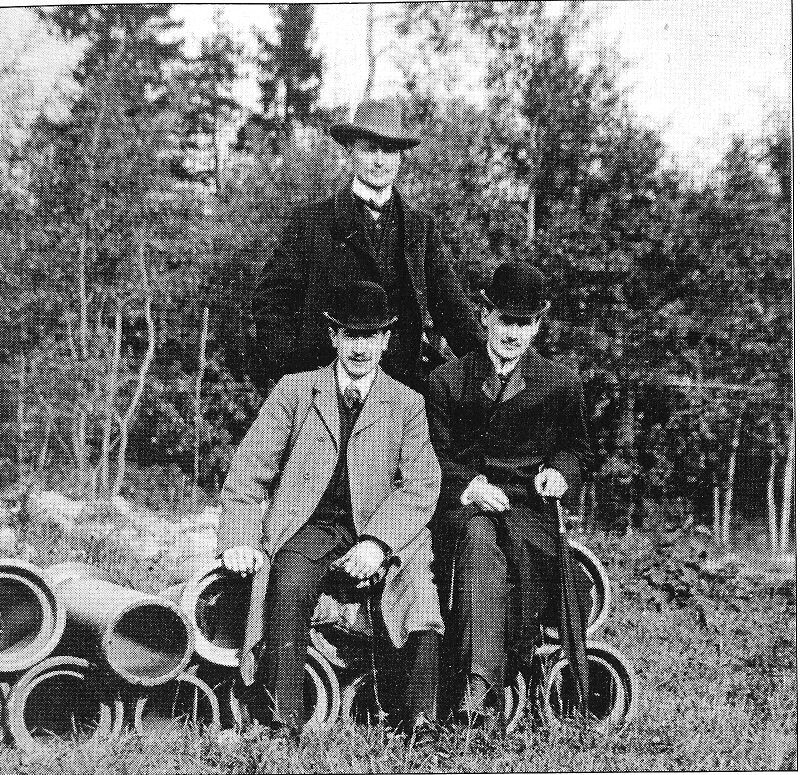
Yet, as Frank Partnoy recounted in his biography 'The Match King', behind that brilliant empire lay something much darker. The story begins, like so many great falls, with a product so simple that no one suspected it: a match.
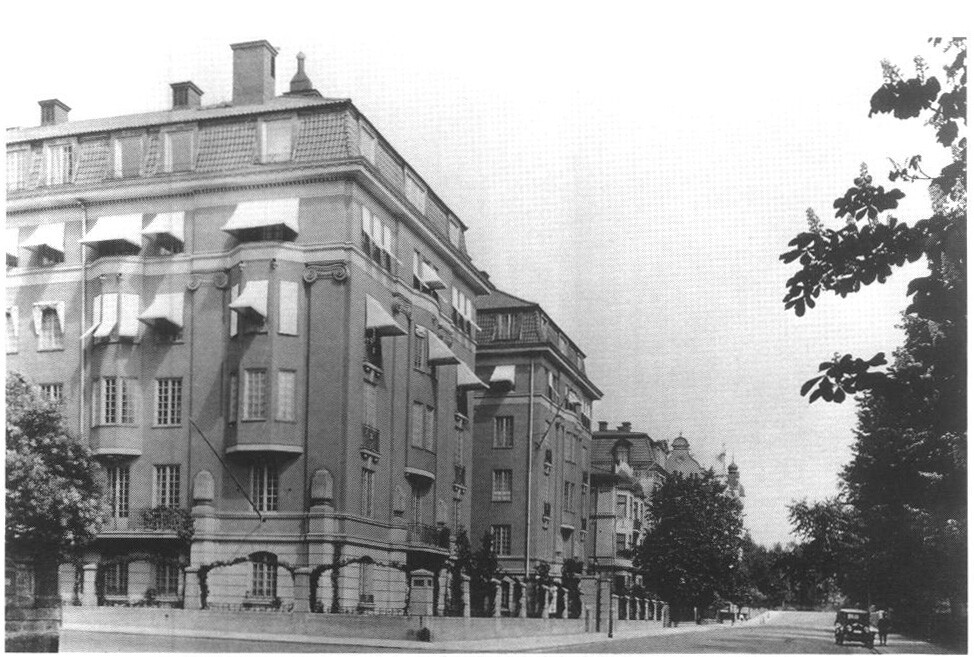
Who Was Ivar Kreuger, the Match King?
Ivar Kreuger was born in Kalmar, in southeastern Sweden, in 1880. His family already had a small match manufacturing business, so his comfortable position allowed him to study engineering and travel to the United States, where he learned construction systems based on reinforced concrete that were not yet used in Sweden.

In 1908, he returned to Sweden and founded the construction company Kreuger & Toll with Paul Toll, with barely $2,500 in capital. The main advantage of his company was that, by using reinforced concrete in its constructions, they could shorten construction times without losing quality.
That success gave Kreuger a taste for ambitious ventures. He soon turned his attention to the family trade: matches.
How Did Kreuger Build His Match Empire?
Kreuger realized that matches were a ubiquitous product, used daily by millions, and that their manufacture could be centralized and monopolized. Through a series of mergers and acquisitions, he consolidated the Swedish match industry and then expanded across Europe.
His strategy was simple but brilliant: he would offer loans to governments in exchange for monopoly rights over match production and sales in their countries. These loans were attractive to cash-strapped governments after World War I, and they gave Kreuger control over match markets worldwide.
By the late 1920s, Kreuger's company, Swedish Match, controlled a vast portion of global match production. He had become one of the most powerful financiers in the world, and his securities were considered blue-chip investments on Wall Street.
What Made Kreuger's Financial Empire So Mysterious?
Despite his success, Kreuger's financial dealings were shrouded in secrecy. He operated through a complex web of companies and holding structures that few fully understood. He often provided vague answers to investors and even to his own board.
Kreuger used the funds from new loans and investments to pay dividends and interest on previous obligations, a classic Ponzi scheme structure. He also fabricated assets and inflated profits to maintain the illusion of a thriving empire.
His charm and reputation allowed him to borrow enormous sums from banks and individuals. He was seen as a financial genius, and few dared to question his methods.
What Caused the Collapse of Kreuger's Empire?
The Great Depression hit in 1929, and credit markets tightened. Kreuger's scheme required a constant inflow of new money to survive. As loans became harder to obtain, the pyramid began to crumble.
In 1932, facing mounting debts and unable to secure new financing, Kreuger's fraud was on the verge of being exposed. On March 12, 1932, he was found dead in his Paris apartment, shot through the heart. The death was ruled a suicide, though some conspiracy theories persist.
After his death, investigators uncovered the extent of the fraud. Assets were missing, books were falsified, and billions of dollars in today's money had vanished. The revelation shocked the financial world and led to stricter securities regulations. The background to this story is set out in Falling for a Fake NFL Player: The Scam That Fooled 20 Women. A related thread runs through Manchester City Relegation Fears: Fans Face Financial Fraud Charges.
What Was the Impact of the Kreuger Fraud?
The Kreuger scandal had far-reaching consequences. It damaged investor confidence in the already fragile markets of the 1930s and contributed to the creation of the U.S. Securities and Exchange Commission (SEC) in 1934. Earlier coverage in Trending: latest articles shows how the argument developed. A closer look at the same subject appears in Argentina 6-0 Peru 1978: The World Cup Fix That Shamed a Dictatorship.
It also served as a cautionary tale about the dangers of opaque financial structures and the cult of personality in finance. Kreuger's story is still studied in business schools as an example of how charisma and secrecy can mask massive fraud. Anyone following the wider picture can start with Barcelona's Electric Fraud Crisis Hits 24-Hour Supermarkets. The same theme surfaces in Franco Angel Monument in Tenerife Faces Removal Ultimatum, which takes a different angle.
Key Takeaways from the Match King's Rise and Fall
- Ivar Kreuger built a global match monopoly by lending money to governments in exchange for monopoly rights.
- His financial empire was based on a Ponzi-like scheme that required constant new investment.
- The Great Depression exposed the fraud when new financing dried up.
- Kreuger's death in 1932 unveiled one of the largest financial frauds in history.
- The scandal led to stricter financial regulations, including the creation of the SEC.
Kreuger's Financial Empire vs. Modern Fraud Schemes
| Aspect | Kreuger's Scheme | Modern Ponzi Schemes (e.g., Madoff) |
|---|---|---|
| Core product | Matches and government loans | Investment funds |
| Method | Loans for monopolies, falsified assets | Fabricated returns, affinity fraud |
| Duration | ~20 years (1910s–1932) | ~20 years (1990s–2008) |
| Collapse trigger | Great Depression, credit crunch | Financial crisis, redemption requests |
| Aftermath | SEC created, regulations tightened | Stricter oversight, investor protection laws |
FAQ
Who was Ivar Kreuger?Ivar Kreuger was a Swedish financier and industrialist who built a global match empire in the early 20th century. He was known as the Match King and was one of the most powerful and respected figures on Wall Street until his fraud was exposed after his death in 1932.
Ivar Kreuger was a Swedish financier and industrialist who built a global match empire in the early 20th century. He was known as the Match King and was one of the most powerful and respected figures on Wall Street until his fraud was exposed after his death in 1932.
How did Kreuger's scheme work?Kreuger lent money to European governments in exchange for monopoly rights over match production and sales. He funded these loans and dividends through a complex web of companies, using new investments to pay off old obligations, similar to a Ponzi scheme. He also falsified assets and inflated profits to maintain the illusion of success.
Kreuger lent money to European governments in exchange for monopoly rights over match production and sales. He funded these loans and dividends through a complex web of companies, using new investments to pay off old obligations, similar to a Ponzi scheme. He also falsified assets and inflated profits to maintain the illusion of success.
What happened to Kreuger?In March 1932, facing financial collapse and exposure, Kreuger was found dead in his Paris apartment from a gunshot wound to the heart. His death was ruled a suicide. After his death, the fraud was uncovered, revealing billions in missing assets and leading to significant financial reforms.
In March 1932, facing financial collapse and exposure, Kreuger was found dead in his Paris apartment from a gunshot wound to the heart. His death was ruled a suicide. After his death, the fraud was uncovered, revealing billions in missing assets and leading to significant financial reforms.
What was the legacy of the Kreuger fraud?The Kreuger fraud shattered investor confidence during the Great Depression and contributed to the creation of the U.S. Securities and Exchange Commission (SEC) in 1934. It remains a classic case study in financial fraud and the dangers of opaque corporate structures.
The Kreuger fraud shattered investor confidence during the Great Depression and contributed to the creation of the U.S. Securities and Exchange Commission (SEC) in 1934. It remains a classic case study in financial fraud and the dangers of opaque corporate structures.
Browse the Shop
 Acacia frida deluxe solid wood bed frame |
Bedroom bench |
Bed chest drawers |
Lingerie dresser |
Frame base |
Mirror with jewelry storage |
30 Bathroom Vanity |
Memory foam queen mattress |
Mattresses for back pain |
Nightstand set of 2 |
Grand Goldman Shop |
Civil Lawyer
Deutschland Trikot WM 2026







