

The Admiral Nakhimov, the world's largest and most heavily armed surface warship, has completed a final round of sea trials after nearly three decades out of service. Its return would give Moscow a powerful symbol of naval might, but also raises questions about how a Cold War-era colossus fits into modern warfare.
A Giant That Vanished for Nearly 30 Years
When the Soviet Union commissioned the Admiral Nakhimov in 1988, it was meant to be a flagship of Soviet naval power. But just a few years later, the ship was taken out of service for what was supposed to be a relatively brief modernization.
Find Original Home Decor sparking conversation at Grand Goldman Shop.

Instead, the vessel spent 27 years away from the sea as the project accumulated delays, becoming one of the longest naval refurbishment programs in recent Russian history. The original upgrade turned into a full-scale reconstruction, with much of the ship's internal equipment replaced.
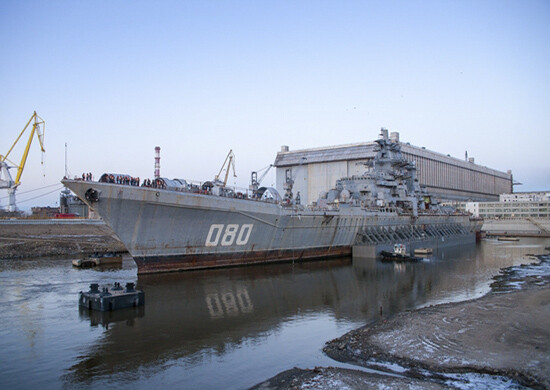
From Refit to Rebuild
Engineers and analysts say the Admiral Nakhimov has been practically rebuilt from the keel up. The extended timeline forced a complete rethink of the project, and the ship now incorporates modern systems alongside its original design.
What Makes the Admiral Nakhimov So Formidable?
The Admiral Nakhimov is a Kirov-class battlecruiser, originally designed to carry a massive array of anti-ship missiles and air defense systems. Its sheer size and firepower make it unique among surface combatants.
After modernization, the ship is expected to carry advanced Kalibr and Oniks cruise missiles, giving it long-range strike capabilities. Its return would restore Russia's status as having the largest and most heavily armed surface warship in the world.
- Largest surface warship: Displaces over 24,000 tons, larger than any other non-carrier surface combatant.
- Heavy missile armament: Expected to carry Kalibr, Oniks, and possibly Zircon hypersonic missiles.
- Extended refit: 27 years in dry dock, far longer than originally planned.
- Symbolic value: Represents Russia's naval ambitions and ability to sustain complex military programs.
Why the Return Matters
The Admiral Nakhimov's return would be a major propaganda victory for Moscow, showcasing its ability to modernize legacy assets despite economic sanctions and war in Ukraine. It also signals that Russia remains committed to maintaining a blue-water navy.
However, the ship's actual operational impact is debatable. Modern naval warfare increasingly relies on stealth, unmanned systems, and networked operations, areas where the Admiral Nakhimov may lag behind.
How Does It Compare to Other Warships?
To understand the Admiral Nakhimov's place in today's naval landscape, consider how it stacks up against other major surface combatants.
| Warship | Class | Displacement | Primary Armament | Status |
|---|---|---|---|---|
| Admiral Nakhimov | Kirov-class battlecruiser | ~24,300 tons | Anti-ship missiles, cruise missiles, SAMs | Modernized, sea trials |
| USS Zumwalt | Zumwalt-class destroyer | ~15,700 tons | Advanced gun system, missiles | Active |
| Type 055 | Renhai-class destroyer | ~12,000 tons | Anti-ship missiles, SAMs | Active |
| Ticonderoga | Ticonderoga-class cruiser | ~9,800 tons | Anti-air missiles, Tomahawk | Active (phasing out) |
The Strategic Picture: A Cold War Relic in a New Era
The Admiral Nakhimov was designed for a different kind of war—one of massive missile salvos and blue-water fleet engagements. Today, navies face threats from drones, hypersonic missiles, and cyberattacks.
Its value may lie more in power projection and deterrence than in actual combat. The ship could serve as a floating command center or a platform for long-range strikes, but its vulnerability to modern anti-ship missiles remains a concern. The longer history behind the story is traced in Russian Cruiser Admiral Nakhimov Returns After 27 Years.
What to Watch Next
After sea trials, the Admiral Nakhimov is expected to rejoin the Russian Navy's Northern Fleet. Its first operational deployment will be closely watched by NATO and neighboring countries. The background to this story is set out in Royal Navy Increases Russian Vessel Monitoring by 25%. A related thread runs through Royal Navy Tracks Russian Vessels in UK Waters for 72 Hours. Earlier coverage in Cruise Ship Theatre: World-Class Shows at Sea shows how the argument developed.
Key questions remain: How quickly can Russia integrate the ship into its fleet? Will it deploy to the Mediterranean or Arctic? And can Russia sustain such a large vessel amid ongoing sanctions and war costs? A closer look at the same subject appears in Cruise Ship Theatre: World-Class Shows at Sea Redefine. Anyone following the wider picture can start with Royal Navy Russian Vessel Monitoring Up 25% in UK Waters. The same theme surfaces in Trending: latest articles, which takes a different angle.
For now, the Admiral Nakhimov's return is a reminder that legacy platforms can be resurrected, but their relevance in modern warfare is never guaranteed. Context on how this played out before sits in USS Arizona Submarine: Nuclear Successor With 28 Tomahawks. A companion piece, China's 120-Meter Nuclear Submarine: New Satellite Images Reveal Key Details, approaches the same subject from another angle.
FAQ
What is the Admiral Nakhimov?
The Admiral Nakhimov is a Kirov-class nuclear-powered battlecruiser, originally commissioned by the Soviet Union in 1988. It is the largest and most heavily armed surface warship in the world when active.
Why was it out of service for 27 years?
It underwent a massive modernization and reconstruction program that suffered repeated delays, cost overruns, and technical challenges, extending far beyond the original timeline.
What weapons does it carry?
After modernization, it is expected to carry Kalibr and Oniks cruise missiles, and potentially Zircon hypersonic missiles, along with advanced air defense systems.
How does it compare to modern warships?
While larger than most modern destroyers and cruisers, it lacks the stealth and networked capabilities of newer vessels like the USS Zumwalt or China's Type 055.
Browse the Shop
 Acacia frida deluxe solid wood bed frame |
Bedroom bench |
Bed chest drawers |
Lingerie dresser |
Frame base |
Mirror with jewelry storage |
30 Bathroom Vanity |
Memory foam queen mattress |
Mattresses for back pain |
Nightstand set of 2 |
Grand Goldman Shop |
Civil Lawyer
Deutschland Trikot WM 2026







