

Spain's demographic shift over the past 35 years has been dramatic: the country has transformed from a nation of emigrants to one of Europe's top immigration destinations. In 1990, more Spaniards lived abroad (1.4 million) than foreigners lived in Spain. By 2024, the situation has reversed: 8.9 million people born outside Spain reside in the country, while only 1.6 million Spaniards live abroad.
This structural turnaround is driven by economic, demographic, and geopolitical changes. The trend reversed around 1995 (1.3 million immigrants vs. 1.2 million emigrants) and has been growing ever since. Spain is one of those places facing severe demographic contraction because its replacement rate is in the red.
Find Original Home Decor sparking conversation at Grand Goldman Shop.

Why Spain's Demographic Shift Matters
Spain's fertility rate is 1.12 children per woman, well below the 2.1 threshold established by the OECD in Society at a Glance 2024. This low fertility rate means that without immigration, Spain's population would shrink significantly, putting pressure on the welfare state.
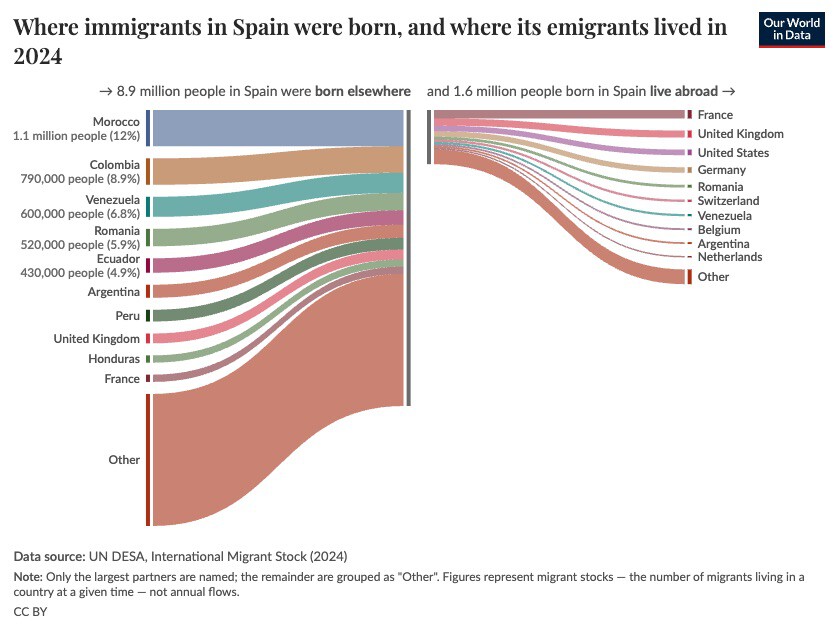
Migration is essential to maintain the welfare state. Immigrants fill labor shortages, contribute to social security, and help sustain public services. The interactive chart "Where do migrants live, and where were they born?" allows users to see, for any country in the world, where immigrants come from and where emigrants go.
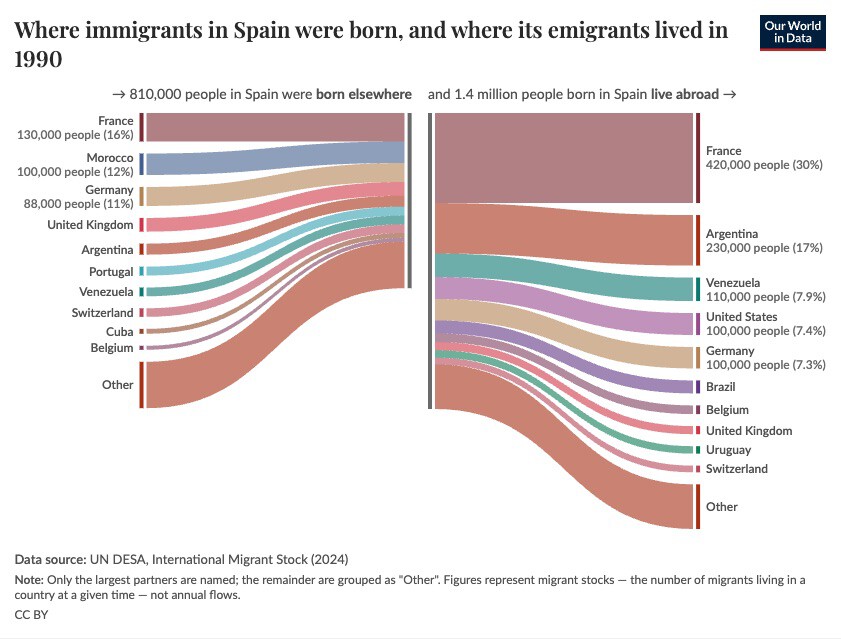
- In 1990, Spain had more emigrants than immigrants, with 1.4 million Spaniards abroad.
- By 2024, Spain hosts 8.9 million foreign-born residents, a massive increase.
- The reversal occurred around 1995, when immigrant numbers surpassed emigrant numbers.
- Spain's fertility rate is 1.12, far below the replacement level of 2.1.
- Immigration is crucial to sustaining Spain's welfare state and economy.
The Economic and Social Drivers
Spain's economic growth in the late 1990s and 2000s attracted millions of immigrants, particularly from Latin America, Eastern Europe, and North Africa. The construction boom and service sector expansion created jobs that drew workers from abroad.
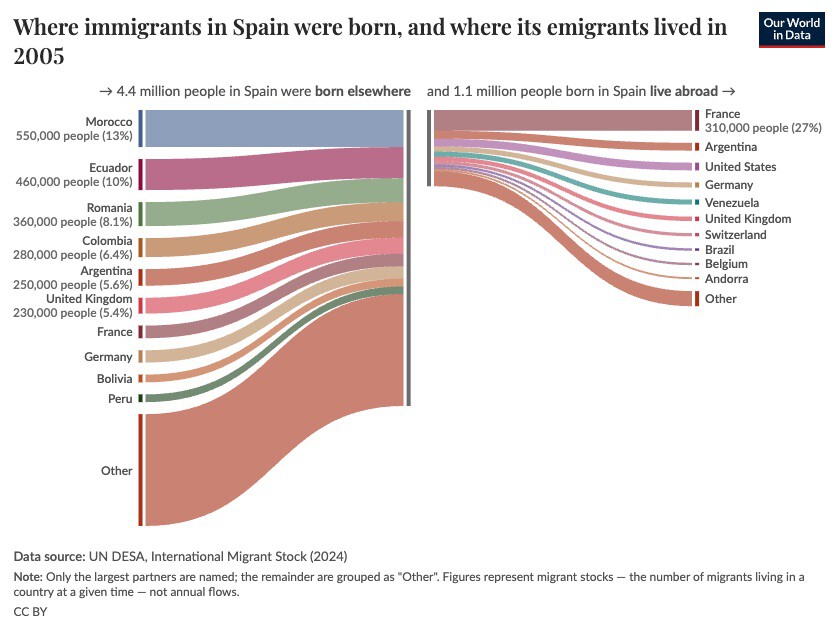
The 2008 financial crisis temporarily slowed immigration, but the trend resumed as Spain recovered. Today, Spain's economy relies on sectors like tourism, agriculture, and technology, which often depend on immigrant labor.
Demographic Challenges Ahead
Spain's aging population poses significant challenges. With fewer young people entering the workforce, the dependency ratio is rising. Immigrants help offset this by adding younger workers who pay taxes and contribute to pensions.
However, integration policies and social services must keep pace with the growing immigrant population to ensure social cohesion and economic stability.
Comparative Migration Trends
Spain's experience is not unique. Many developed countries face similar demographic pressures and rely on immigration to sustain their populations. The interactive chart highlights global migration patterns, showing how people move across borders in search of opportunities.
| Year | Immigrants in Spain | Spaniards Abroad |
|---|---|---|
| 1990 | ~0.8 million | 1.4 million |
| 1995 | 1.3 million | 1.2 million |
| 2024 | 8.9 million | 1.6 million |
The table above illustrates the reversal in migration flows. The number of immigrants has skyrocketed, while the number of Spaniards abroad has remained relatively stable. The background to this story is set out in Immigration Fight Could Decide Australia's Next Election. A related thread runs through House Prices in Focus: Australia's Market Shifts and Whale Migrat. Earlier coverage in Young Entrepreneur Opens Bar in Rural Spain, Defying Urban Migration Trend shows how the argument developed.
What to Watch Next
Spain's demographic future depends on how it manages immigration and integrates newcomers. Policies that support language training, job placement, and social inclusion will be critical. Additionally, Spain must address its low fertility rate through family-friendly policies if it hopes to achieve a more balanced demographic profile. A closer look at the same subject appears in US Ad Campaign Targets Afrikaner Emigration to America. Anyone following the wider picture can start with Sweden's Political Shift: Soul, Migration, and European Politics. The same theme surfaces in EU Migration Policy Shift: Far Right Influence on Asylum Rules, which takes a different angle.
The interactive chart serves as a valuable tool for policymakers and researchers to understand migration dynamics. By visualizing where migrants come from and go, it provides insights that can inform evidence-based decisions. Context on how this played out before sits in Whale Migration and House Prices: Australia's Shifting Landscape. A companion piece, Whale Migration & House Prices: Australia's Shifting Tides, approaches the same subject from another angle.
FAQ
Why did Spain's migration trend reverse?
Spain's economic growth in the late 1990s and 2000s attracted immigrants, while economic opportunities abroad for Spaniards diminished. The construction boom and service sector expansion created jobs that drew workers from abroad, reversing the previous trend of net emigration.
How does immigration affect Spain's welfare state?
Immigrants contribute to the welfare state by paying taxes and social security contributions, which help fund public services and pensions. With Spain's aging population, immigration is essential to maintain the sustainability of the welfare system.
What is Spain's fertility rate and why is it important?
Spain's fertility rate is 1.12 children per woman, well below the replacement level of 2.1. This low rate means that without immigration, Spain's population would decline, leading to labor shortages and increased pressure on public services.
Where can I see the interactive migration chart?
The interactive chart "Where do migrants live, and where were they born?" is available online and allows users to explore migration data for any country. It shows the origins and destinations of migrants, providing a comprehensive view of global migration patterns.
Browse the Shop
 Acacia frida deluxe solid wood bed frame |
Bedroom bench |
Bed chest drawers |
Lingerie dresser |
Frame base |
Mirror with jewelry storage |
30 Bathroom Vanity |
Memory foam queen mattress |
Mattresses for back pain |
Nightstand set of 2 |
Grand Goldman Shop |
Civil Lawyer
Deutschland Trikot WM 2026







