

The Spanish prisoners of World War II who remained in Soviet camps long after the conflict ended in 1945 are a forgotten chapter of history. While Europe celebrated peace, hundreds of Spaniards were still held in the USSR, caught between a war that had finished and a Cold War that was just beginning.
When did World War II really end for these Spaniards?
World War II officially ended in Europe on May 8, 1945. For millions, it was the start of the journey home. But for some Spaniards, peace did not mean freedom. They remained locked in Soviet camps for years, trapped between a war that had ended and another, the Cold War, that had just begun.
Find Original Home Decor sparking conversation at Grand Goldman Shop.

Their story culminated in April 1954, when a ship arrived in Barcelona with 286 compatriots on board. This was nine years after the end of the war, and for some, the wait had begun even before the Spanish Civil War ended.
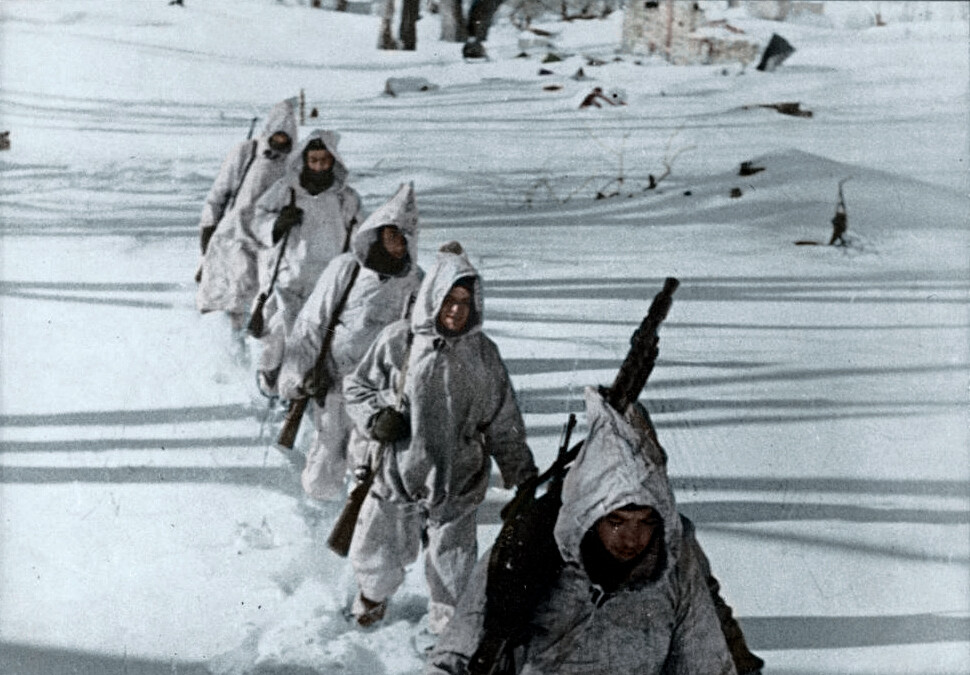
Why were Spaniards in Soviet camps after WWII?
When Germany surrendered, hundreds of Spaniards were still held in the Soviet Union. Many belonged to the Blue Division, the unit of volunteers sent by Franco in 1941 to fight alongside Hitler's army against Stalin, even though Spain officially stayed out of World War II. Others were Republicans who had reached Soviet territory during the Spanish Civil War and ended up detained by the communist authorities.
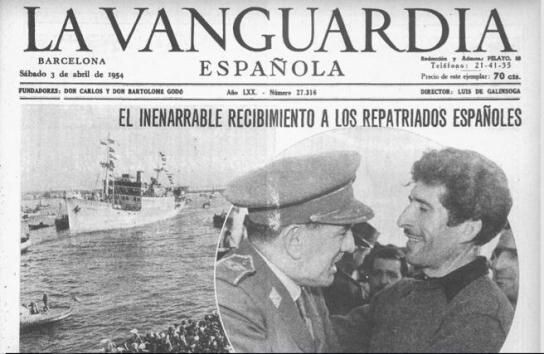
These men were scattered across prisons and labor camps while Europe tried to rebuild. Their stories are a stark reminder of the complex loyalties and tragedies of the era.
- Hundreds of Spaniards were trapped in Soviet camps after WWII.
- Some were Blue Division volunteers who fought for Hitler.
- Others were Republicans detained by Soviet authorities.
- Their ordeal lasted until 1954, nine years after the war.
- The return voyage was on the ship Semiramis.
Who were the 286 Spaniards on the Semiramis?
On April 2, 1954, the ship Semiramis docked in Barcelona carrying 286 Spaniards. For some, the wait had begun even before the end of the Spanish Civil War in 1939. These men had spent years in Soviet captivity, far from home and family.
Their return was a significant event, marking the end of a long ordeal. It also highlighted the complicated legacy of Spanish involvement in World War II and the early Cold War.
A mix of volunteers and Republicans
The group was diverse. Some had volunteered for the Blue Division to fight communism, while others were Republicans who had sought refuge in the Soviet Union and were later imprisoned. Their shared fate in Soviet camps underscores the unpredictable consequences of political allegiances.
What was the Blue Division's role in WWII?
The Blue Division was a unit of Spanish volunteers sent by Franco to fight alongside the German army on the Eastern Front. Despite Spain's official neutrality, these volunteers fought against Stalin's forces. Many were captured and ended up in Soviet camps.
Their presence in the USSR after the war was a thorny issue. The Soviet Union used them as leverage in diplomatic negotiations, and their release was delayed for years.
How did the Cold War affect their release?
The onset of the Cold War complicated their situation. The Soviet Union and the Western powers were now adversaries, and the fate of these Spaniards became entangled in larger geopolitical struggles. Franco's Spain, isolated internationally, had limited means to secure their release.
It took until 1954 for a repatriation agreement to be reached, allowing the 286 to return aboard the Semiramis. The background to this story is set out in The Big Crown D.26 286 HB-RAG Oris Limited Edition pays tribute to the Dewoitine D.26, a milestone in aviation history. A related thread runs through Trending: latest articles. Earlier coverage in The Surreal 1942 Battle Between the US and France shows how the argument developed.
What can we learn from this forgotten episode?
This story reminds us that the end of a war does not always mean the end of suffering. The Spaniards who returned in 1954 had spent years in limbo, their lives suspended by ideology and international politics. A closer look at the same subject appears in NYC's 1919 German Helmet Pyramids: The Victory Loan Campaign. Anyone following the wider picture can start with How a Nazi-Engineered Famine Led to the Discovery of Celiac Disease. The same theme surfaces in Famous World Chess Championship Games: From Fischer to Carlsen, which takes a different angle.
Their experience also highlights the importance of remembering lesser-known histories. As we reflect on World War II and its aftermath, we should not overlook those whose homecoming was delayed by years. Context on how this played out before sits in 1946 Pilbara Strike Photos Reveal Aboriginal Mining Camps. A companion piece, Spanish Prisoners of WWII: The 286 Who Returned in 1954, approaches the same subject from another angle.
FAQ
When did the 286 Spaniards return to Barcelona?
They returned on April 2, 1954, aboard the ship Semiramis, nine years after the end of World War II in Europe.
Why were Spaniards in Soviet camps after WWII?
Some were Blue Division volunteers who had fought for Hitler, while others were Republicans detained by Soviet authorities. Both groups were held in prisons and labor camps.
What was the Blue Division?
The Blue Division was a unit of Spanish volunteers sent by Franco to fight alongside the German army on the Eastern Front during World War II.
How many Spaniards returned in 1954?
Exactly 286 Spaniards returned to Barcelona on the Semiramis in 1954.
Browse the Shop
 Acacia frida deluxe solid wood bed frame |
Bedroom bench |
Bed chest drawers |
Lingerie dresser |
Frame base |
Mirror with jewelry storage |
30 Bathroom Vanity |
Memory foam queen mattress |
Mattresses for back pain |
Nightstand set of 2 |
Grand Goldman Shop |
Civil Lawyer
Deutschland Trikot WM 2026







