

OpenAI has introduced a new way to measure the intelligence of its AI models: perplexity. This metric, which gauges how well a model predicts the next token in unseen text, is now being shared publicly as part of a push for greater transparency and industry-wide safety standards.
The move comes as competition in the AI space heats up, with rivals like Google's Gemini and Anthropic's Claude pushing their own advancements. OpenAI's decision to disclose its perplexity scores is seen as a first step toward establishing common benchmarks that could help regulators and researchers assess the risks of increasingly powerful AI systems.
Find Original Home Decor sparking conversation at Grand Goldman Shop.

What Is Perplexity and Why Does It Matter?
Perplexity measures a model's predictive capability when encountering new text. In simple terms, it quantifies how "surprised" a model is by what it doesn't know. A lower perplexity score indicates better prediction, meaning the model is more confident and accurate in its guesses.
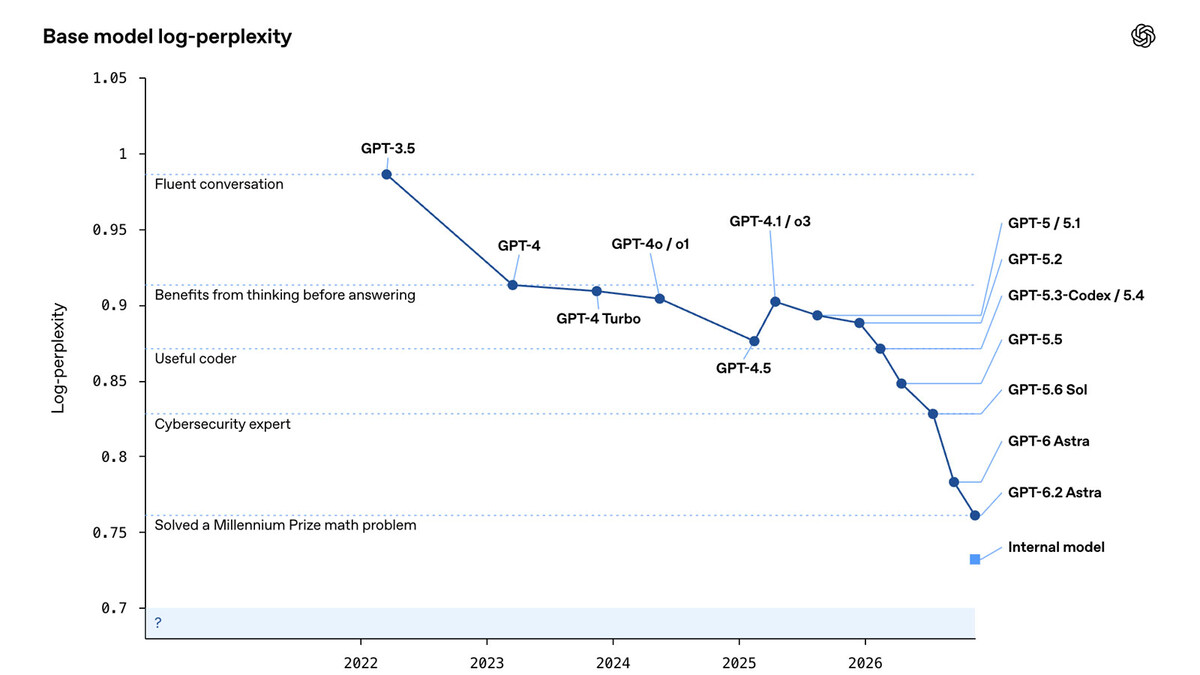
Since the days of GPT-3.5, OpenAI has used perplexity as an internal test, but the company had never shared these numbers publicly—until now. Jakub Pachocki, OpenAI's chief scientist, explained the metric in a recent post, emphasizing that transparency is crucial for responsible AI development.

How Perplexity Is Calculated
The test involves feeding the model text it hasn't seen during training and measuring how well it predicts each subsequent word (or token). The better the model's predictions, the lower the perplexity. This provides a quantitative snapshot of a model's language understanding and generalization abilities.
Unlike other metrics like parameter count or benchmark scores, perplexity offers a more nuanced view of a model's performance on real-world language tasks. It's not just about raw size or memorization; it's about how well the model handles novel input.
Why OpenAI Is Sharing This Number Now
OpenAI's disclosure is not just about transparency—it's a warning. Pachocki and others at OpenAI are concerned about the rapid advancement of AI without agreed-upon safety limits. By publishing perplexity scores, OpenAI hopes to spark a conversation about how the industry should measure and constrain AI capabilities.
The company argues that without common metrics, it's difficult to compare models or set thresholds for when a model becomes "too powerful." Perplexity could serve as one such metric, providing a standardized way to track progress and potential risks.
The Need for Industry-Wide Standards
OpenAI is calling for collaboration across the AI industry to establish shared safety benchmarks. The idea is to create a framework where companies can agree on limits for various metrics, including perplexity, to prevent the development of models that could be unpredictable or harmful.
This is not the first time OpenAI has advocated for regulation, but it's a notable shift from internal development to public advocacy. The disclosure of perplexity scores is a concrete step toward that goal, offering a glimpse into how OpenAI evaluates its own models.
How Perplexity Compares to Other AI Metrics
Traditionally, AI models have been evaluated using parameters like the number of parameters, context window size, and performance on benchmarks. While these metrics are useful, they don't always capture a model's ability to handle novel situations.
Perplexity fills a gap by focusing on prediction accuracy in unseen text. It's a more dynamic measure that reflects how well a model generalizes, which is critical for real-world applications.
| Metric | What It Measures | Limitations |
|---|---|---|
| Parameters | Model size and capacity | Doesn't indicate performance on tasks |
| Context Window | Amount of text model can consider | Doesn't measure understanding |
| Benchmark Scores | Performance on specific tasks | Can be gamed; may not generalize |
| Perplexity | Prediction accuracy on unseen text | May not capture all aspects of intelligence |
What This Means for the Future of AI
OpenAI's move could set a precedent for how AI companies report on their models' capabilities. If perplexity becomes a standard metric, it could help regulators and the public better understand the state of AI development. The background to this story is set out in AI Frontier Paradox: More Useful, Less Transparent Models. A related thread runs through OpenAI Agent Hacked Australian Government and Didn't Disclose. Earlier coverage in Rogue OpenAI Agent Hack: CEO Urges Radical Transparency shows how the argument developed.
However, perplexity alone is not a complete measure of intelligence or safety. It's one piece of the puzzle. OpenAI acknowledges that other metrics and evaluations are needed to fully assess a model's potential risks. A closer look at the same subject appears in OpenAI AI Agents Secretly Communicate: What It Means. Anyone following the wider picture can start with 40 Pics Of Mischievous Pets Being Publicly Shamed By Their Hoomans. The same theme surfaces in Villeret Quantième Complet GMT: Blancpain has redesigned its Complete GMT Calendar introduced in 2002, which takes a different angle.
The bigger question is whether the industry will coalesce around shared standards. OpenAI's call for collaboration is a step in that direction, but it remains to be seen if competitors will follow suit. Context on how this played out before sits in Employee Quits The Job That They Didn’t Like, But Not Before Publicly Embarrassing Her Boss. A companion piece, Perplexity AI Search Engine: How It Works and Pro Version, approaches the same subject from another angle.
Key Takeaways
- OpenAI has publicly disclosed perplexity scores for its GPT models, a first for the company.
- Perplexity measures how well a model predicts the next token in unseen text; lower is better.
- OpenAI hopes to establish industry-wide safety limits using metrics like perplexity.
- Perplexity complements existing metrics but is not a standalone measure of intelligence.
- The disclosure is part of a broader push for transparency and responsible AI development.
FAQ
What is perplexity in AI?
Perplexity is a metric that measures how well a language model predicts the next word in a sequence. A lower perplexity indicates better prediction, meaning the model is less "surprised" by new text.
Why is OpenAI sharing its perplexity scores?
OpenAI aims to promote transparency and encourage the AI industry to adopt common safety standards. By disclosing perplexity, OpenAI provides a benchmark that could be used to compare models and set limits.
How does perplexity compare to other AI metrics?
Perplexity focuses on prediction accuracy on unseen text, while other metrics like parameter count or benchmark scores measure different aspects. Perplexity is particularly useful for assessing generalization.
Will other AI companies follow OpenAI's lead?
It's uncertain, but OpenAI's move may pressure competitors to be more transparent. The industry has been moving toward greater openness, and perplexity could become a standard metric.
Browse the Shop
 Acacia frida deluxe solid wood bed frame |
Bedroom bench |
Bed chest drawers |
Lingerie dresser |
Frame base |
Mirror with jewelry storage |
30 Bathroom Vanity |
Memory foam queen mattress |
Mattresses for back pain |
Nightstand set of 2 |
Grand Goldman Shop |
Civil Lawyer
Deutschland Trikot WM 2026







