

Have you ever wondered how old you would be on Mars? A new website lets you calculate your birthday on every planet in the solar system and beyond, including exoplanets and even the Sun. The tool is free, easy to use, and offers a fun way to explore the vastness of space.
All you need to do is enter your name and birth date, and the site instantly shows your age on each celestial body. The calculations are based on the length of a year on each planet—the time it takes to complete one orbit around the Sun. For example, a year on Venus is shorter than on Earth, so you'd be older there, while a year on Mars is longer, making you younger.
Find Original Home Decor sparking conversation at Grand Goldman Shop.

How the Space Birthday Calculator Works
The website computes your age by determining how many days have passed since you were born and then dividing that by the length of a year on each planet or object. For planets and dwarf planets in our solar system, the year lengths are well-known. For exoplanets and asteroids, the site uses available data to make the calculations.
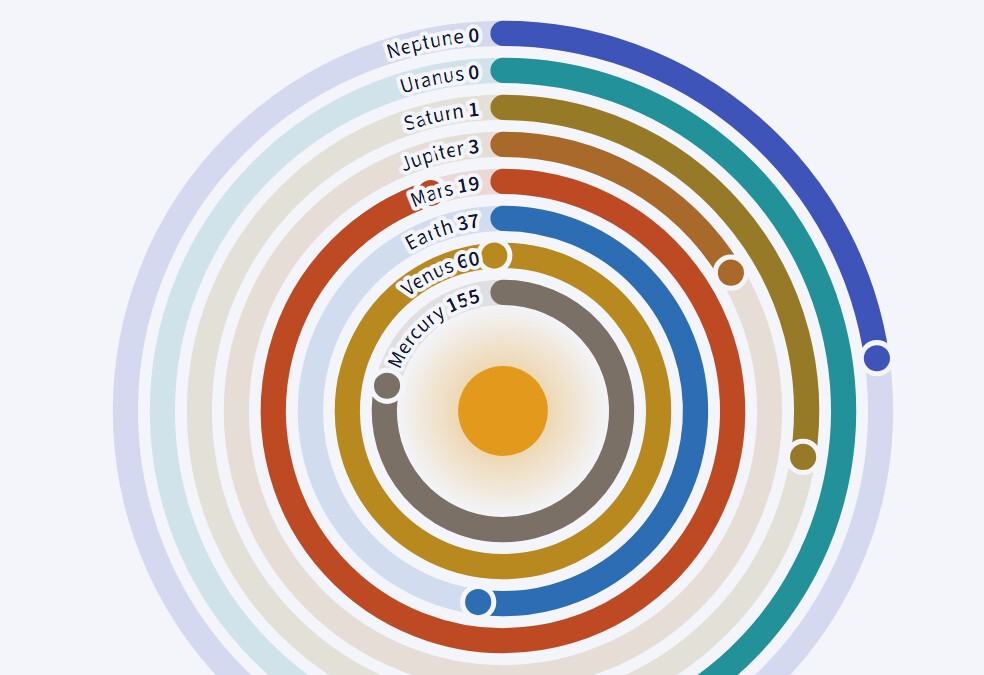
For instance, if you are 37.5 years old on Earth, you would be about 19.9 years old on Mars and 60.9 years old on Venus. On Mercury, where a year lasts only 88 Earth days, you'd be 155.7 years old! These stark differences highlight the diverse orbital periods of celestial bodies.
- Free and instant: No payment or waiting required—just enter your details and get results.
- Wide range: Includes planets, dwarf planets, exoplanets, asteroids, and the Sun.
- Fun for all ages: A great educational tool for kids and adults alike.
- Customizable: Starting November 4, the site will offer a shop where you can buy a calendar with your space birthdays (US shipping only) or a printable version.
Why Your Age Differs Across the Solar System
The concept is simple: your age is a measure of time elapsed since birth. On Earth, we measure years by the time it takes for our planet to orbit the Sun—about 365.25 days. But each planet has its own orbital period. Mercury zips around the Sun in just 88 Earth days, so you'd celebrate many more birthdays there. Neptune, on the other hand, takes about 165 Earth years to complete one orbit, so you'd be much younger.
This calculator not only satisfies curiosity but also serves as a gentle introduction to orbital mechanics and the scale of the solar system. It's a tangible way to grasp the relative speeds of planets and the vast distances involved.
| Celestial Body | Year Length (Earth days) | Your Age (if 37.5 on Earth) |
|---|---|---|
| Mercury | 88 | 155.7 |
| Venus | 225 | 60.9 |
| Earth | 365.25 | 37.5 |
| Mars | 687 | 19.9 |
| Jupiter | 4333 | 3.2 |
Beyond the Planets: Exoplanets and More
The website doesn't stop at our solar system. It also calculates your age on several exoplanets and asteroids, and even on the Sun. For the Sun, the calculation is based on its rotational period or perhaps a different definition—though the site likely uses a fun interpretation. This feature adds an extra layer of intrigue, inviting users to think about worlds beyond our own.
Exoplanets have wildly varying orbital periods, from a few days to thousands of years. The site probably includes a selection of well-known exoplanets with known periods. It's a reminder that our concept of a "year" is entirely local to our planet. The background to this story is set out in James Webb Detects Variable Water Clouds Beyond Solar System. A related thread runs through Pluto's Demotion: Why It's Actually Good News for the Solar System. Earlier coverage in Sun's Death Will Be Worse Than Expected for Solar System shows how the argument developed.
What's Next for the Website
Starting November 4, the site will launch an online store where you can purchase a calendar featuring your space birthdays and those of your family. However, shipping is currently limited to the United States, so international users can opt for a printable document instead. The core calculator will remain free, so you can keep exploring without spending a dime. A closer look at the same subject appears in Birthday Age Milestones: Deals and Discounts You Unlock. Anyone following the wider picture can start with KYZON Space Review: Your Complete Guide. The same theme surfaces in Solar Panels: A Complete DIY Guide to Photovoltaic Systems, which takes a different angle.
This initiative combines education with a bit of whimsy, making space science accessible and personal. Whether you're a space enthusiast or just curious, it's worth a visit. Context on how this played out before sits in Solar Eclipse Wonder: A Shared Moment of Awe and Unity. A companion piece, Shelves That Use All the Space at Home, approaches the same subject from another angle.
FAQ
How does the space birthday calculator work?
It takes your birth date, calculates the number of days you've been alive, and divides that by the length of a year on each celestial body. The result is your age on that body.
Is the calculator free to use?
Yes, the core calculator is completely free. You can enter your name and birth date and get instant results without any payment.
Can I get a physical calendar of my space birthdays?
Starting November 4, the website will offer a shop where you can buy a calendar. Shipping is only available in the US, but a printable version will also be available for international users.
Which celestial bodies are included?
The calculator includes all planets in our solar system, some dwarf planets, a selection of exoplanets and asteroids, and even the Sun.
Browse the Shop
 Acacia frida deluxe solid wood bed frame |
Bedroom bench |
Bed chest drawers |
Lingerie dresser |
Frame base |
Mirror with jewelry storage |
30 Bathroom Vanity |
Memory foam queen mattress |
Mattresses for back pain |
Nightstand set of 2 |
Grand Goldman Shop |
Civil Lawyer
Deutschland Trikot WM 2026







