

China's Tianyu telescope, a one-meter optical instrument, has successfully achieved first light, marking a major step forward in the quest to observe the fast-changing universe. Installed at the Saishiteng Mountain in Lenghu, Qinghai Province, the telescope is designed to scan large swaths of the sky rapidly, catching fleeting cosmic events that traditional telescopes often miss.
Developed jointly by the Tsung-Dao Lee Institute of Shanghai Jiao Tong University and the Shanghai Astronomical Observatory under the Chinese Academy of Sciences, Tianyu's first light signifies the completion of its construction. However, regular scientific observations are not expected to begin until October 2026, after thorough testing and adjustments.
Find Original, High-end Home Decor that spark conversation at Grand Goldman Shop.
Why Speed Matters in Astronomy
When we think of large telescopes, we often imagine peering deeper into space to see fainter, more distant objects. But there's another challenge: the sky changes while we watch. Some phenomena appear, evolve, and vanish in seconds or minutes, so sensitivity alone isn't enough—telescopes must also be fast.
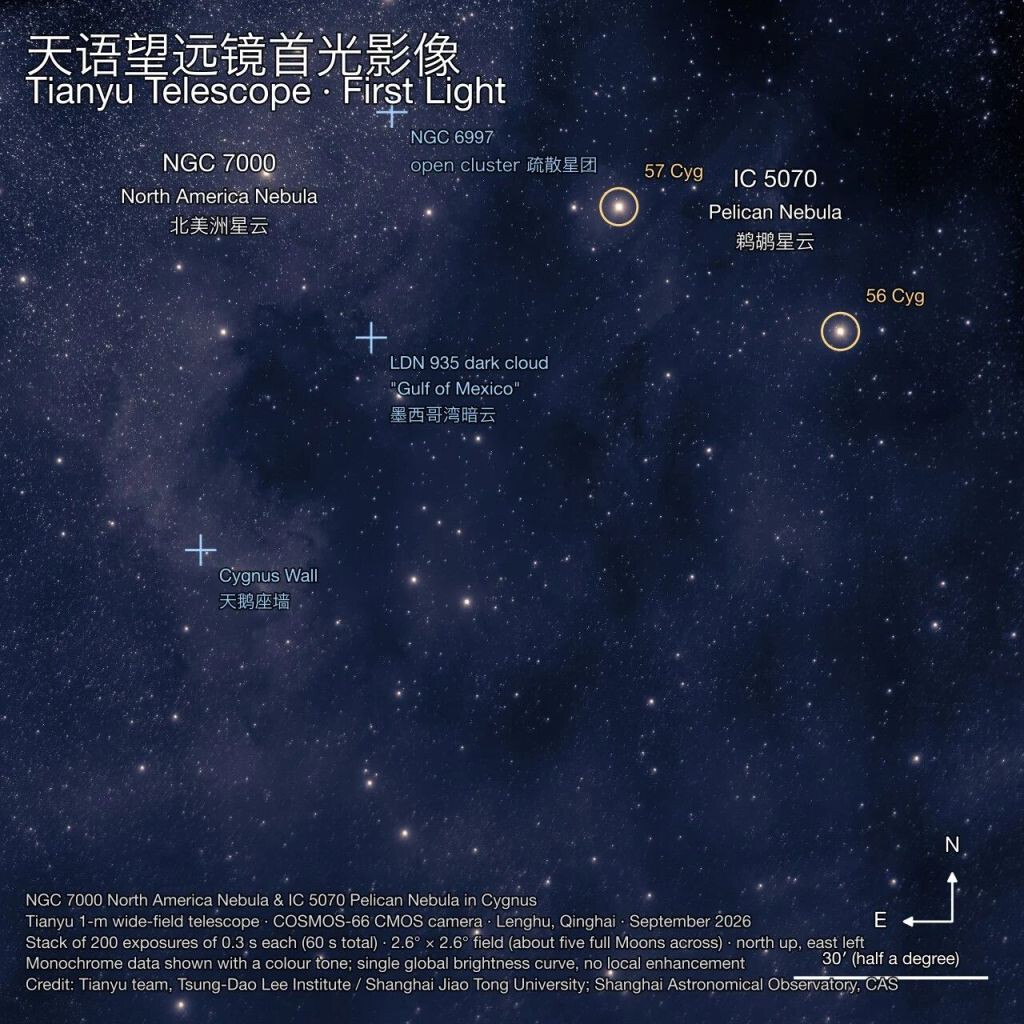
Tianyu is built for this kind of time-domain astronomy. Its one-meter aperture is paired with a wide-field camera that can capture a large area of the sky in a single exposure. This allows it to detect transient events such as supernovas, gamma-ray bursts, and fast radio bursts, which are often missed by telescopes with narrow fields of view.
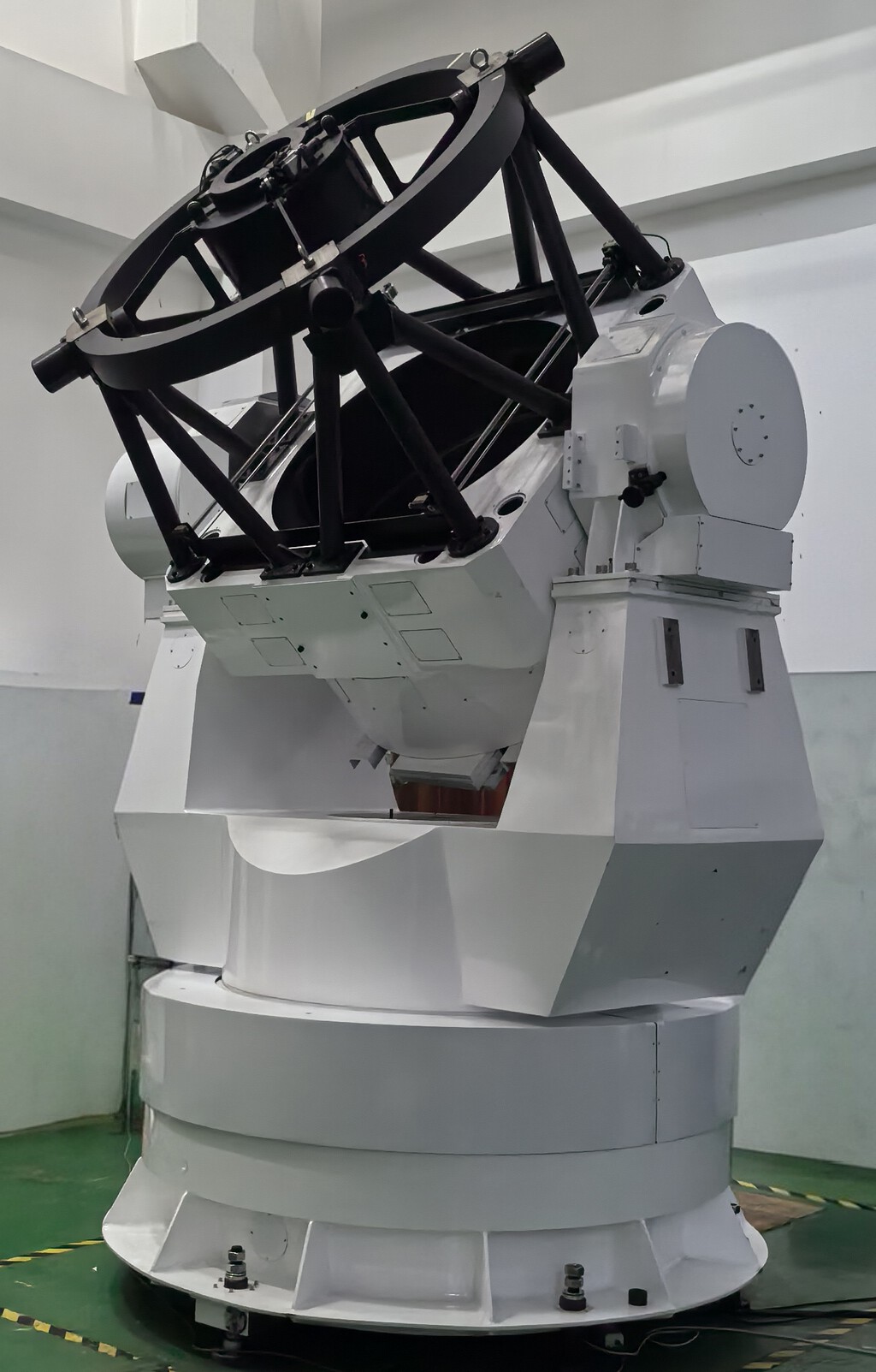
Inside Tianyu's Design
The telescope's wide field of view is its key feature. While its mirror is modest compared to giant observatories like the James Webb Space Telescope, its ability to survey vast portions of the sky quickly makes it uniquely suited for discovering short-lived phenomena.
Tianyu is equipped with a large-format CCD camera that enables it to image an area equivalent to several full moons at once. This combination of aperture and field of view allows it to scan the sky repeatedly, building up a movie of the cosmos rather than just a snapshot.
- Wide field of view: Captures large sky areas per exposure, ideal for transient detection.
- Fast cadence: Can revisit the same region frequently to track changes.
- Automated pipeline: Processes data in real time to alert astronomers of new events.
- Strategic location: Lenghu offers excellent seeing and dark skies.
- International collaboration: Developed by leading Chinese institutions with potential global partnerships.
How Tianyu Compares to Other Survey Telescopes
Tianyu joins a growing family of wide-field survey telescopes around the world. Its capabilities are similar to those of the Zwicky Transient Facility (ZTF) in the United States, though Tianyu's one-meter aperture gives it greater light-gathering power than ZTF's 1.2-meter Samuel Oschin telescope? Actually, ZTF uses a 1.2-meter telescope, so Tianyu is slightly smaller but still competitive. The table below highlights key specs.
| Telescope | Aperture | Field of View | Primary Goal |
|---|---|---|---|
| Tianyu (China) | 1.0 m | ~10 square degrees | Transient survey |
| ZTF (USA) | 1.2 m | ~47 square degrees | Transient survey |
| LSST (Chile) | 8.4 m | ~9.6 square degrees | Deep wide survey |
While Tianyu's field of view is smaller than ZTF's, its location in the Northern Hemisphere fills a gap in global coverage. Together with other surveys, it will help create a continuous monitor of the night sky.
The Science Ahead
Once operational, Tianyu will embark on a multi-year survey to discover and characterize transient events. Its data will complement observations from space-based missions like Swift and Fermi, providing ground-based follow-up for gamma-ray bursts and other high-energy phenomena.
The telescope will also contribute to the study of near-Earth asteroids, variable stars, and active galactic nuclei. By catching events early, it can provide crucial alerts to larger telescopes for detailed study.
Challenges and Opportunities
Building and operating a wide-field survey telescope is not without challenges. The data volume is enormous, requiring sophisticated software to sift through millions of objects each night. Tianyu's team is developing machine-learning algorithms to identify interesting candidates automatically. Context on how this played out before sits in China's Tianyu Telescope: A New Era for Fast Astronomy.
Another challenge is coordination with other observatories. To maximize scientific return, Tianyu will need to share its discoveries quickly with the global community, enabling rapid follow-up. The background to this story is set out in Science: latest articles. A related thread runs through Cosmic Shockwave Defies Known Rules: The Mystery Engine Behind.
What This Means for Astronomy
Tianyu's first light is a milestone for Chinese astronomy and for the global effort to understand the dynamic universe. It represents a shift from simply looking deeper to looking faster—a recognition that some of the most exciting discoveries come from events that unfold on human timescales. Earlier coverage in James Webb Telescope Detects Mysterious Signal in Fornax shows how the argument developed. A closer look at the same subject appears in NASA's PRIMA Telescope to Fill James Webb's Far-Infrared Gap.
As the telescope moves toward regular operations in 2026, astronomers around the world will be watching closely. The data it produces could lead to new insights into the physics of explosions, the nature of dark energy, and the hazards posed by near-Earth objects. Anyone following the wider picture can start with Orionid Meteor Shower 2025: How to See Halley's Comet Debris. The same theme surfaces in Astronomers Detect Most Distant Fast Radio Burst From Far Galaxy, which takes a different angle.
FAQ
What is the Tianyu telescope?
Tianyu is a one-meter optical telescope in China designed for wide-field surveys of the sky. It aims to detect transient events like supernovas and gamma-ray bursts quickly.
When will Tianyu start scientific observations?
The telescope achieved first light recently, but regular scientific observations are planned to begin in October 2026 after testing and adjustments.
How does Tianyu differ from other telescopes?
Tianyu prioritizes speed and wide-field coverage over sheer mirror size, allowing it to scan large areas of the sky rapidly to catch fleeting phenomena.
Where is Tianyu located?
It is installed at Saishiteng Mountain in Lenghu, Qinghai Province, China, a site known for its dark skies and excellent observing conditions.
Browse the Shop
 Acacia frida deluxe solid wood bed frame |
Bedroom bench |
Bed chest drawers |
Lingerie dresser |
Frame base |
Mirror with jewelry storage |
30 Bathroom Vanity |
Memory foam queen mattress |
Mattresses for back pain |
Nightstand set of 2 |
Grand Goldman Shop |
Civil Lawyer
Deutschland Trikot WM 2026







