

Bolwoningen, the iconic spherical houses in the Netherlands, were built in 1984 as a radical solution to the country's housing shortage. These 50 white, golf-ball-like dwellings in 's-Hertogenbosch (Den Bosch) remain inhabited today, a testament to experimental architecture that still fascinates and confounds.
Decades of European architecture favored uniformity, but in the 1980s, some governments dared to experiment with entirely different ways of living. In one Dutch city, that search for solutions left a neighborhood that still looks like a science fiction movie set.
Find Original Home Decor sparking conversation at Grand Goldman Shop.

What Are the Bolwoningen?
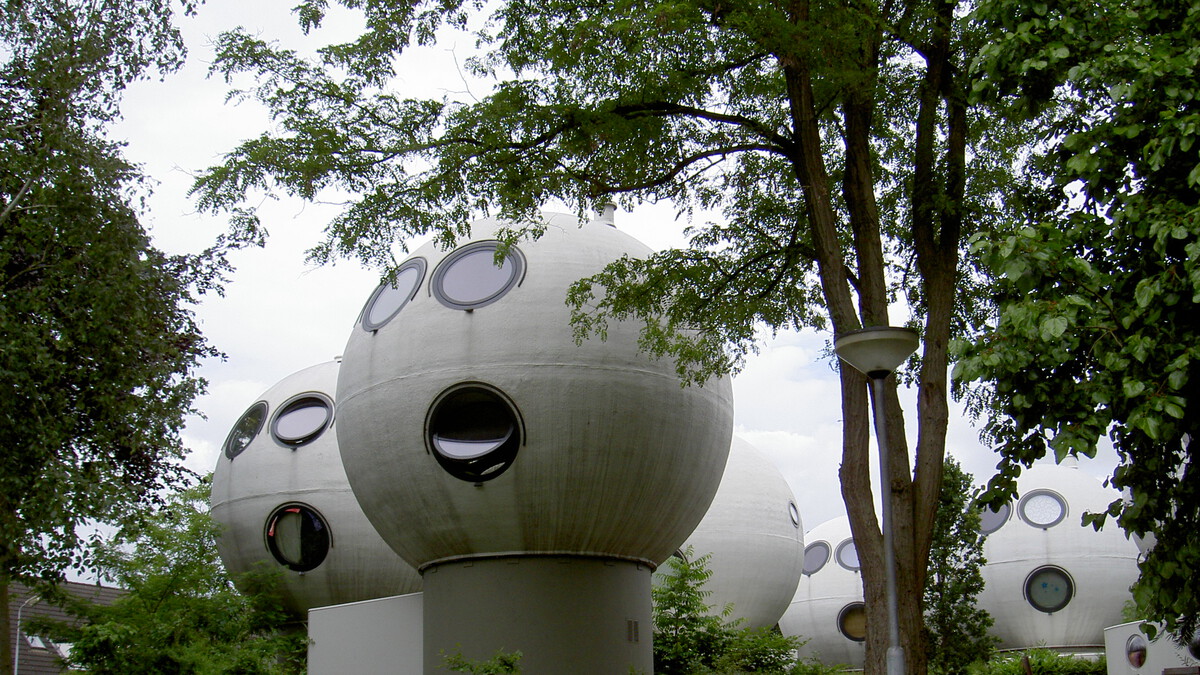
Bolwoningen, literally “ball houses,” are 50 spherical homes elevated on pedestals and dotted with circular windows. They were inaugurated in 1984 in 's-Hertogenbosch, a city in the southern Netherlands also known as Den Bosch. Far from being futuristic decor, these were social housing units designed to address a severe housing shortage.
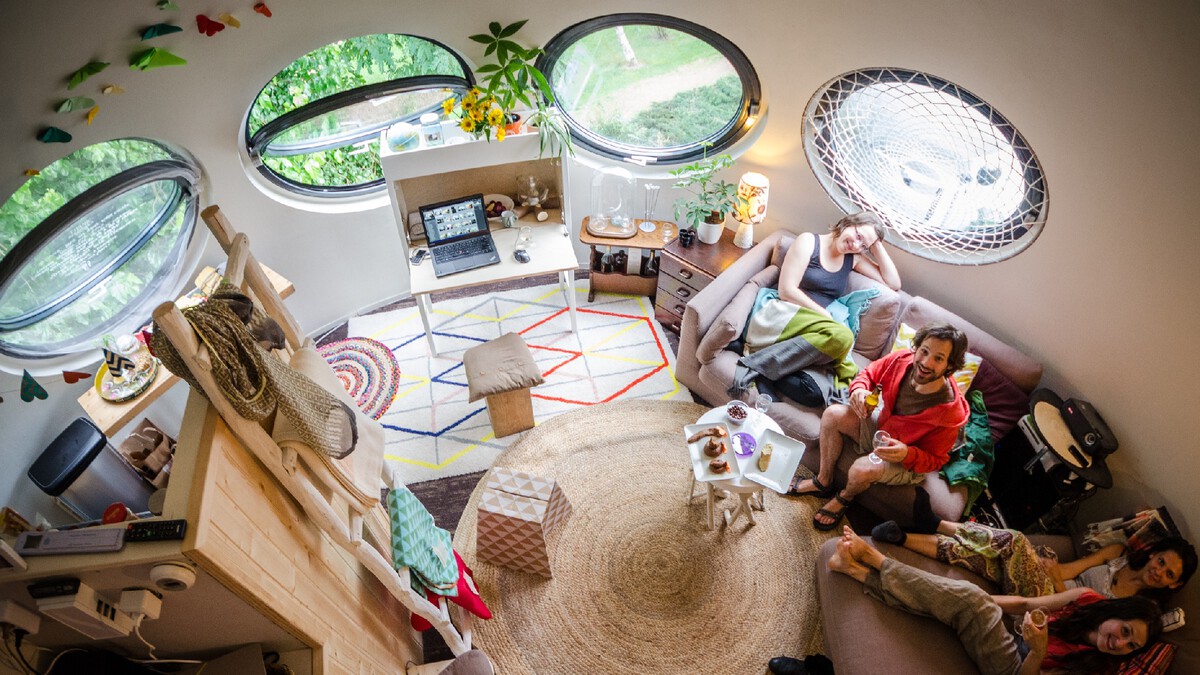
Their creator, artist and architect Dries Kreijkamp, convinced authorities that a sphere could be an economical, efficient, and radically different alternative to traditional houses. More than four decades later, all 50 structures are still occupied.
Why Did the Dutch Government Experiment with Spherical Homes?
During the 1960s, the Netherlands experienced strong demographic and economic growth that worsened housing scarcity. The government needed to build quickly, cheaply, and on a large scale. Traditional square houses were not enough, so they turned to unconventional ideas.
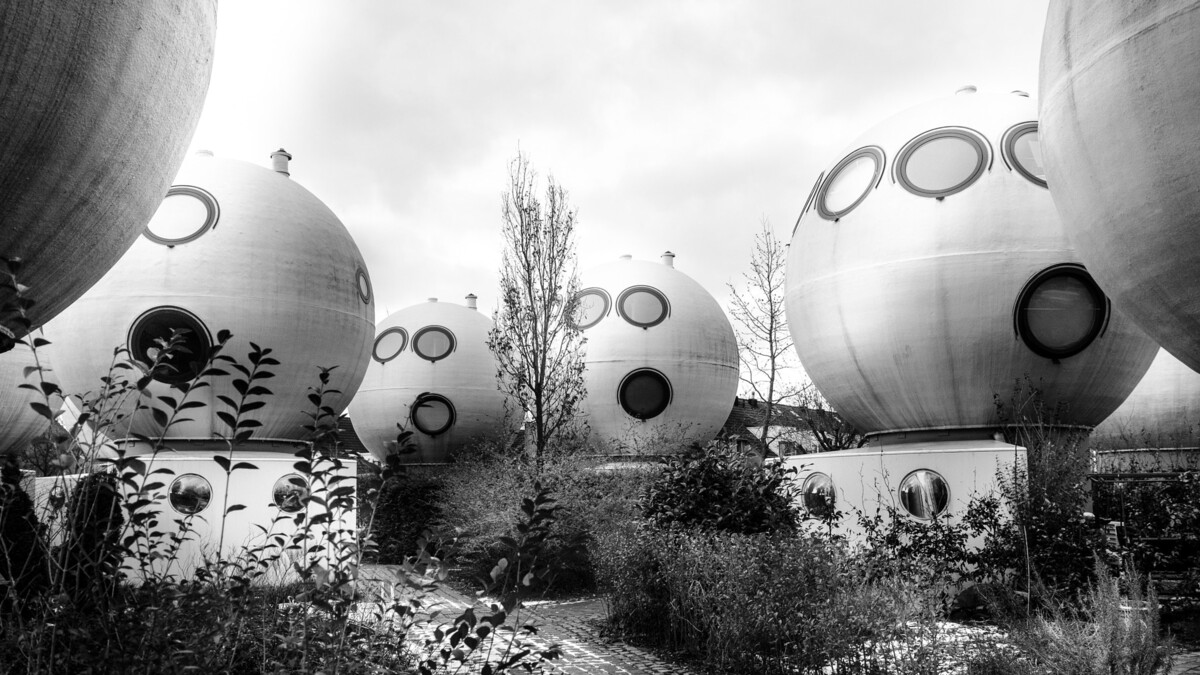
Kreijkamp's spherical design promised several advantages: a small footprint, efficient use of space, and potentially lower construction costs. The government, eager to explore innovative solutions, gave the green light to this experimental project.
The Vision Behind the Spheres
Kreijkamp believed that the sphere was the most efficient shape for a dwelling. It encloses the most volume with the least surface area, which could mean energy savings and material efficiency. He also envisioned a community of these spheres, each with a small garden, creating a unique neighborhood.
Design and Construction of the Bolwoningen
Each Bolwoningen is a concrete sphere with a diameter of about 5.5 meters, mounted on a cylindrical base. The sphere is divided into three levels: a lower level for storage and entrance, a middle level for the living area, and an upper level for sleeping. Circular windows provide light and views.
The construction was prefabricated, with the spheres cast in a factory and then transported to the site. This method allowed for rapid assembly and cost control, aligning with the government's goal of fast, affordable housing.
Key Features
- Spherical shape: maximizes volume while minimizing surface area, potentially reducing heat loss.
- Prefabricated concrete: allowed quick construction and lower costs.
- Three-level layout: efficient use of vertical space within a compact footprint.
- Circular windows: provide natural light and a distinctive aesthetic.
- Elevated on pedestals: protects against flooding and adds to the otherworldly look.
How Have the Bolwoningen Performed Over Time?
Despite their futuristic appeal, the Bolwoningen have faced practical challenges. The spherical shape makes furniture placement difficult, and the curved walls can feel disorienting. Maintenance has also been a concern, as the concrete spheres require regular upkeep to prevent leaks and deterioration.
Nevertheless, the homes have remained popular among residents who appreciate their uniqueness and the strong sense of community. Over the years, some have been renovated and updated, but the original design remains largely intact. The background to this story is set out in NASA Sent 3,301 Bees to Space in 1984: They Built 200 cm² of Honeycomb. A related thread runs through Trending: latest articles. Earlier coverage in Expandable Prefab Homes Now Sold on Amazon for Under $15K shows how the argument developed.
| Aspect | Details |
|---|---|
| Year built | 1984 |
| Location | 's-Hertogenbosch, Netherlands |
| Number of units | 50 |
| Architect | Dries Kreijkamp |
| Diameter | Approximately 5.5 meters |
| Material | Prefabricated concrete |
| Levels | Three |
What Do the Bolwoningen Mean for Architecture Today?
The Bolwoningen represent a bold experiment in social housing that challenged conventional thinking. While they did not become a widespread model, they continue to inspire architects to explore alternative forms and materials. In an era of housing crises and climate concerns, such experiments remind us that innovation often comes from stepping outside the norm. A closer look at the same subject appears in MacBook Pro M5 Pro 16-Inch Review: A New Era for Apple Laptops. Anyone following the wider picture can start with Viral AI Dog Video: Seven Stray Dogs That Never Existed. The same theme surfaces in UK Housing Crisis: How Fiscal Rules Block Affordable Homes, which takes a different angle.
Today, the Bolwoningen are a protected monument, recognized for their cultural and architectural significance. They attract tourists and architecture enthusiasts from around the world, proving that even failed experiments can leave a lasting legacy. Context on how this played out before sits in Andy Burnham's Housing Revolution: Bold Vision or Pipedream. A companion piece, Bolwoningen: The Netherlands' 1984 Spherical Homes That Still Puzzle, approaches the same subject from another angle.
FAQ
Are the Bolwoningen still inhabited?
Yes, all 50 spherical houses in 's-Hertogenbosch are still occupied. They remain a unique residential community and a popular spot for architecture tours.
Can you visit the Bolwoningen?
The neighborhood is open to the public, and visitors can walk or drive by to admire the exterior. However, the interiors are private homes, so access is not allowed unless arranged with residents.
Why were the Bolwoningen built?
They were built in response to the Dutch housing shortage in the 1980s. Architect Dries Kreijkamp proposed the spherical design as an efficient, cost-effective alternative to traditional housing.
What are the disadvantages of living in a Bolwoningen?
Residents often mention the challenge of furnishing curved spaces and the need for regular maintenance. However, many appreciate the unique design and strong community spirit.
Browse the Shop
 Acacia frida deluxe solid wood bed frame |
Bedroom bench |
Bed chest drawers |
Lingerie dresser |
Frame base |
Mirror with jewelry storage |
30 Bathroom Vanity |
Memory foam queen mattress |
Mattresses for back pain |
Nightstand set of 2 |
Grand Goldman Shop |
Civil Lawyer
Deutschland Trikot WM 2026







