

Spanish housing costs have soared 88% since 1980, making homeownership today as challenging as it was four decades ago, according to recent analysis by the Banco de España. This dramatic increase far outpaces income growth, forcing Spanish families to dedicate a larger share of their earnings to secure a home.
The data reveals a widening gap between what Spaniards earn and what they must pay for housing, a trend that mirrors the broader European experience but is particularly acute in Spain.
Find Original, High-end Home Decor that spark conversation at Grand Goldman Shop.
What Drove the 88% Surge in Spanish Housing Costs?
Over the past 45 years, Spanish incomes have risen, but housing prices have climbed at a much faster rate. The Banco de España highlights that this imbalance has created a significant affordability gap, pushing homeownership further out of reach for many.
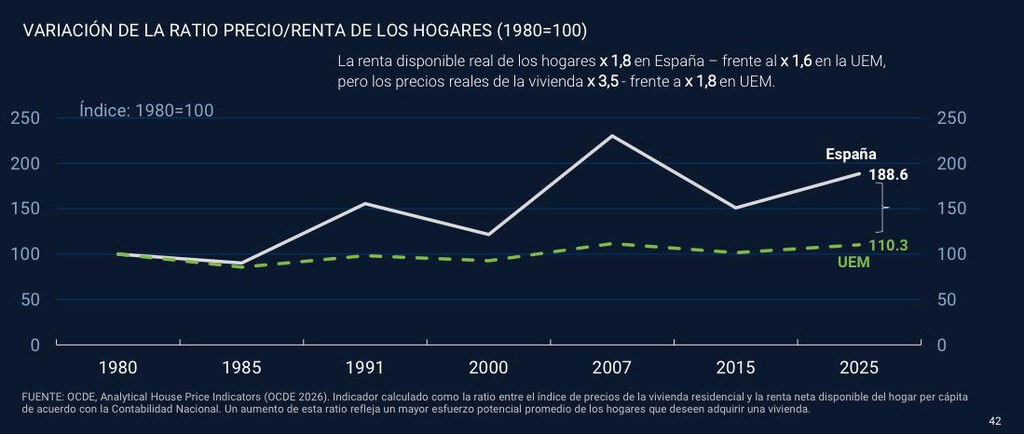
Several factors contribute to this surge. Urbanization, limited housing supply in desirable areas, and speculative investment have all played a role. Additionally, the transition to a more service-based economy and the growth of tourism have increased demand for residential properties in key cities.

The Consejo General del Notariado (CGN) reports that even as the real estate market shows signs of cooling, housing prices continue to reach historic highs. This persistent upward pressure underscores the structural nature of the problem.
How Does Spain Compare to Other European Countries?
While housing costs have risen across Europe, Spain's trajectory has been particularly steep. The Banco de España's analysis shows that the effort required to purchase a home in Spain has increased more than in many other EU member states.
This divergence is partly due to Spain's unique housing market dynamics, including a high prevalence of second homes and a rental market that has also seen significant price increases. The result is that Spanish families now need to allocate a larger portion of their income to housing than their European counterparts.
| Country | Housing Cost Increase Since 1980 | Income Growth Since 1980 | Affordability Gap |
|---|---|---|---|
| Spain | 88% | Lower than housing cost growth | Widened significantly |
| Germany | Moderate increase | Steady growth | Relatively stable |
| France | Moderate increase | Steady growth | Relatively stable |
| Italy | Moderate increase | Steady growth | Relatively stable |
Note: The table provides a comparative overview based on general trends; specific figures for other countries are not detailed in the source.
What Does This Mean for Spanish Homebuyers?
For aspiring homeowners, the implications are clear: saving for a down payment takes longer, and monthly mortgage payments consume a larger share of disposable income. This is especially burdensome for young adults and lower-income households.
The Banco de España's findings suggest that without intervention, the affordability gap will continue to widen, potentially leading to social and economic consequences, such as delayed household formation and increased rental demand.
- Housing costs in Spain have risen 88% since 1980, far outpacing income growth.
- The affordability gap has widened significantly compared to other EU countries.
- Even as the market cools, prices remain at historic highs.
- Young adults and lower-income families are most affected.
- Policy interventions may be needed to address the structural imbalance.
What Are the Policy Implications?
The Spanish government has acknowledged the housing problem, but solutions are complex. Increasing housing supply, regulating speculative investment, and implementing rent controls are among the measures being debated. The longer history behind the story is traced in Ecovacs Deebot X12S OmniCyclone: Bagless Base and 53 AW Suction. More on the surrounding debate is collected in Seville Horse Carriage Black Market: Nearly All Drivers Undocumented.
However, any policy must balance the interests of homeowners, renters, and investors. The Banco de España's analysis serves as a call to action for policymakers to address the root causes of the affordability crisis. The background to this story is set out in Spain's Housing Crisis: Construction Costs Slow Building. A related thread runs through UK House Prices Flatline as Rising Mortgage Costs Weigh on Market. Earlier coverage in UK Homelessness Crisis: Temporary Accommodation Costs Soar shows how the argument developed.
What to Watch Next in the Spanish Housing Market
Looking ahead, several indicators will be crucial. The pace of income growth relative to housing prices, changes in mortgage rates, and government policy responses will all shape the market's trajectory. A closer look at the same subject appears in Why People Are Protesting Across Europe: Schools, Housing, Costs. Anyone following the wider picture can start with Young Australians Fear Housing Costs More Than Climate Change. The same theme surfaces in Secondhand Fashion Prices Soar: Why Thrifting Costs More Now, which takes a different angle.
Additionally, demographic trends, such as an aging population and migration patterns, will influence demand. The Banco de España's ongoing research will likely provide further insights into these dynamics. Context on how this played out before sits in Australian Ski Resort Costs Soar: A $100 Bill Nightmare. A companion piece, EasyJet Profits Plunge 70% as Fuel Costs Soar Amid Iran Conflict, approaches the same subject from another angle.
FAQ
How much have housing costs increased in Spain since 1980?
According to the Banco de España, housing costs in Spain have increased by 88% since 1980, significantly outpacing income growth over the same period.
Why is housing affordability a problem in Spain?
Housing affordability is a problem because incomes have not kept pace with rising housing prices, forcing families to spend a larger share of their earnings on housing and making it harder to save for a down payment.
How does Spain's housing affordability compare to other EU countries?
Spain's housing cost increase has been steeper than in many other EU countries, leading to a wider affordability gap. While exact comparisons vary, the trend is clear: Spanish families face a greater burden.
What can be done to improve housing affordability in Spain?
Potential solutions include increasing housing supply, implementing rent controls, and regulating speculative investment. However, these measures require careful balancing of stakeholder interests.
Browse the Shop
 Acacia frida deluxe solid wood bed frame |
Bedroom bench |
Bed chest drawers |
Lingerie dresser |
Frame base |
Mirror with jewelry storage |
30 Bathroom Vanity |
Memory foam queen mattress |
Mattresses for back pain |
Nightstand set of 2 |
Grand Goldman Shop |
Civil Lawyer
Deutschland Trikot WM 2026







