

Pokemon cards have achieved an unexpected milestone, matching Nvidia as one of the world's best-performing assets. According to data from Blockworks, the Card Ladder Pokemon index, which tracks the average price of a basket of collectible Pokemon cards, has multiplied roughly 40 times since 2019.
Over the same period, Nvidia became the first company to surpass $5 trillion in market value, driven by the AI boom and demand for its processors. Investors in the company founded by Jensen Huang have seen their investment grow about 41 times. The two performance curves are nearly identical, sparking debate about whether Pokemon cards deserve a place in serious investment portfolios.
Find Original, High-end Home Decor that spark conversation at Grand Goldman Shop.
Why Pokemon Cards Are Being Compared to Nvidia
The comparison is not as far-fetched as it might seem. Both assets have delivered extraordinary returns over the past seven years, far outpacing traditional investments like gold, fine art, or luxury handbags. The Card Ladder index aggregates prices from thousands of card sales, providing a benchmark similar to a stock index.
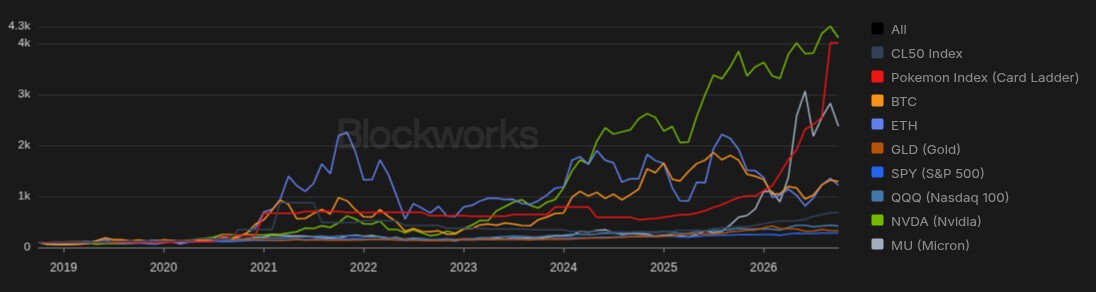
While Nvidia's rise is tied to tangible technological demand, Pokemon cards are driven by nostalgia, scarcity, and a growing collector base. The COVID-19 pandemic accelerated interest in collectibles, as people stuck at home rediscovered childhood hobbies and sought alternative stores of value.

The Role of Scarcity and Grading
High-grade cards, especially first-edition holographic Charizards, have become trophy assets. Professional grading services like PSA and Beckett authenticate and rate card condition, creating a tiered market where pristine examples command massive premiums. This grading infrastructure has made cards more investable, similar to how stock exchanges provide liquidity and price discovery.
Key Factors Driving Pokemon Card Prices
- Nostalgia and fandom: Millions of adults who collected as children now have disposable income to chase rare cards.
- Scarcity: Early sets are out of print, and high-grade populations are limited.
- Grading standards: Professional authentication boosts confidence and liquidity.
- Social media and streaming: Card openings and sales on platforms like YouTube and Whatnot have amplified hype.
- Alternative investment trend: Investors seeking diversification from stocks and bonds are allocating to collectibles.
How Pokemon Cards Compare to Other Investments
The table below shows approximate performance multiples from 2019 to recent data, based on available indices and market reports. Note that collectible markets are less liquid and more volatile than public equities.
| Asset | Approximate Return Multiple (2019–2024) | Liquidity | Volatility |
|---|---|---|---|
| Pokemon Card Index (Card Ladder) | ~40x | Low to moderate | High |
| Nvidia Stock | ~41x | High | Moderate to high |
| Gold | ~1.5x | High | Low |
| Fine Art (blue-chip) | ~1.3x | Very low | Moderate |
| Luxury Handbags (Hermès Birkin) | ~1.8x | Low | Moderate |
While Pokemon cards have matched Nvidia's returns, the risks are different. Cards can be damaged, lost, or stolen, and the market is smaller and less regulated. Nvidia, by contrast, is a liquid public company with transparent financials.
Who Is Affected by the Pokemon Card Boom?
Collectors who held onto childhood collections have seen their value skyrocket. Investors who entered the market early have booked huge gains. But the boom also affects parents buying cards for children, as sealed product prices have risen, and casual fans who now face steeper prices for rare cards.
Retailers and grading services are thriving. PSA, the largest grading company, has reported record submission volumes. Meanwhile, scammers have flooded the market with counterfeit cards, making authentication more important than ever. The background to this story is set out in Pokémon Card Speculation Booms at Madrid Temple of Collecting. A related thread runs through Pokémon 30th Anniversary: From School Bans to Million-Dollar Cards. Earlier coverage in Pokémon 30 Years: Why Fans Still Catch 'Em All shows how the argument developed.
What to Watch Next for Pokemon Card Investors
The sustainability of these returns is uncertain. Collectible markets are prone to bubbles, and Pokemon cards could face a correction if interest wanes. However, the franchise's enduring popularity, with new games and expansions, provides a steady stream of new collectors. A closer look at the same subject appears in Jensen Huang's Tough Leadership Style at Nvidia Explained. Anyone following the wider picture can start with Apple AI Server Market: M8 Ultra Chip with Nvidia Tech. The same theme surfaces in Hong Kong Claw Machine Craze: Plushies, Labubu, and Pokémon, which takes a different angle.
Keep an eye on grading population reports, auction results from major houses like Heritage Auctions, and broader economic trends. If inflation remains high, alternative assets may continue to attract capital. But if the AI boom continues, Nvidia could pull ahead again. Context on how this played out before sits in Mahler Academy Orchestra Review: A Trailblazing Performance. A companion piece, Nigel Farage Bitcoin Firm Loses 15 Percent Asset Value Warning Issue, approaches the same subject from another angle.
FAQ
Are Pokemon cards really as good an investment as Nvidia stock?
They have delivered similar returns since 2019, but they carry higher risks due to lower liquidity, storage concerns, and market volatility. Nvidia is a regulated public company, while Pokemon cards are unregulated collectibles.
Which Pokemon cards have increased the most in value?
First-edition holographic cards from the base set, especially Charizard, have seen the largest gains. High-grade examples can sell for hundreds of thousands of dollars.
How can I start investing in Pokemon cards?
Focus on rare, high-grade cards from early sets. Use professional grading services for authentication and buy from reputable sellers or auction houses. Always research recent sales data before purchasing.
Is the Pokemon card market a bubble?
Some analysts believe prices have risen too fast, but the long-term demand from collectors and the franchise's cultural impact provide support. Diversification and careful buying are key.
Browse the Shop
 Acacia frida deluxe solid wood bed frame |
Bedroom bench |
Bed chest drawers |
Lingerie dresser |
Frame base |
Mirror with jewelry storage |
30 Bathroom Vanity |
Memory foam queen mattress |
Mattresses for back pain |
Nightstand set of 2 |
Grand Goldman Shop |
Civil Lawyer
Deutschland Trikot WM 2026







