

The cybersecurity job market in the United States has experienced a significant contraction, with a 26% decline in job postings. However, one specialty—AI security engineering—has defied the trend, growing by 268%. This divergence highlights a critical shift in what employers are prioritizing as they integrate artificial intelligence into their operations.
According to a report by CyberSN, between January and September 2026, there were 235,786 cybersecurity job postings in the US, down 26.4% from 320,210 in the same period of 2025. In stark contrast, advertisements for AI security engineers increased by 268.3%. The data underscores how technological needs and hiring decisions don't always align, and how specific skills can buck broader market trends.
Find Original, High-end Home Decor that spark conversation at Grand Goldman Shop.
Why the Overall Cybersecurity Job Market Is Shrinking
The decline in cybersecurity job postings is not just a year-over-year anomaly; it reflects a broader cooling after 2025, which saw the highest number of postings in the four years analyzed. Several factors contribute to this contraction.
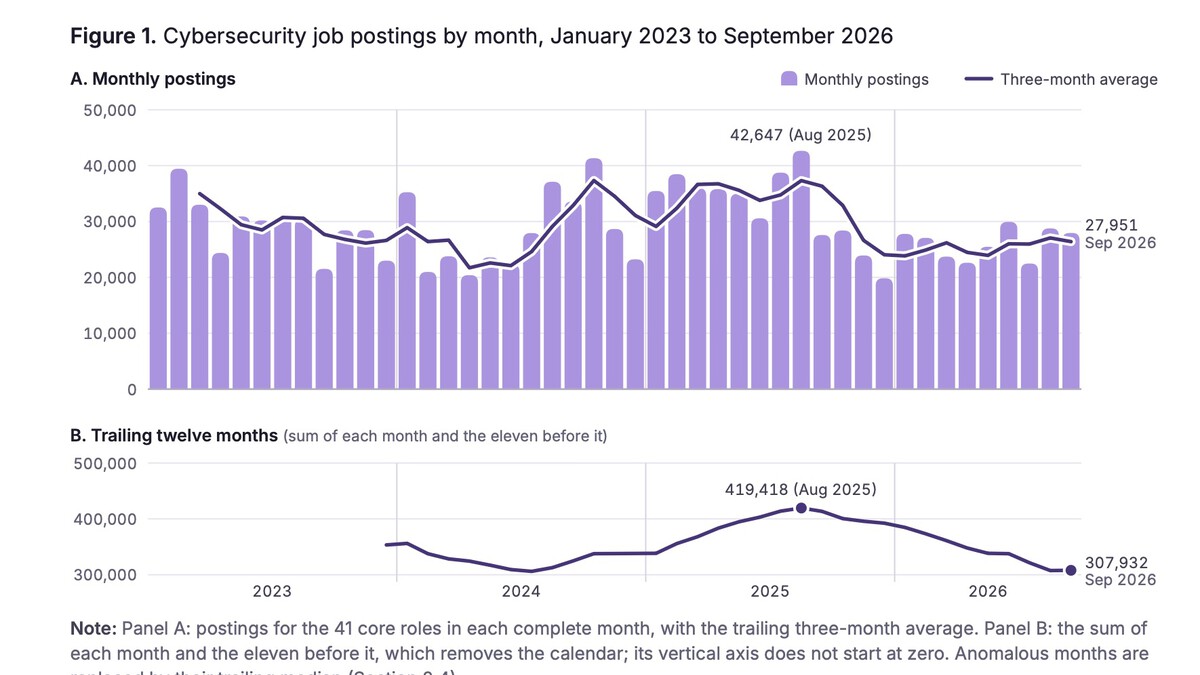
First, many organizations are consolidating their security operations and leveraging automation to handle routine tasks. This reduces the need for entry-level and generalist roles. Second, economic uncertainty has led to tighter budgets, causing companies to prioritize spending on tools and platforms over headcount. Finally, the market may be correcting after a period of over-hiring during the pandemic-driven digital transformation rush.
Despite the overall decline, cybersecurity remains a critical function. The drop in postings doesn't necessarily mean fewer jobs overall, but rather a shift in the types of roles being advertised. Employers are becoming more selective, seeking specialized skills that directly address emerging threats.
The Rise of AI Security Engineers
As companies incorporate artificial intelligence into their services, they face new security challenges. They must protect not only traditional systems but also the data used by AI models, the individuals who can access that data, and the potential vulnerabilities of these new tools. This creates a demand for professionals who understand both AI and security.
AI security engineers are tasked with safeguarding machine learning models, ensuring data privacy, and mitigating risks such as adversarial attacks and model inversion. Their expertise is crucial as AI becomes more pervasive in everything from customer service chatbots to autonomous vehicles.
The 268% increase in job postings for this specialty indicates that companies are willing to invest in specialized talent to secure their AI initiatives. This trend is likely to continue as AI adoption accelerates across industries.
Key Takeaways for Job Seekers and Employers
- Specialization pays: While general cybersecurity roles are declining, niche skills like AI security are in high demand.
- AI integration drives new security needs: As companies adopt AI, they must address unique vulnerabilities, creating opportunities for experts.
- Market correction: The overall drop may reflect a post-pandemic normalization rather than a long-term decline.
- Employers are selective: Companies are focusing on roles that directly mitigate emerging risks.
- Continuous learning is essential: Professionals should upskill in AI and machine learning to stay relevant.
Comparing Cybersecurity Job Trends: 2025 vs. 2026
The following table summarizes the change in job postings for cybersecurity overall and AI security engineering specifically.
| Category | Jan-Sep 2025 | Jan-Sep 2026 | Change |
|---|---|---|---|
| Total Cybersecurity Postings | 320,210 | 235,786 | -26.4% |
| AI Security Engineer Postings | Not specified | Not specified | +268.3% |
Note: The CyberSN report does not provide absolute numbers for AI security engineer postings, only the percentage change.
What This Means for the Future of Cybersecurity Careers
The divergence in job trends signals a transformation in the cybersecurity workforce. Professionals with traditional security skills may need to adapt by gaining AI expertise. Meanwhile, employers must compete for a limited pool of AI security talent, potentially driving up salaries and benefits for these roles. The background to this story is set out in AI Reshapes Software Engineering: How Engineers Adapt. A related thread runs through Business: latest articles. Earlier coverage in Anthropic to Donate 5% of Shares to AI Job Impact Fund shows how the argument developed.
Universities and training programs are responding by offering specialized courses in AI security. However, the pace of change is rapid, and many professionals are turning to online certifications and hands-on projects to bridge the gap. A closer look at the same subject appears in White Powder Envelopes Target Over 36 Congress Offices Before Midterms. Anyone following the wider picture can start with New Private Parking Code Outlaws Rip-Off Fines for Drivers. The same theme surfaces in Amazon Pushes Back as Data Center Opposition Grows, which takes a different angle.
For those already in the field, the message is clear: staying current with emerging technologies is no longer optional. The ability to secure AI systems will become as fundamental as securing networks and endpoints. Context on how this played out before sits in Australia Housing Market: High-End Property Falls, Affordable. A companion piece, Cybersecurity Job Market Falls 26% in US, But AI Security Engineer Roles Grow, approaches the same subject from another angle.
FAQ
What caused the 26% drop in cybersecurity job postings?
The decline is attributed to a combination of factors, including market correction after high demand in 2025, increased automation of routine security tasks, and budget constraints leading companies to prioritize tools over headcount. It also reflects a shift toward more specialized roles rather than a reduction in overall security needs.
Why are AI security engineer roles growing so fast?
As companies integrate AI into their products and services, they face new security challenges such as protecting model data, preventing adversarial attacks, and ensuring privacy. This creates a high demand for professionals who can address these unique vulnerabilities, leading to a surge in job postings for AI security engineers.
What skills are needed to become an AI security engineer?
AI security engineers need a strong foundation in cybersecurity principles, plus expertise in machine learning, data privacy, and model security. Familiarity with adversarial machine learning and regulatory frameworks is also beneficial. Continuous learning is essential as the field evolves rapidly.
Is the cybersecurity job market expected to recover?
While overall postings may remain below peak levels, the market is likely to stabilize as companies adjust to new realities. Demand for specialized roles, especially in AI security, will continue to grow, offsetting some of the decline in generalist positions.
Browse the Shop
 Acacia frida deluxe solid wood bed frame |
Bedroom bench |
Bed chest drawers |
Lingerie dresser |
Frame base |
Mirror with jewelry storage |
30 Bathroom Vanity |
Memory foam queen mattress |
Mattresses for back pain |
Nightstand set of 2 |
Grand Goldman Shop |
Civil Lawyer
Deutschland Trikot WM 2026










