

China's CAS Space has opened a rocket superfactory in Shaoxing, Zhejiang province, designed to produce up to 12 Kinetica-2 liquid-propellant rockets annually. This marks a significant shift in China's space ambitions, moving from one-off milestones to industrial-scale manufacturing.
The facility integrates final assembly and testing with the production of key components such as propellant tanks, piping and valves, interstage sections, and more. This vertical integration aims to streamline production and increase launch cadence.
Find Original Home Decor sparking conversation at Grand Goldman Shop.

China's Space Program: From Milestones to Manufacturing
Over the past two decades, China has achieved a series of space milestones: Yang Liwei's historic flight aboard Shenzhou-5 in 2003, which made China the third country to independently send humans into space; the landing on the far side of the Moon; the return of samples by Chang'e 6; and the completion of its space station in about 20 months.
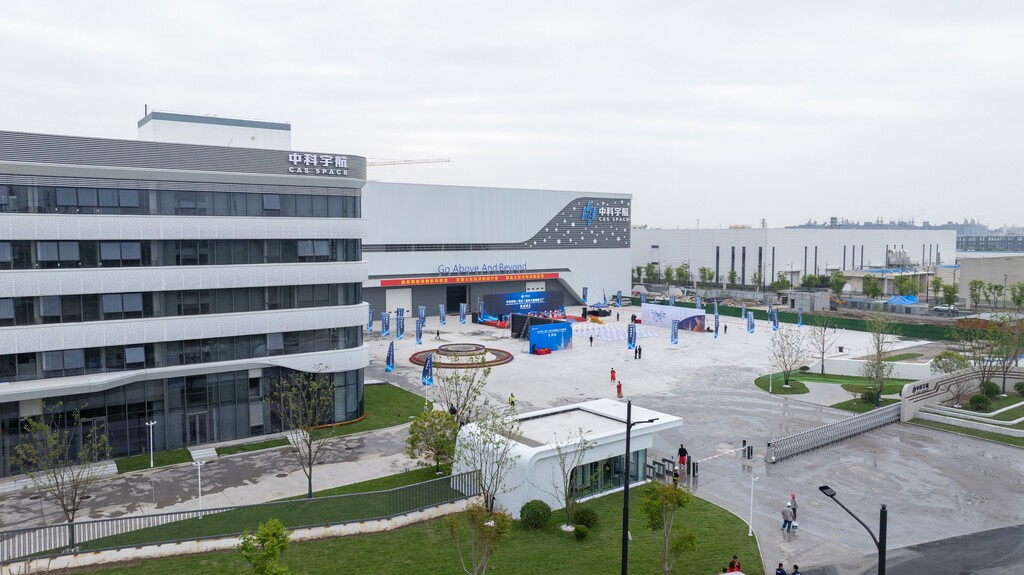
Now, the focus is shifting to industrial capacity. The new CAS Space superfactory represents a move toward producing rockets at a faster rate, similar to an assembly line, to support more frequent launches.
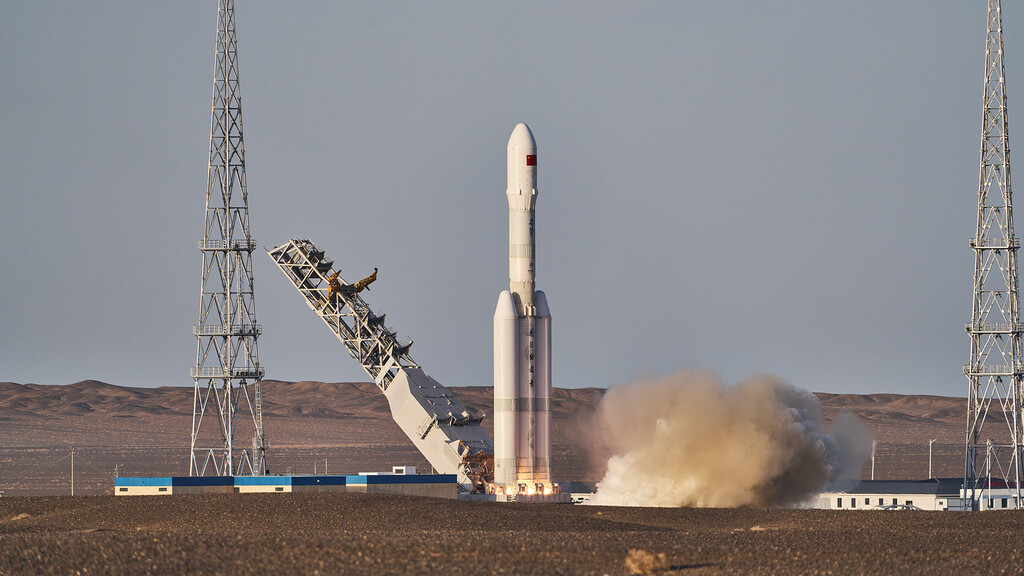
Inside the CAS Space Superfactory
Located in Shaoxing, the superfactory is not just an assembly plant. It integrates the entire production process, from manufacturing essential rocket components to final assembly and testing.
This approach reduces reliance on external suppliers and aims to shorten production timelines. The Kinetica-2 rocket, which had its first flight on March 30, is a liquid-propellant vehicle designed for commercial launches.
- Annual capacity: 12 Kinetica-2 rockets at full production.
- Location: Shaoxing, Zhejiang province, China.
- Key components produced: Propellant tanks, piping and valves, interstage sections, and more.
- First flight: March 30 (year not specified in source).
- Operator: CAS Space, a private Chinese aerospace company.
Why This Matters for the Space Industry
The ability to manufacture rockets at a high rate is crucial for meeting the growing demand for satellite launches and space exploration. China's move toward industrial-scale production could position it as a major player in the commercial launch market.
This shift also reflects a broader trend in the space industry, where private companies are increasingly taking the lead in innovation and production. CAS Space's superfactory is a clear signal that China intends to compete in this arena.
Kinetica-2: A Commercial Rocket
The Kinetica-2 is a liquid-propellant rocket, which typically offers better performance and control compared to solid-propellant rockets. Its first flight on March 30 was a significant step for CAS Space. Context on how this played out before sits in China's CAS Space Opens Rocket Superfactory for Kinetica-2.
With the new superfactory, CAS Space aims to ramp up production to support more frequent launches, potentially serving both domestic and international customers. The background to this story is set out in Science: latest articles. A related thread runs through China's Long March 12B Rocket: Secret Launch for Satellite Supremacy.
What to Watch Next
As CAS Space ramps up production, we can expect to see more frequent Kinetica-2 launches. The success of this superfactory could also spur further investment in China's commercial space sector. Earlier coverage in Isar Aerospace: The European Rocket Firm That Has Everything But Liftoff shows how the argument developed. A closer look at the same subject appears in China's Advanced Hyperspectral Satellite Xiguang-1 06 Explained.
Additionally, watch for how this industrial approach influences global launch prices and competition. China's ability to produce rockets at scale could disrupt the market. Anyone following the wider picture can start with China's Missile Boom: Civil-Military Fusion and the Real Target 3,000 km Away. The same theme surfaces in Ukraine's Drone Industry Turns to Taiwan to Cut China Reliance, which takes a different angle.
FAQ
What is the CAS Space superfactory?
The CAS Space superfactory is a manufacturing facility in Shaoxing, China, designed to produce up to 12 Kinetica-2 rockets per year. It integrates component manufacturing with final assembly and testing.
When did the Kinetica-2 rocket first fly?
The Kinetica-2 rocket had its first flight on March 30. The year was not specified in the source article.
Why is this superfactory important for China's space program?
It represents a shift from achieving individual milestones to building industrial-scale production capacity, which is essential for increasing launch cadence and competing in the commercial space market.
What components are made at the superfactory?
The facility produces propellant tanks, piping and valves, interstage sections, and other essential rocket components, in addition to final assembly and testing.
Browse the Shop
 Acacia frida deluxe solid wood bed frame |
Bedroom bench |
Bed chest drawers |
Lingerie dresser |
Frame base |
Mirror with jewelry storage |
30 Bathroom Vanity |
Memory foam queen mattress |
Mattresses for back pain |
Nightstand set of 2 |
Grand Goldman Shop |
Civil Lawyer
Deutschland Trikot WM 2026







