

The iPhone Duo is Apple's first foldable, and after spending time with it at Apple Park, I can tell you the primary keyword here isn't the crease—it's posture. In the demo area, everyone was doing the same thing: opening and closing the device, tilting it to catch the light, and hunting for the fold. I did it too, of course. The crease is palpable under your finger and barely visible to the eye (at least on a brand-new unit; we'll see how it ages), but that's a topic for another article.
Within minutes, I stopped staring at the center line and started doing something else: placing the Duo in every position I could think of. Half-open on the table. Standing like a little book. Closed in one hand while taking notes with the other. Lying horizontally like a mini TV. That's where I best understood the product—especially when I opened the Netflix app.
Find Original, High-end Home Decor that spark conversation at Grand Goldman Shop.
The crease is the question you ask yourself on day one with the Duo. Posture is the question you'll ask yourself every day you use it.
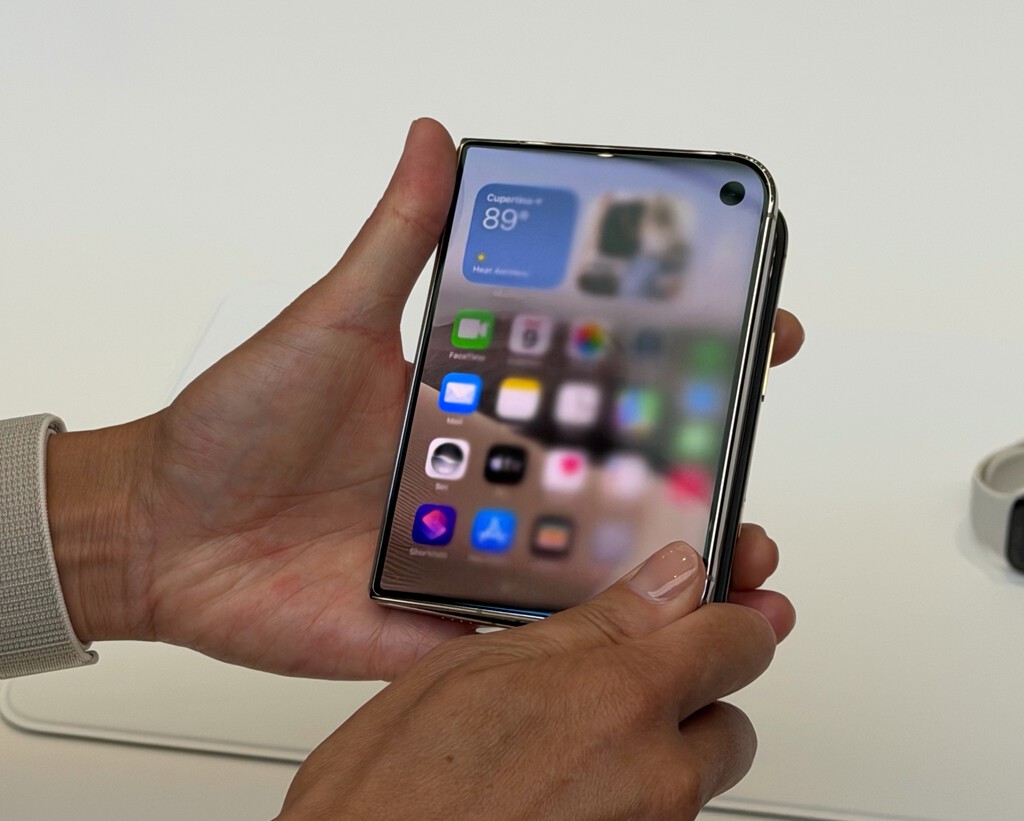
iPhone Duo: A New Take on an Old Habit
Since 2007, the iPhone has had a single way of being used: vertically, in your hand, about a foot from your face. Everything else has changed. The screen grew, the bezels disappeared, the notch came and went, replaced by the Dynamic Island. The connector changed, the home button was removed. The operating system was redesigned three times.

Posture, meanwhile, has remained exactly the same. That's an anomaly. Any other computer that...
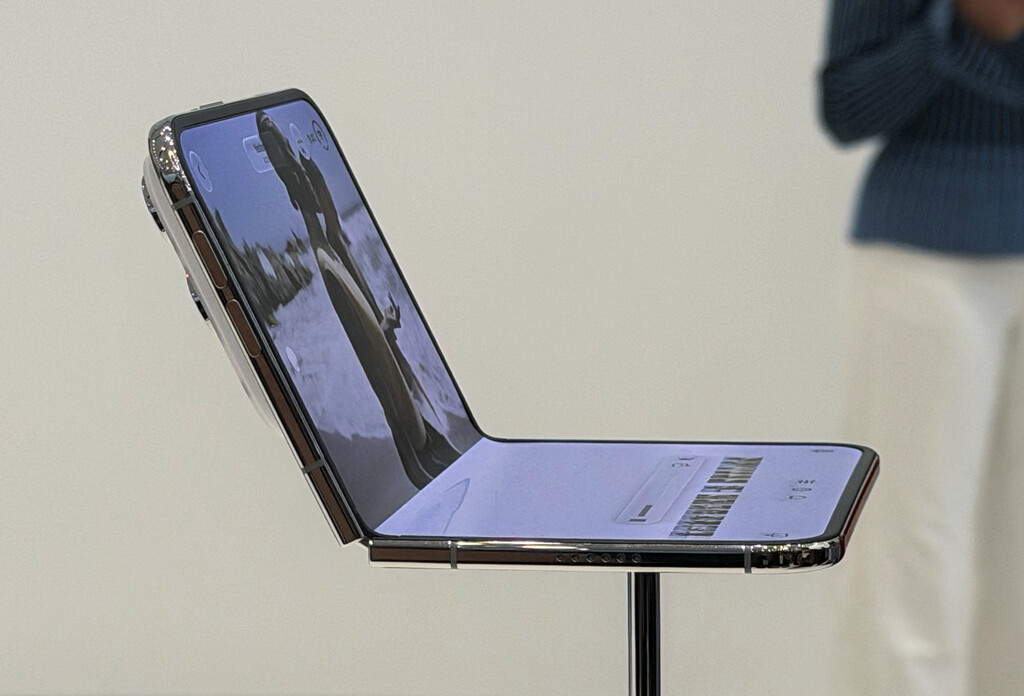
That's where the iPhone Duo breaks the mold. By allowing the device to stand, tilt, or fold, Apple is introducing a new physical vocabulary for the iPhone. It's not just about the screen size—it's about how you interact with the screen.
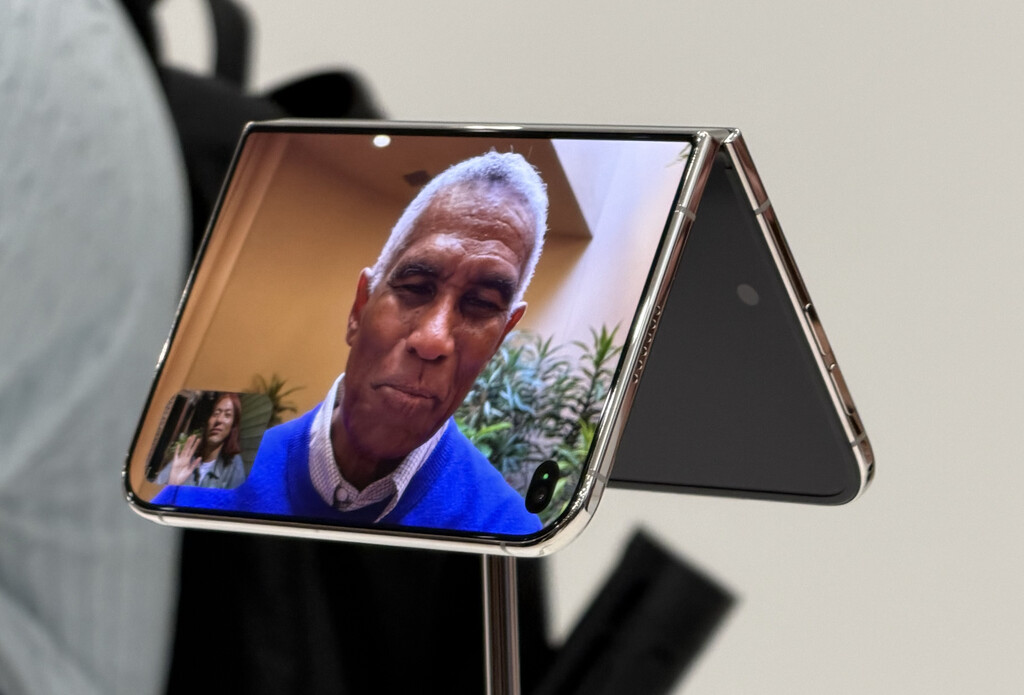
Why Posture Matters More Than the Crease
The crease is a hardware detail. It's the first thing people check, but it's not what you'll live with daily. Posture, on the other hand, is the set of physical configurations that change how you use the device. And that's where the Duo shines.
In my time with it, I found myself naturally propping it up to watch video, folding it to take notes, and using it closed for quick tasks. The iPhone Duo adapts to you, not the other way around.
Key Takeaways from the Hands-On
- The crease is minimal but noticeable; long-term durability remains to be seen.
- Posture is the killer feature: the Duo can stand, tilt, and fold, enabling new use cases.
- Media consumption is transformed—Netflix and other apps feel different when the device is half-open.
- Multitasking becomes more natural with the device partially folded.
- Ergonomics improve for tasks like note-taking when using one hand for input and the other for support.
How the iPhone Duo Compares to Other Foldables
The iPhone Duo isn't the first foldable, but it's Apple's first. Here's how it stacks up against the competition in terms of posture and usability.
| Device | Posture Options | Crease Visibility | App Optimization |
|---|---|---|---|
| iPhone Duo | Half-open, standing, closed, horizontal | Low (new unit) | High (iOS integration) |
| Samsung Galaxy Z Fold | Half-open, standing, closed | Moderate | Good (Android apps) |
| Google Pixel Fold | Half-open, closed | Moderate | Good (Android apps) |
As you can see, the iPhone Duo offers a similar range of postures, but Apple's tight control over hardware and software could lead to better optimization.
The Software Side of Posture
Apple has a history of introducing hardware features that are tightly integrated with software. The iPhone Duo is no exception. From what I saw, iOS adapts to the device's posture—apps like Netflix and Notes rearrange their interfaces based on how the device is folded.
This is crucial. Without software support, a foldable is just a gimmick. But if developers embrace the possibilities, the Duo could redefine how we interact with our phones. The background to this story is set out in iPhone Duo Review: The Biggest iPhone Change Isn't the Best iPhone. A related thread runs through iPhone Duo Preorder: Apple's First Foldable Now Available. Earlier coverage in 2026: Best Android Foldable Phones Yet, But What Comes After iPhone Duo shows how the argument developed.
Who Is the iPhone Duo For?
After spending time with it, I can say the iPhone Duo is for people who want more from their phone than a slab. It's for those who watch a lot of video, take notes on the go, or simply want a device that adapts to different situations. A closer look at the same subject appears in iPhone Duo Continuity: The Real Feature Android Should Copy. Anyone following the wider picture can start with iPhone Duo Preorders Sell Out Fast: Delivery Dates Slip to 2027. The same theme surfaces in Honor Magic V6 Review: Sleek Foldable Phone with Premium Features, which takes a different angle.
It's not for everyone—the price will likely be high, and the crease may bother some. But for those who value flexibility, the Duo offers something genuinely new. Context on how this played out before sits in Honor Magic V6 Review: Sleek Foldable Phone with Stunning Display. A companion piece, iPhone Duo 2TB at €76.50/Month: Movistar's Convenient Payment Plan, approaches the same subject from another angle.
FAQ
What is the iPhone Duo?
The iPhone Duo is Apple's first foldable iPhone, featuring a flexible display that allows it to be used in multiple postures, such as half-open, standing, or closed.
Is the crease visible on the iPhone Duo?
In our hands-on, the crease was barely visible but palpable to the touch. Long-term durability and crease development are still unknown.
How does the iPhone Duo improve media consumption?
By allowing the device to stand or be half-open, the iPhone Duo enables hands-free viewing and a more immersive experience for apps like Netflix.
When will the iPhone Duo be available?
Apple has not announced a release date or pricing for the iPhone Duo. We'll update as more information becomes available.
Browse the Shop
 Acacia frida deluxe solid wood bed frame |
Bedroom bench |
Bed chest drawers |
Lingerie dresser |
Frame base |
Mirror with jewelry storage |
30 Bathroom Vanity |
Memory foam queen mattress |
Mattresses for back pain |
Nightstand set of 2 |
Grand Goldman Shop |
Civil Lawyer
Deutschland Trikot WM 2026










