

Sierra, once ranked as the second most powerful supercomputer in the world, has been officially retired after seven years of service at the Lawrence Livermore National Laboratory. The machine, which cost hundreds of millions of dollars and was once a crown jewel of U.S. computing, has now been dismantled and recycled—literally fed into shredders to recover valuable components.
Its fate underscores a little-known reality of high-performance computing: even the most advanced machines have shockingly short lifespans. In the relentless race for faster calculations, yesterday's champion quickly becomes today's obsolete hardware.
Find Original Home Decor sparking conversation at Grand Goldman Shop.

The Role of Sierra in National Security
Sierra was never a general-purpose computer. From its debut in 2018, it was dedicated to a single, critical mission: ensuring the safety and reliability of the U.S. nuclear arsenal without conducting live tests.
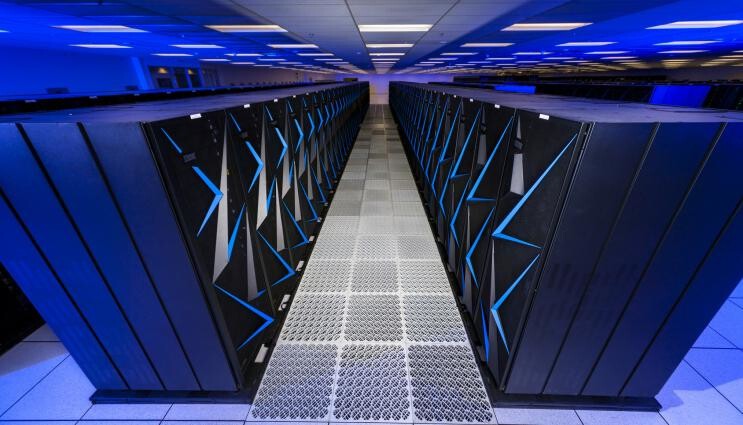
At the Lawrence Livermore National Laboratory, scientists used Sierra to run extraordinarily detailed simulations of nuclear weapons behavior. These virtual experiments reproduced the physics of detonations and material aging, providing insights that would otherwise require underground testing—banned since the 1990s.
The work supported the National Nuclear Security Administration's Stockpile Stewardship Program, which maintains the readiness of the nation's nuclear deterrent. Sierra's calculations also had implications for nonproliferation efforts and counterterrorism analysis, making it a strategic asset far beyond pure research.
Why Sierra Was Retired After Just Seven Years
Seven years might sound like a short tenure for a machine of Sierra's caliber, but in the supercomputing world it's practically a full career. The reasons are both technical and economic.
First, performance advances in the industry are brutal. When Sierra launched, it delivered about 125 petaflops of peak performance. Today, the fastest machines exceed 1,000 petaflops, and newer architectures offer dramatically better energy efficiency. Keeping Sierra running meant spending millions on power and maintenance for a fraction of the computational throughput of a modern system.
Second, reliability becomes a growing concern. As components age, failure rates climb, and spare parts become scarce. For a machine that must run months-long simulations without interruption, even minor hardware hiccups can jeopardize critical projects.
Finally, the lab needed space and resources for its next-generation system, El Capitan, which is expected to exceed 2 exaflops—more than 16 times Sierra's speed. Retiring Sierra freed up infrastructure and personnel to focus on the future.
What Happens to a Retired Supercomputer?
Unlike a desktop PC that might be sold or donated, a supercomputer like Sierra is typically dismantled and recycled. The process is handled by specialized contractors who recover precious metals, rare earth elements, and other valuable materials from the thousands of nodes and miles of cabling.
Some components may be reused in other systems or kept for archival purposes, but the majority is shredded and separated into recyclable streams. It's a pragmatic end for a machine that once represented the pinnacle of human computation.
The retirement of Sierra also raises questions about data security. All storage devices must be thoroughly wiped or destroyed to prevent any classified information from leaking. The lab follows strict protocols to ensure that no sensitive data survives the decommissioning process.
The Legacy of Sierra and the Future of Supercomputing
Sierra's contributions extend beyond its seven years of operation. The software tools and simulation codes developed for it will continue to run on successor machines, and the expertise gained by researchers will inform future projects. The longer history behind the story is traced in Sierra Supercomputer Retired: Why the World's Second Fastest Was Scrapped.
Moreover, Sierra helped train a generation of scientists in the art of extreme-scale computing. Many of the techniques pioneered on Sierra—such as advanced parallel processing and data management—are now standard in the field. The background to this story is set out in China's LineShine Supercomputer Tops TOP500 Without GPUs. A related thread runs through Daniel Andrews Sculpture Plans Officially Scrapped by Victorian. Earlier coverage in Pensioners Poorer After Triple Lock Scrapped: What It Means shows how the argument developed.
As for the hardware itself, its fate is a reminder that in technology, even the mightiest eventually fall. The race for exascale computing is already underway, with El Capitan and other systems poised to take the lead. Sierra's story is not one of failure, but of a job well done and a graceful exit. A closer look at the same subject appears in Disabled Bus Pass Restrictions Scrapped Nationwide. Anyone following the wider picture can start with Technology: latest articles. The same theme surfaces in NASA's 100x More Powerful Space Chips: Semiconductors in Space, which takes a different angle.
Key Takeaways
- Sierra was the world's second-fastest supercomputer when it launched in 2018, used for nuclear weapons simulations.
- It was retired after seven years due to advances in technology, rising maintenance costs, and the arrival of faster machines.
- Retired supercomputers are typically dismantled and recycled, with strict data security protocols.
- Sierra's legacy lives on in software and expertise that will benefit future systems like El Capitan.
Comparing Sierra to Its Successor
| Specification | Sierra | El Capitan (expected) |
|---|---|---|
| Peak performance | ~125 petaflops | ~2 exaflops (2,000 petaflops) |
| Launch year | 2018 | 2024 (anticipated) |
| Primary use | Nuclear stockpile stewardship | Nuclear security, AI, climate research |
| Architecture | IBM Power9 + NVIDIA Volta | AMD MI300A APUs |
| Status | Retired and recycled | Operational |
The table illustrates the rapid pace of supercomputing progress. In just a few years, performance has increased by an order of magnitude, making older systems like Sierra seem quaint by comparison. Context on how this played out before sits in Google Sets Q-Day Deadline: Quantum Computing Threat to Encryption. A companion piece, Google Quantum AI Warns Bitcoin Cryptography Is at Risk, approaches the same subject from another angle.
FAQ
What was Sierra used for?
Sierra was used for simulating nuclear weapons to ensure their safety and reliability without live testing. It also supported nonproliferation and counterterrorism efforts.
Why was Sierra retired?
Sierra was retired after seven years because newer supercomputers offered far greater performance and energy efficiency. Maintaining an aging system became too costly and impractical.
What happened to Sierra's hardware?
The hardware was dismantled and recycled. Components were shredded to recover valuable materials, and all data was securely destroyed.
How does Sierra compare to today's fastest supercomputers?
Sierra's peak performance of about 125 petaflops is dwarfed by today's exascale machines, which exceed 1,000 petaflops. Its successor, El Capitan, aims for 2 exaflops.
Browse the Shop
 Acacia frida deluxe solid wood bed frame |
Bedroom bench |
Bed chest drawers |
Lingerie dresser |
Frame base |
Mirror with jewelry storage |
30 Bathroom Vanity |
Memory foam queen mattress |
Mattresses for back pain |
Nightstand set of 2 |
Grand Goldman Shop |
Civil Lawyer
Deutschland Trikot WM 2026







