

Spain's housing crisis has sparked a fierce debate over solutions, and one unlikely example stands out: Benidorm. This former fishing village on the Alicante coast transformed itself into a high-rise haven, offering a potential model for addressing housing shortages through vertical construction.
The Origins of Benidorm's High-Rise Experiment
In the mid-20th century, skyscrapers were still rare outside cities like New York or Chicago. Europe remained dominated by horizontal cities with low-rise buildings and compact historic centers. But in the 1950s, a futuristic urban idea began to take shape: concentrate thousands of homes and hotels in tall towers to free up land, bring people closer to the sea, and create cities that could accommodate crowds without sprawling uncontrollably.
Find Original Home Decor sparking conversation at Grand Goldman Shop.

Benidorm, then a small fishing village, was the perfect candidate for this experiment. Its economy revolved around the sea, particularly tuna fishing, and many families survived by combining fishing, farming, and merchant marine work. The town had the typical Mediterranean look: low houses, narrow streets, and a life dictated by the tides.
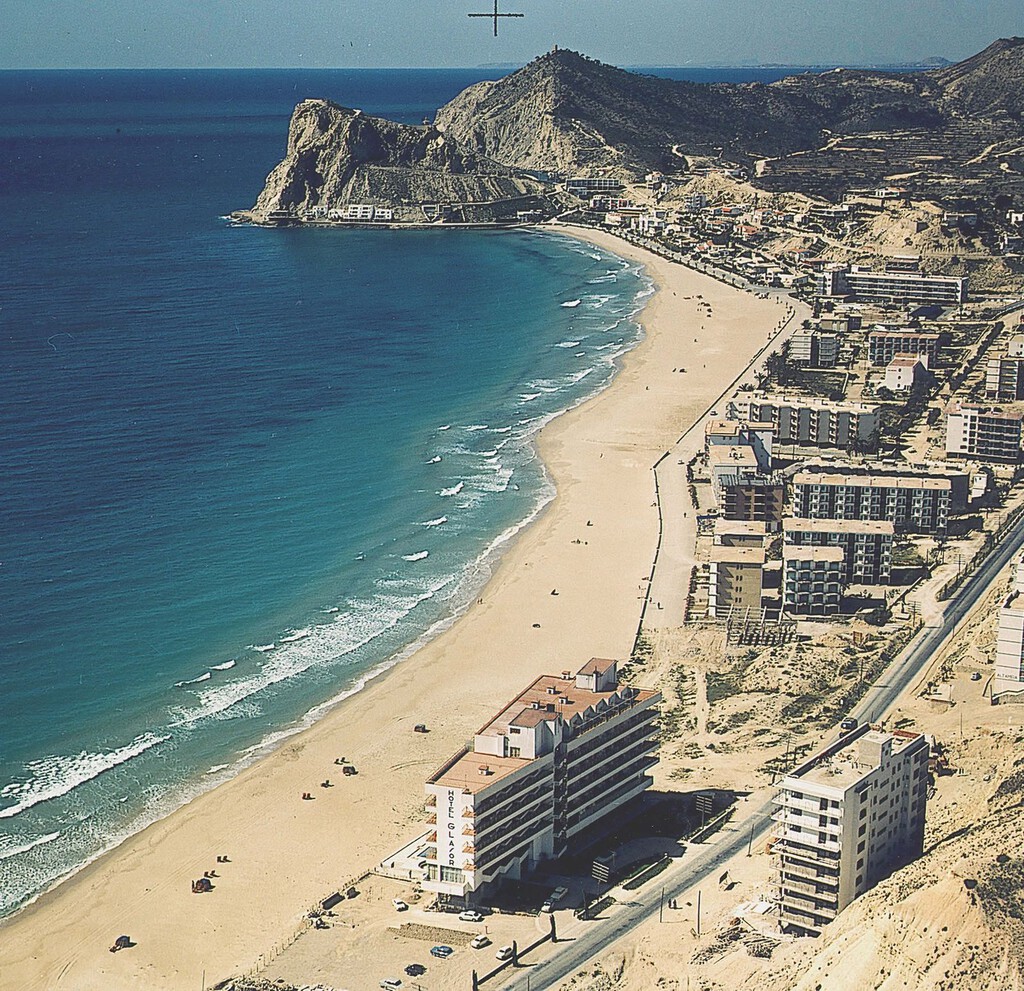
However, the decline of fishing, the economic isolation of post-war Spain, and the need for new income sources pushed the town to seek a different future. Thus began an almost unthinkable transformation: a humble enclave destined to become one of the most radical urban and tourism experiments in Europe.

Why Benidorm Embraced Vertical Growth
The decision to build upward was not arbitrary. Local leaders, led by mayor Pedro Zaragoza, recognized that Benidorm's limited land and prime coastal location required a different approach. By allowing high-rise buildings, they could preserve open spaces, reduce urban sprawl, and accommodate a growing number of tourists and residents.
The 1956 General Plan was a turning point. It zoned the town for high-density development, setting the stage for a forest of skyscrapers that would eventually make Benidorm the city with the most high-rises per capita in the world. This plan prioritized vertical construction over horizontal expansion, a revolutionary concept at the time.
The results were striking. Benidorm became a model of sustainable tourism development, with wide beaches, green areas, and a skyline that attracts millions of visitors each year. But could this model be replicated to solve Spain's housing crisis?
Lessons from Benidorm for Spain's Housing Crisis
Spain faces a severe housing shortage, with prices soaring in major cities and young people struggling to afford homes. Benidorm's high-rise model offers several potential lessons:
- Efficient land use: Vertical construction maximizes limited space, preserving natural areas and reducing urban sprawl.
- Density without congestion: Well-planned high-rises can accommodate large populations while maintaining open spaces and amenities.
- Tourism and housing balance: Benidorm's model integrates residential and tourist accommodations, though it also highlights the need for regulation to prevent overtourism.
- Infrastructure planning: High-density development requires robust infrastructure, from transportation to utilities, to support residents and visitors.
- Political will: Benidorm's transformation was driven by bold leadership and a clear vision, something often lacking in today's housing debates.
However, Benidorm is not without its critics. The city's skyline is dominated by towering hotels and apartments, and some argue that it prioritizes tourism over affordable housing. The model also raises questions about environmental impact and the quality of life in high-density areas.
Challenges and Criticisms of the Benidorm Model
While Benidorm's vertical approach has been praised for its efficiency, it has also faced criticism. The city's heavy reliance on tourism makes it vulnerable to economic downturns, as seen during the 2008 financial crisis and the COVID-19 pandemic. Moreover, the high concentration of hotels and apartments has led to concerns about water consumption, waste management, and the preservation of local culture.
For Spain's housing crisis, the Benidorm model must be adapted to prioritize affordable housing, not just tourism. It requires a balanced approach that includes social housing, rent controls, and sustainable urban planning. The key is to learn from Benidorm's successes and failures without repeating its mistakes.
What Other Cities Can Learn from Benidorm
Benidorm's story is one of reinvention. It shows how a small town can transform itself through visionary planning and a willingness to embrace bold ideas. For Spanish cities grappling with housing shortages, the lesson is not necessarily to build skyscrapers everywhere, but to consider vertical density as part of a broader strategy. The background to this story is set out in Horizontal Skyscrapers: The Rise of Groundscrapers in Modern Cities. A related thread runs through Urban Exploration Dangers: Teen Dies in Abandoned High-Rise. Earlier coverage in Spain's Housing Crisis: Construction Costs Slow Building shows how the argument developed.
This strategy should include mixed-use development, efficient public transportation, and green spaces. It also requires a commitment to affordable housing, ensuring that high-rise developments serve all income levels, not just the wealthy. Benidorm's early plans included affordable housing, but over time, tourism took precedence. A closer look at the same subject appears in Vancouver's Mini City: A Housing Crisis Solution. Anyone following the wider picture can start with Helch Graffiti Legacy: Iconic Artist's Impact on British High-Rise. The same theme surfaces in Spain's 200km Commute: Madrid and Barcelona Housing Crisis, which takes a different angle.
As Spain debates how to solve its housing crisis, Benidorm stands as a testament to the power of vertical urbanism. It is a model that, with careful adaptation, could help create more sustainable, inclusive, and affordable cities. Context on how this played out before sits in Spain Housing Crisis: Can Sánchez Win Voters on Fair Housing. A companion piece, Benidorm Sea Surface Temperature Rise: 3°C in Five Years Explained, approaches the same subject from another angle.
FAQ
What is the Benidorm model of urban planning?
The Benidorm model is a high-density, vertical urban development approach that concentrates buildings in tall towers to preserve open space and accommodate large populations, particularly tourists. It was pioneered in the 1950s and has made Benidorm one of the most high-rise cities per capita in the world.
Can Benidorm's high-rise model solve Spain's housing crisis?
It could be part of the solution by increasing housing supply and using land efficiently. However, it must be adapted to prioritize affordable housing and avoid the pitfalls of overtourism and environmental strain. A balanced approach with regulation and social housing is essential.
What are the criticisms of Benidorm's development?
Critics point to the city's heavy reliance on tourism, which makes it vulnerable to economic shocks, as well as environmental concerns like water consumption and waste management. There are also concerns that high-rise development has prioritized hotels over affordable housing for residents.
How did Benidorm transform from a fishing village to a high-rise city?
In the 1950s, faced with the decline of fishing and economic isolation, local leaders adopted a general plan that allowed high-rise construction. This attracted tourism and investment, leading to rapid vertical growth and transforming the town into a major tourist destination.
Browse the Shop
 Acacia frida deluxe solid wood bed frame |
Bedroom bench |
Bed chest drawers |
Lingerie dresser |
Frame base |
Mirror with jewelry storage |
30 Bathroom Vanity |
Memory foam queen mattress |
Mattresses for back pain |
Nightstand set of 2 |
Grand Goldman Shop |
Civil Lawyer
Deutschland Trikot WM 2026







