

Marine sponges may hold the key to restoring polluted coastal waters, according to a groundbreaking 455-day experiment in Spain's most contaminated port. A team from the Centre for Advanced Studies of Blanes (CEAB-CSIC) transplanted 42 sponges from five species into the Marina de Palamós in Girona to see which could survive in one of the most degraded marine environments.
The results, published after more than a year of monitoring, reveal a clear winner: Chondrosia reniformis, commonly known as the chicken kidney sponge, not only survived but thrived where others perished.
Find Original Home Decor sparking conversation at Grand Goldman Shop.

Why Marine Sponges Matter for Polluted Ports
Marine sponges are filter feeders that pump water through their bodies, removing bacteria, toxins, and excess nutrients. In polluted ports, they act as natural water purifiers. However, not all sponges tolerate contaminated conditions. The CEAB-CSIC experiment aimed to identify species that could be used in bioremediation and restoration projects.
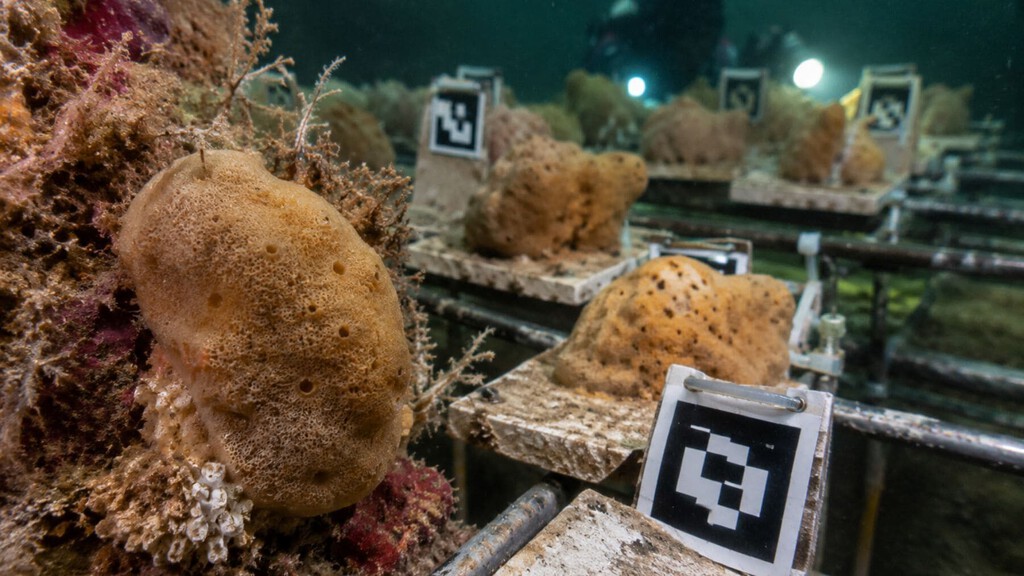
The team, led by Manuel Maldonado and Carlota Escarré, collected specimens from clean habitats around Blanes and attached them to biomimetic microreefs called Life Boosting Units, designed by Ocean Ecostructures. These units already increase species diversity sixfold at installation sites.
The Experiment: Five Species, One Survivor
Five sponge species were selected: Chondrosia reniformis, Corticium candelabrum, Crambe crambe, Scalarispongia scalaris, and Ircinia oros. Of these, Corticium candelabrum died in the laboratory before transplantation. The other three species shrank and died between 20 and 165 days after transplantation.
Only Chondrosia reniformis endured all three stress phases: collection, handling, and transplantation. At the end of the experiment, 91.7% of its specimens—22 out of 24—were still alive. This remarkable survival rate suggests the species is highly resilient to pollution and physical stress.
What Makes Chondrosia Reniformis So Tough?
Chondrosia reniformis has a leathery, collagen-rich body that resists damage. It also appears to tolerate a wide range of environmental conditions, from clean waters to heavily polluted ports. The researchers noted that the sponge not only survived but also maintained its filtering activity, potentially improving water quality around the microreefs.
This toughness makes it an ideal candidate for restoration projects in degraded coastal areas. Unlike other species, it can be easily collected, handled, and transplanted without significant mortality.
Implications for Marine Restoration
The findings could change how scientists approach marine restoration in polluted environments. Instead of trying to reintroduce sensitive species, they can focus on hardy ones like Chondrosia reniformis that can establish populations and gradually improve conditions for other organisms.
The Life Boosting Units also proved effective as a substrate for transplantation. These biomimetic structures mimic natural reefs and provide a stable base for sponges to attach and grow. Combined with pollution-tolerant species, they could be deployed in ports and marinas worldwide. The longer history behind the story is traced in China's Rental Children Trend Tackles Elderly Loneliness. More on the surrounding debate is collected in Ferran Adrià: Why Socializing Beats Food at Restaurants.
Key Takeaways
- Chondrosia reniformis survived 455 days in one of Spain's most polluted ports, with a 91.7% survival rate.
- Four other sponge species died within 165 days, highlighting the importance of species selection.
- Biomimetic microreefs (Life Boosting Units) provided a successful substrate for transplantation.
- The experiment suggests that hardy sponges can be used for bioremediation and restoration in degraded marine environments.
- Future projects could deploy these sponges to improve water quality and biodiversity in ports and marinas.
Comparing Sponge Species Survival
| Species | Survival Time | Survival Rate | Notes |
|---|---|---|---|
| Chondrosia reniformis | 455 days | 91.7% | Thrived in polluted port |
| Corticium candelabrum | 0 days | 0% | Died in lab before transplant |
| Crambe crambe | 20-165 days | 0% | Shrank and died |
| Scalarispongia scalaris | 20-165 days | 0% | Shrank and died |
| Ircinia oros | 20-165 days | 0% | Shrank and died |
The stark contrast between Chondrosia reniformis and the other species underscores the importance of choosing the right candidates for restoration. While the other sponges may thrive in clean waters, they cannot cope with the multiple stressors found in polluted ports. The background to this story is set out in Nine New Deep-Sea Sponge Species Discovered Off Alaska Coast. A related thread runs through Eelgrass Seed Collection: Restoring Vital Marine Habitats. Earlier coverage in Marine Heatwaves Reshape British Seas and Fishing shows how the argument developed.
What to Watch Next
The CEAB-CSIC team plans to further investigate the mechanisms behind Chondrosia reniformis's tolerance. They also aim to test the sponge in other polluted locations and monitor its long-term impact on water quality and biodiversity. A closer look at the same subject appears in Trending: latest articles. Anyone following the wider picture can start with Almazán Palace Collapse: Mayor Warned for Years Before 15th-Century Fall. The same theme surfaces in Action Discounts 3-in-1 Pressure Pump: Save on Tire Inflation, which takes a different angle.
As coastal urbanization and pollution increase, such nature-based solutions become increasingly valuable. The success of this experiment offers a ray of hope for restoring marine ecosystems in the most unlikely places. Context on how this played out before sits in Adjustable Desktop PC Stand: Easy Cleaning and Moving. A companion piece, Marine Sponges Survive 455 Days in Spain's Most Polluted Port, approaches the same subject from another angle.
FAQ
What is Chondrosia reniformis?Chondrosia reniformis, also known as the chicken kidney sponge, is a marine sponge species with a leathery, collagen-rich body. It is known for its resilience to environmental stress and pollution.
Why did only one sponge species survive?The other species were likely more sensitive to the combined stress of collection, handling, and polluted water. Chondrosia reniformis has physical and physiological traits that allow it to tolerate harsh conditions.
How can this help marine restoration?Hardy species like Chondrosia reniformis can be transplanted into degraded areas to filter water and create habitat. They can improve conditions for other organisms and support ecosystem recovery.
What are Life Boosting Units?Life Boosting Units are biomimetic microreefs designed by Ocean Ecostructures. They provide a stable substrate for marine organisms and have been shown to increase species diversity at installation sites.
Browse the Shop
 Acacia frida deluxe solid wood bed frame |
Bedroom bench |
Bed chest drawers |
Lingerie dresser |
Frame base |
Mirror with jewelry storage |
30 Bathroom Vanity |
Memory foam queen mattress |
Mattresses for back pain |
Nightstand set of 2 |
Grand Goldman Shop |
Civil Lawyer
Deutschland Trikot WM 2026







