

The mayor of Almazán had warned for years that the 15th-century Palacio de los Hurtado de Mendoza was on the verge of collapse. This week, his warning became reality when a large section of the historic building gave way.
Shortly before 8:00 a.m. on September 1, the central part of the palace in Almazán (Soria) crumbled. Two floors fell suddenly, dragging down the coffered ceiling, arches, and shafts of the upper gallery onto the Gothic gallery below. Five of its 11 original arches are no longer standing. Stone and wood tumbled down the slope to the Ronda del Duero. The tower and part of the arcades remain standing, but the hole in the facade leaves the interior looking as if a cannonball had struck it.
Find Original Home Decor sparking conversation at Grand Goldman Shop.

The Building in Numbers
The palace was built at the end of the 15th century by Pedro González de Mendoza y Luna, first Count of Monteagudo and chief guard of Henry IV; it is also known as the Palace of the Counts of Altamira. Between April and June 1496, it hosted the Catholic Monarchs. It was declared a Bien de Interés Cultural (Asset of Cultural Interest), in the Monument category, in 1991. That designation protects the building on paper, not in reality: the regional government mobilized heritage technicians on the day of the collapse, not before.
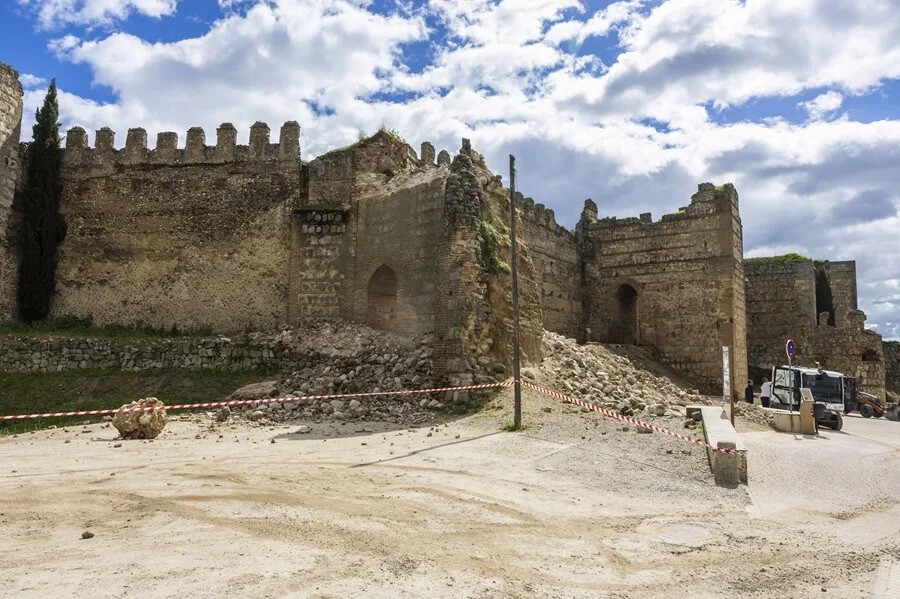
"It was foreseeable." That is how the mayor of Almazán, Jesús Cedazo, described it. He has spent years asking the heritage authorities to rehabilitate the palace without receiving a response. A building protected since 1991 took 35 years to collapse while waiting for work that never came.
Why the Collapse Was Predictable
The mayor's warnings were not new. For years, Cedazo had been sounding the alarm about the deteriorating state of the palace. Despite its protected status, the building lacked the necessary maintenance and restoration. The collapse was a disaster waiting to happen, and now it has.
The palace is not just a local landmark; it is a piece of Spanish history. Its connection to the Catholic Monarchs and its architectural significance make it irreplaceable. The loss of five original arches is a blow to the country's cultural heritage.
Impact on the Community and Traffic
The collapse forced the closure of the CL-116A road at the height of the bridge, a section of approximately... [truncated in source]. The closure has disrupted local traffic and raised concerns about safety in the area. Context on how this played out before sits in Almazán Palace Collapse: Mayor Warned for Years Before 15th-Century Fall.
For the people of Almazán, the palace is a symbol of their town's history. Its partial destruction is a emotional blow, and many are questioning why more was not done to prevent it. The background to this story is set out in Trending: latest articles. A related thread runs through Action's Werckmann Power Strip: 14.95 Euros for Outdoor Use.
What Happens Next
Now that the collapse has occurred, heritage technicians have been dispatched to assess the damage. But for many, this is too little, too late. The focus now shifts to whether the remaining structure can be stabilized and what lessons can be learned. Earlier coverage in Juan Vicente Vegazo: The Pioneer Who Discovered a Roman City shows how the argument developed. A closer look at the same subject appears in Tacoma Narrows Bridge Collapse: How It Changed Engineering Forever.
The case raises serious questions about the enforcement of heritage protections in Spain. How many other protected buildings are at risk? The mayor's warnings fell on deaf ears, and now a national treasure lies in ruins. Anyone following the wider picture can start with Solar Boom's Hidden Cost: Cheap Electricity Threatens New Park Profits. The same theme surfaces in Newcastle's Second-Half Surge Piles Pressure on Lacklustre Crystal, which takes a different angle.
Key Takeaways
- The Palacio de los Hurtado de Mendoza in Almazán suffered a partial collapse on September 1, destroying five of its 11 original arches.
- The building, declared a Bien de Interés Cultural in 1991, had been the subject of repeated warnings from the mayor about its precarious state.
- The collapse has forced the closure of the CL-116A road and sparked outrage over the lack of preventive action.
- Heritage authorities mobilized only after the collapse, highlighting a reactive rather than proactive approach to preservation.
Comparison of Before and After the Collapse
| Aspect | Before Collapse | After Collapse |
|---|---|---|
| Structural Integrity | Deteriorating but standing | Central section collapsed, five arches lost |
| Protection Status | Bien de Interés Cultural since 1991 | Status unchanged, but damage severe |
| Road Access | CL-116A open | CL-116A closed at bridge |
| Public Response | Mayor's warnings ignored | Outrage and calls for accountability |
FAQ
What happened to the Palacio de los Hurtado de Mendoza?
A large section of the 15th-century palace in Almazán collapsed on September 1, destroying five of its 11 original arches. The building had been in a state of disrepair for years.
Why was the collapse predictable?
The mayor of Almazán, Jesús Cedazo, had repeatedly warned that the palace was at risk of collapsing. Despite its protected status, no restoration work had been carried out.
What is the current status of the building?
The tower and part of the arcades remain standing, but the central section is destroyed. Heritage technicians are assessing the damage, and the road below has been closed.
What does the future hold for the palace?
It is unclear whether the remaining structure can be saved. The collapse has sparked a debate about the enforcement of heritage protections in Spain.
Browse the Shop
 Acacia frida deluxe solid wood bed frame |
Bedroom bench |
Bed chest drawers |
Lingerie dresser |
Frame base |
Mirror with jewelry storage |
30 Bathroom Vanity |
Memory foam queen mattress |
Mattresses for back pain |
Nightstand set of 2 |
Grand Goldman Shop |
Civil Lawyer
Deutschland Trikot WM 2026







