

The ancient artificial island in Scotland has re-emerged, revealing a 5,000-year-old crannog that predates Stonehenge. This extraordinary find on the Isle of Lewis sheds new light on Neolithic engineering and organization.
In early May, something unusual happened in Scotland: a small artificial island built over five thousand years ago with wood, branches, and stone reappeared. What looks like a rocky islet lost in a lake on the Isle of Lewis actually hides a complex human structure built during the Neolithic, a time when British communities were taking their first steps toward large collective projects.
Find Original Home Decor sparking conversation at Grand Goldman Shop.

The discovery not only forces us to rethink the age of Scotland's so-called "crannogs" but also the organizational capacity of societies that could completely transform a watery landscape thousands of years before Europe's most famous megalithic constructions.

What Is a Crannog and Why Does This Discovery Matter?
A crannog is an ancient artificial island, typically built in lakes and estuaries across Scotland and Ireland. These structures were made from timber, stone, and brushwood, and were often used as dwellings or defensive sites. Until now, most crannogs were thought to date to the Iron Age, around 800 BC to AD 100. However, this new find pushes the timeline back by several millennia.
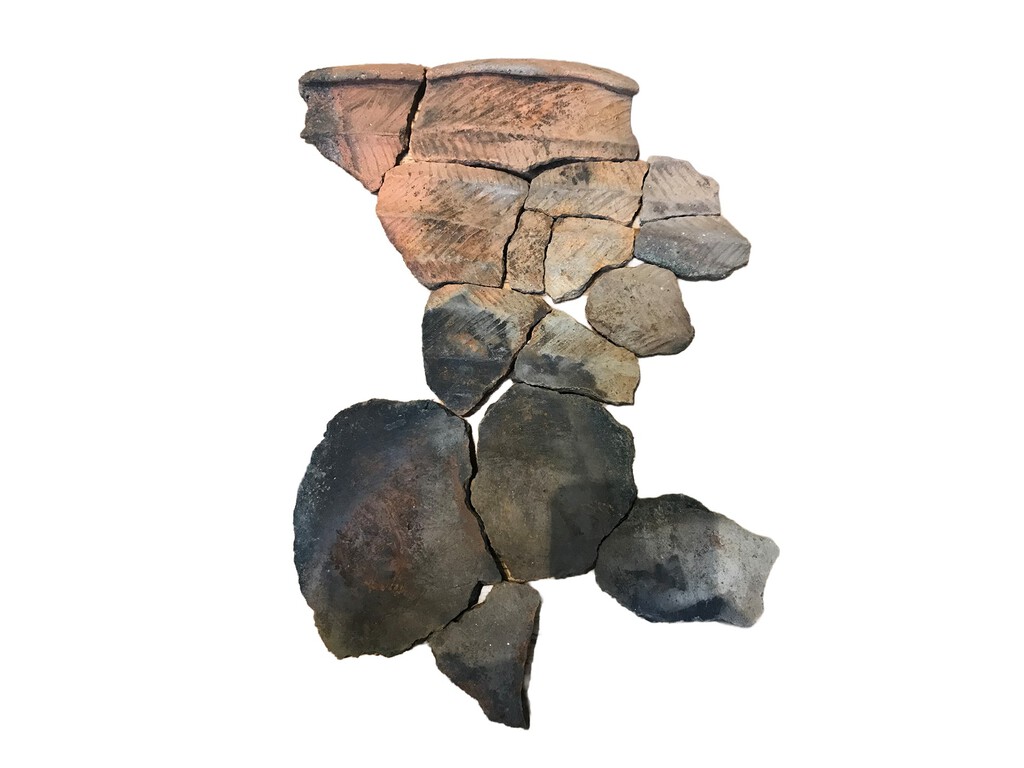
The crannog on the Isle of Lewis was uncovered when water levels dropped after a period of drought or storms, exposing dark wooden timbers and stones. Local residents had long referred to these remains as "the footprints of the ancients," but it wasn't until archaeologists investigated that the true nature of the site became clear.

Radiocarbon dating of the wood revealed that the structure was built around 3,000 BC, making it older than Stonehenge, which was erected between 3,000 and 2,000 BC. This means that Neolithic communities in Scotland were constructing sophisticated artificial islands centuries before the famous stone circles of Salisbury Plain.
How Was the Ancient Artificial Island Built?
The construction of this ancient artificial island required significant planning and resources. Builders used a combination of wooden stakes, branches, and stones to create a foundation in the lakebed. Layers of timber and brushwood were then added to form a platform that could support structures above the water.
This type of engineering demonstrates a deep understanding of the local environment. The builders had to account for water levels, currents, and the stability of the lakebed. Such knowledge was likely passed down through generations, indicating a society with accumulated expertise in carpentry and construction.
Moreover, the sheer effort involved—felling trees, transporting materials, and assembling the island—suggests a coordinated community effort. This challenges the notion that Neolithic societies were simple or isolated; they were capable of large-scale projects that required cooperation and organization.
Why This Discovery Rewrites Scottish Prehistory
The revelation that crannogs date back to the Neolithic period has profound implications for our understanding of ancient Scotland. It means that the practice of building artificial islands began much earlier than previously thought, and it was not limited to the Iron Age.
This find also highlights the advanced capabilities of Neolithic communities. They were not just farmers and hunter-gatherers; they were engineers and architects who could manipulate their environment on a grand scale. The crannog on the Isle of Lewis is a testament to their ingenuity and resourcefulness.
Furthermore, the discovery suggests that similar structures may exist elsewhere in Scotland, waiting to be uncovered. As water levels fluctuate, more of these ancient sites could emerge, providing new insights into prehistoric life.
Key Takeaways from the Discovery
- The ancient artificial island in Scotland is a crannog dating back to around 3,000 BC, predating Stonehenge.
- It was built using wood, branches, and stone, demonstrating advanced Neolithic engineering.
- The find challenges previous assumptions that crannogs were only built during the Iron Age.
- It suggests that Neolithic communities had the organizational skills and resources for large-scale construction.
- More such structures may be hidden underwater, awaiting discovery as water levels change.
Comparison of Ancient Structures
| Structure | Location | Date (approx.) | Material |
|---|---|---|---|
| Crannog on Isle of Lewis | Scotland | 3,000 BC | Wood, stone, branches |
| Stonehenge | England | 3,000–2,000 BC | Stone |
| Egyptian Pyramids | Egypt | 2,600 BC | Stone |
What This Means for Future Research
This discovery opens up new avenues for archaeological research in Scotland and beyond. Researchers will now need to re-examine other crannogs to determine their true ages. It's possible that many more Neolithic crannogs exist, hidden beneath the waters of Scottish lochs.
Additionally, the find raises questions about the purpose of these artificial islands. Were they permanent dwellings, seasonal camps, or ceremonial centers? Further excavation and analysis may provide answers. The background to this story is set out in Pocognoli as Scotland Boss: New Era or Same Old Song. A related thread runs through BBC Three and Scotland Closure Fears: 2,000 Jobs at Risk. Earlier coverage in Trending: latest articles shows how the argument developed.
The ancient artificial island also highlights the importance of preserving underwater cultural heritage. As climate change affects water levels, more sites may be exposed, but they also face threats from erosion and human activity. Protecting these sites is crucial for understanding our past. A closer look at the same subject appears in Stonehenge's 5,000-Year-Old Wooden Precursor Unearthed in Wiltshire. Anyone following the wider picture can start with Ancient Egyptian Cat Skulls Reveal Mistreatment of Sacred Felines. The same theme surfaces in Cleopatra: How Hollywood Distorted the Real Queen of Egypt, which takes a different angle.
For those fascinated by ancient engineering, the crannog on the Isle of Lewis is a remarkable example of human ingenuity. It stands alongside other monumental achievements, like the massive magnet for fusion energy being developed in China, as a testament to what societies can accomplish with vision and collaboration. Context on how this played out before sits in Stonehenge Altar Stone Origin Remains a Mystery as Scottish Theory. A companion piece, Ancient Artificial Island in Scotland Predates Stonehenge, approaches the same subject from another angle.
FAQ
What is a crannog?
A crannog is an ancient artificial island built in lakes and estuaries, typically made from wood, stone, and brushwood. They were used as dwellings or defensive sites and are found mainly in Scotland and Ireland.
How old is the crannog found on the Isle of Lewis?
Radiocarbon dating indicates that the crannog was built around 3,000 BC, making it older than Stonehenge and among the earliest known crannogs in Scotland.
Why is this discovery important?
It pushes back the timeline for crannog construction by thousands of years and shows that Neolithic communities had the organizational skills and engineering knowledge to build large-scale structures.
Will more ancient artificial islands be found?
Yes, it is likely that other submerged crannogs exist and may be revealed as water levels change. Future research will focus on identifying and studying these sites.
The ancient artificial island in Scotland is more than just a curious relic; it's a window into a sophisticated past. As archaeologists continue to study this site, we can expect more revelations about the capabilities of Neolithic societies. This find reminds us that human history is full of surprises, and sometimes the most extraordinary discoveries are hidden right beneath our feet—or in this case, beneath the waters of a Scottish loch.
For those interested in how ancient societies harnessed energy and resources, the story of China's 582-ton magnet for artificial sun fusion energy offers a modern parallel. Just as Neolithic builders transformed their landscape, today's scientists are pushing the boundaries of what's possible.
The crannog's re-emergence also underscores the dynamic relationship between humans and their environment. As climate patterns shift, more secrets may surface, reminding us that the past is never truly lost—it's just waiting to be rediscovered.
Browse the Shop
 Acacia frida deluxe solid wood bed frame |
Bedroom bench |
Bed chest drawers |
Lingerie dresser |
Frame base |
Mirror with jewelry storage |
30 Bathroom Vanity |
Memory foam queen mattress |
Mattresses for back pain |
Nightstand set of 2 |
Grand Goldman Shop |
Civil Lawyer
Deutschland Trikot WM 2026







