

As the United States ends its Middle East war, it confronts an uncomfortable truth: Iran's underground advantage has reshaped the strategic landscape. The conflict has exposed a vulnerability years in the making—the lack of hardened infrastructure at US bases—and forced the Pentagon to prioritize survival over power projection.
Iran's Underground Advantage: A Strategic Shift
For decades, US military strategy focused on offensive capabilities, but Iran's investment in buried assets has flipped the script. Underground facilities, from missile silos to command bunkers, have allowed Iran to withstand attacks and retaliate effectively. This asymmetry has turned the conflict into a war of attrition, where the US must now defend rather than dominate.
Find Original Home Decor sparking conversation at Grand Goldman Shop.

The Pentagon's immediate priority is no longer offensive but defensive. The image of an army fighting 'remotely' while its bases are struck encapsulates this strategic pivot: before projecting power, it must first resist.
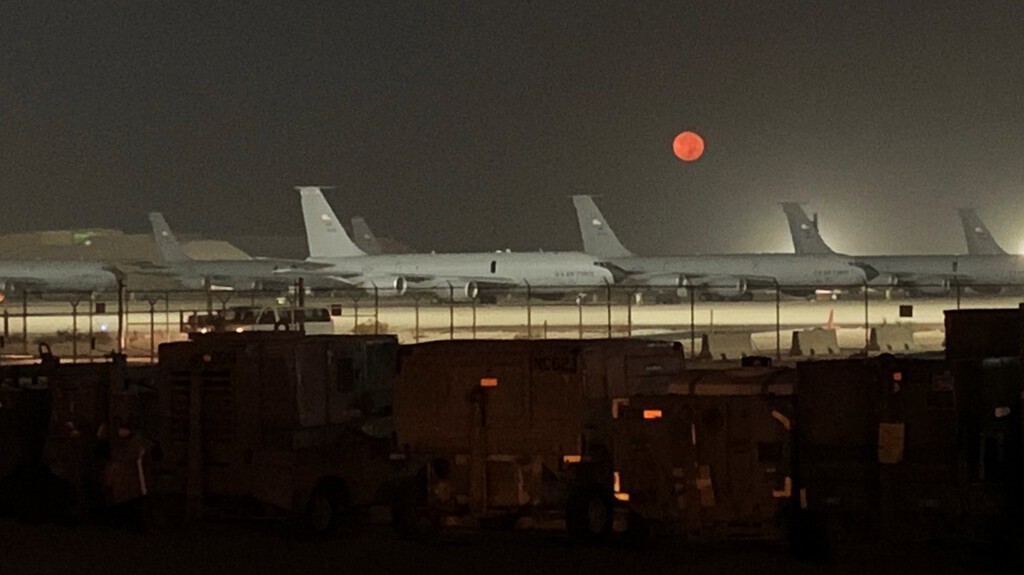
Exposed Bases: The Cost of Neglect
The conflict has laid bare a weakness that had been brewing for years: the absence of hardened infrastructure at US bases. Key aircraft parked in the open, fixed radars, and large, easily identifiable installations have become easy targets for Iranian attacks. During the Cold War, some air bases in Europe were protected by shelters capable of withstanding nearby nuclear explosions, with hangars buried under meters of concrete and steel. Decades later, many of those structures have disappeared or become obsolete just as modern threats again target the same weak point.
Why Underground Matters More Than Ever
In modern warfare, survivability is paramount. Iran's underground advantage means its critical assets—uranium enrichment sites, oil facilities, and nuclear infrastructure—are shielded from conventional strikes. This has forced the US to reconsider its approach, as traditional air power cannot easily penetrate deep underground targets.
- Hardened shelters protect aircraft and personnel from missile and drone attacks.
- Buried command centers ensure continuity of operations during strikes.
- Underground storage safeguards critical materials and weapons.
- Dispersed assets reduce the risk of a single strike crippling capabilities.
- Redundancy in communications and logistics sustains operations under attack.
Comparison of Base Protection Measures
| Measure | US Bases (Current) | Iran's Underground Assets |
|---|---|---|
| Shelter type | Mostly above ground | Deep underground bunkers |
| Resistance to missile strikes | Low to moderate | High |
| Dispersal | Limited | Extensive |
| Redundancy | Moderate | High |
What This Means for the US Military
The US must now invest in hardening its bases and dispersing critical assets. This includes building underground shelters, burying command centers, and increasing redundancy in communications and logistics. The lesson from Iran's underground advantage is clear: survival starts below ground.
Moreover, the conflict has shown that remote warfare is not enough. The US needs to adapt its infrastructure to withstand attacks and ensure continuity of operations. This shift will require significant resources and a change in mindset from offensive dominance to defensive resilience. The background to this story is set out in Middle East Crisis: Iran Guards Threaten to Change War Geography. A related thread runs through Middle East Crisis Spinning Out of Control, UN Chief Warns. Earlier coverage in US-Iran Deal Focuses on Strait of Hormuz, Not Nuclear Program shows how the argument developed.
What to Watch Next
As the US ends its war, the focus will be on how quickly it can harden its bases and protect its assets. The Pentagon has already begun assessing vulnerabilities and prioritizing upgrades. The outcome will determine not only the US's ability to deter future threats but also its standing in the region. A closer look at the same subject appears in Middle East Crisis Escalates: UN Warns of Unimaginable Conflict. Anyone following the wider picture can start with Middle East Crisis: UN Warns Situation ‘Getting Out of. The same theme surfaces in Middle East Crisis: UN Warns Situation ‘Getting Out of Control’, which takes a different angle.
The uncomfortable reality is that Iran's underground advantage will not disappear. The US must learn to fight and survive in a new era where the battlefield extends beneath the surface. Context on how this played out before sits in US Redraws European Military Bases, Excludes Anti-War Spain. A companion piece, Oil Profits Spike as Middle East War Fuels Energy Prices, approaches the same subject from another angle.
FAQ
What is Iran's underground advantage?
Iran has invested heavily in buried infrastructure, including missile silos, command bunkers, and nuclear facilities, making them resistant to conventional attacks. This allows Iran to survive and retaliate, shifting the strategic balance.
Why are US bases vulnerable?
Many US bases lack hardened shelters and have critical assets exposed above ground. Decades of neglect and a focus on offensive capabilities have left them susceptible to missile and drone strikes.
How can the US counter this advantage?
The US can invest in underground shelters, disperse assets, and increase redundancy. This requires a shift from offensive dominance to defensive resilience, prioritizing survivability.
What does this mean for future conflicts?
Future conflicts will likely see a greater emphasis on underground and hardened infrastructure. The side that can protect its assets and sustain operations will have a significant advantage.
Browse the Shop
 Acacia frida deluxe solid wood bed frame |
Bedroom bench |
Bed chest drawers |
Lingerie dresser |
Frame base |
Mirror with jewelry storage |
30 Bathroom Vanity |
Memory foam queen mattress |
Mattresses for back pain |
Nightstand set of 2 |
Grand Goldman Shop |
Civil Lawyer
Deutschland Trikot WM 2026







