

Apple's AI strategy is often compared to ChatGPT or Claude, but that comparison may be missing the bigger picture. While Apple may seem late to the AI race, its three-year evolution reveals a different story—one where performance metrics aren't the only measure of success.
The Evolution of Apple's AI Models
In 2024, Apple's initial foray into AI was modest, focusing on small models with around 3 billion parameters designed for basic tasks like generating Genmojis or summarizing text. These models were far from the capabilities of leading large language models from OpenAI and Anthropic.
Find Original Home Decor sparking conversation at Grand Goldman Shop.

By 2025, Apple shifted gears by releasing its MLX framework to the developer community, making it easier to integrate and use local models. This move signaled Apple's intent to build an ecosystem around on-device AI rather than competing solely on model size.
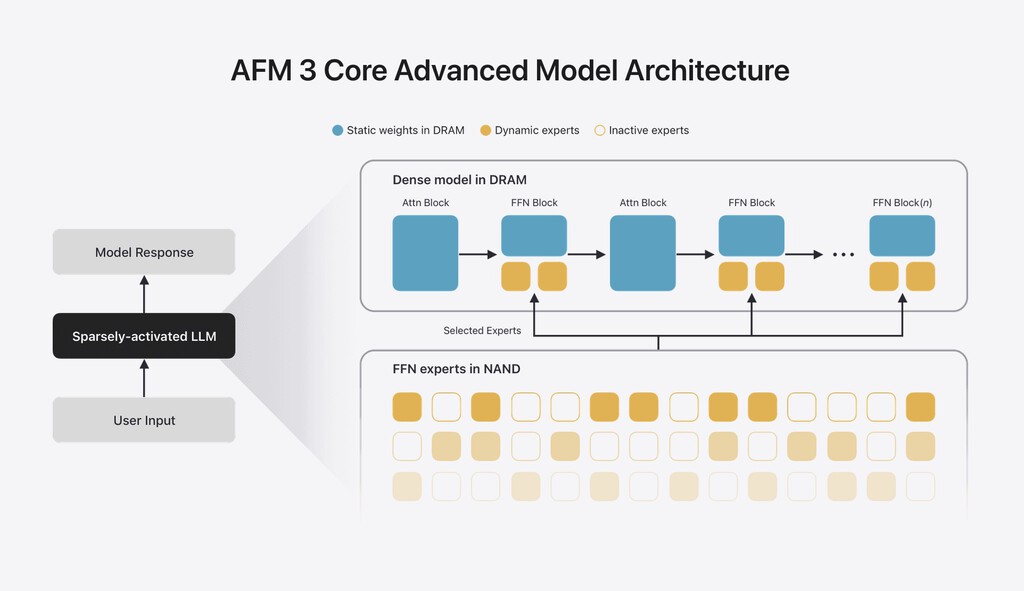
Now, in 2026, Apple is proposing a hybrid infrastructure that leverages the strengths of both on-device and cloud-based AI. This approach acknowledges the limitations of mobile hardware while aiming to deliver capable AI experiences.
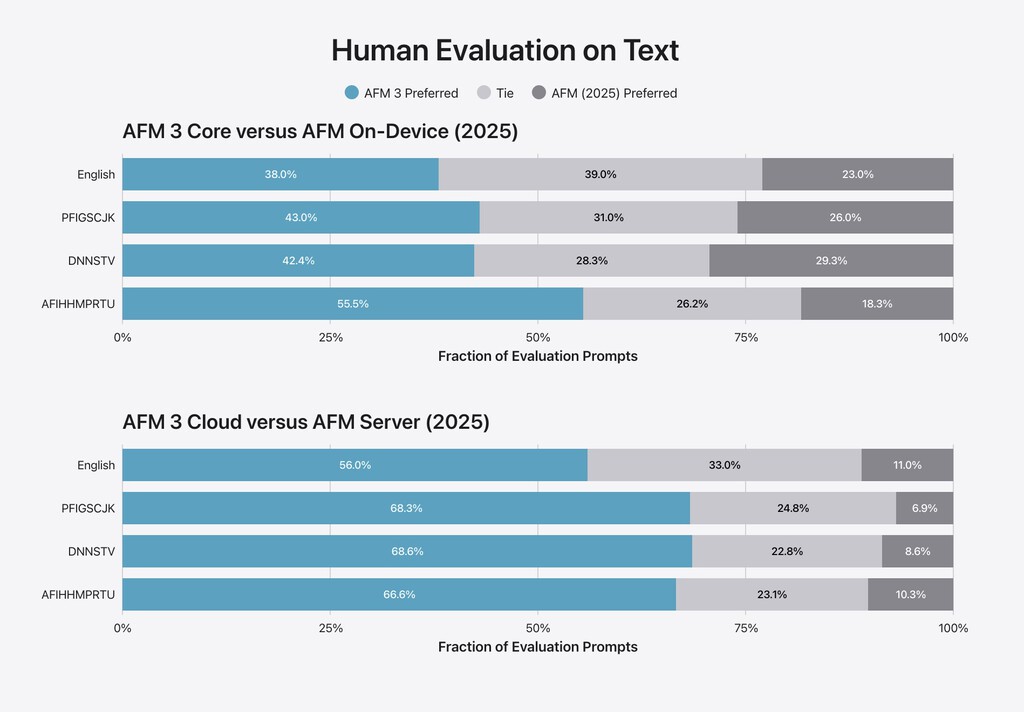
Why the Comparison with ChatGPT and Claude Is Misleading
Comparing Apple's AI directly to ChatGPT or Claude is like comparing a smartphone camera to a professional DSLR—they serve different purposes and excel in different contexts. Apple's focus is on integrating AI seamlessly into its devices and services, not on winning benchmark tests.
This strategy prioritizes user privacy, low latency, and offline functionality—areas where cloud-based models like ChatGPT and Claude inherently struggle. By keeping processing on-device, Apple can offer AI features that are always available, even without an internet connection.
- Privacy-first approach: On-device processing keeps user data local.
- Low latency: Immediate responses without round-trip to the cloud.
- Offline functionality: AI works even without connectivity.
- Ecosystem integration: Deep integration with iOS, macOS, and other Apple services.
- Hardware optimization: Tailored for Apple's custom silicon.
The NAND Flash Breakthrough
One of the most intriguing aspects of Apple's recent AI work is its use of NAND flash memory to overcome memory constraints. Modern iPhones have limited RAM—12 GB in some models—which is a bottleneck for running large AI models.
Apple's AFM 3 Core Advanced model, with 20 billion parameters, is designed to run efficiently by leveraging NAND storage as an extension of memory. This allows the model to be larger than what would typically fit in RAM alone, enabling more capable AI on mobile devices.
This innovation could be a game-changer, as it addresses a fundamental limitation of mobile AI without sacrificing performance.
| Year | AI Model | Parameters | Key Feature |
|---|---|---|---|
| 2024 | Initial small models | 3B | Basic tasks (Genmoji, summaries) |
| 2025 | MLX framework | N/A | Developer integration for local models |
| 2026 | AFM 3 Core Advanced | 20B | Hybrid infrastructure, NAND memory use |
What This Means for the AI Landscape
Apple's approach could reshape how we think about AI deployment. Instead of a one-size-fits-all cloud model, Apple is betting on a hybrid future where on-device and cloud AI coexist.
This could pressure competitors to optimize for efficiency and privacy, not just raw performance. It also opens up new possibilities for AI features that are deeply integrated into daily workflows.
For users, this means more responsive, private, and reliable AI experiences. For developers, it offers a new platform to build upon. The background to this story is set out in Claude AI: What It Is, How It Works, and How It Compares to ChatGPT. A related thread runs through OpenAI Ethically Hacked Using Anthropic's Claude Chatbot. Earlier coverage in OpenAI's Invisible Watermark for ChatGPT Text in Europe shows how the argument developed.
The Road Ahead
Apple's AI journey is far from over. With its hybrid infrastructure and NAND-based memory optimization, the company is carving out a unique niche. Whether this will translate into market success remains to be seen, but dismissing Apple based on parameter counts would be a mistake. A closer look at the same subject appears in Anthropic's Invisible Claude Watermark: Imperfect AI Text Detection. Anyone following the wider picture can start with AI Agents vs Human Brain: Why Zuckerberg Misses the Point. The same theme surfaces in Woke 1: Its Issues Are Minor Compared to Bigger Problems, which takes a different angle.
The real test will be how well these AI features perform in real-world scenarios and whether users embrace them. If Apple can deliver seamless, private, and powerful AI, it may not need to beat ChatGPT or Claude at their own game. Context on how this played out before sits in NASA Streamlines Mission Selection to Launch More Often Like SpaceX. A companion piece, How to make a small apartment not seem small, approaches the same subject from another angle.
FAQ
Why is comparing Apple's AI to ChatGPT or Claude a mistake?
Because Apple's focus is on on-device AI and privacy, not on competing directly with large cloud-based models. Its hybrid approach serves different needs and use cases.
What is Apple's AFM 3 Core Advanced model?
It's a 20-billion-parameter model designed to run efficiently on mobile devices by using NAND flash memory to overcome RAM limitations.
How does Apple's approach benefit users?
It offers faster response times, better privacy, and offline functionality, making AI more integrated and reliable in daily use.
Will Apple's AI catch up to OpenAI and Anthropic?
Apple may not need to catch up in raw performance; instead, it's redefining the playing field with a focus on integration and user experience.
Browse the Shop
 Acacia frida deluxe solid wood bed frame |
Bedroom bench |
Bed chest drawers |
Lingerie dresser |
Frame base |
Mirror with jewelry storage |
30 Bathroom Vanity |
Memory foam queen mattress |
Mattresses for back pain |
Nightstand set of 2 |
Grand Goldman Shop |
Civil Lawyer
Deutschland Trikot WM 2026







