

White roofs cut heat and energy costs in low-income homes, according to the Philadelphia Cool Homes Project. Between 2001 and 2003, the Energy Coordinating Agency (ECA) coated roughly 340 row houses occupied by elderly, low-income residents with reflective white roof coverings. The results showed that a simple, low-cost intervention could significantly reduce indoor temperatures and air conditioning demand.
The project targeted the city's characteristic brick row houses, which often have dark roofs that absorb solar radiation. By applying a reflective coating, the ECA aimed to test whether reducing heat gain could protect vulnerable residents from extreme heat and lower their energy bills.
Find Original, High-end Home Decor that spark conversation at Grand Goldman Shop.
How the Philadelphia Cool Homes Project Worked
The ECA installed white reflective coatings on the roofs of about 340 homes between 2001 and 2003. The homes were primarily occupied by low-income elderly people, a group particularly susceptible to heat-related illness and high energy costs. The intervention was straightforward: no solar panels, no smart thermostats, just a reflective layer to bounce sunlight back.
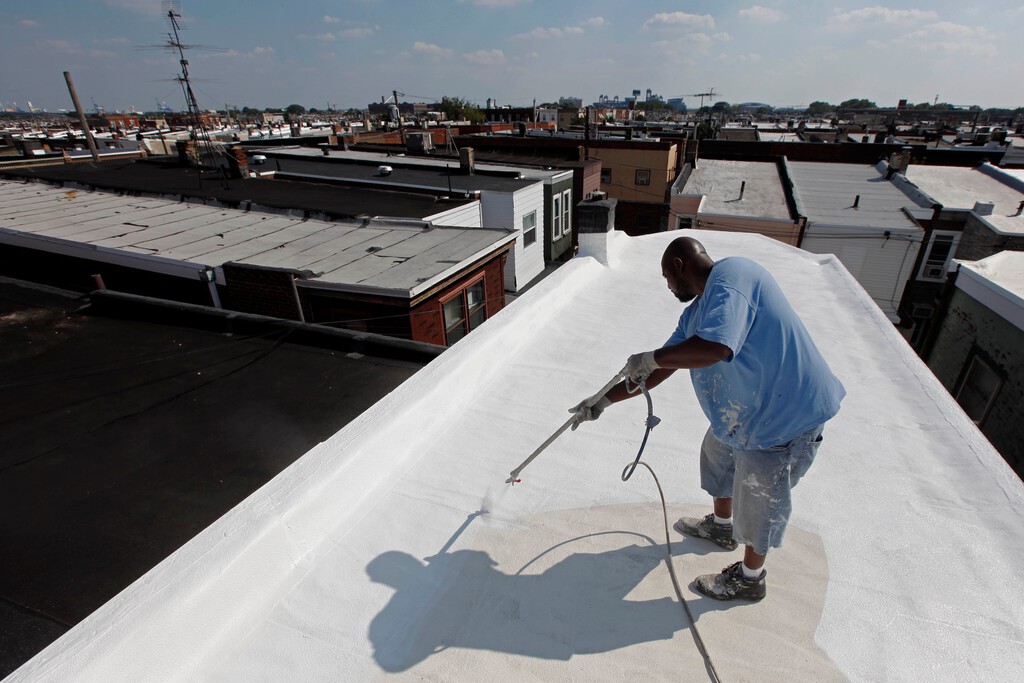
The project's simplicity was its strength. It required minimal maintenance and could be applied quickly to existing roofs. The coating used was likely a white elastomeric or acrylic product designed for reflectivity and durability, though the source does not specify the exact material.
Why Row Houses?
Philadelphia's row houses are tightly packed, often with dark asphalt shingles or tar roofs. These materials absorb heat during the day and release it slowly, keeping indoor spaces uncomfortably warm well into the evening. For elderly residents on fixed incomes, running air conditioning to combat this heat can be a financial burden.
By targeting this housing stock, the project addressed a common urban challenge: how to keep older, energy-inefficient homes livable without costly retrofits. The white roofs offered a passive cooling solution that works with the building's existing structure.
Key Results: Lower Temperatures and Energy Savings
The project's outcomes were notable. Peak interior ceiling surface temperatures dropped by 4 to 5 °F (about 2.2 to 2.8 °C). This reduction in surface temperature directly translates to less heat radiating into living spaces, making homes more comfortable during hot weather.
More importantly, the white roofs led to a significant decrease in air conditioning use. Participants saved an average of 560 kWh per year on cooling electricity—a substantial amount for low-income households. For context, the average U.S. home uses about 10,500 kWh annually, so this represents roughly 5% of total electricity use, but for cooling alone it could be a much larger share.
- Temperature reduction: Interior ceiling surface temperatures fell by 4–5 °F (2.2–2.8 °C).
- Energy savings: Households saved about 560 kWh per year on air conditioning.
- Target population: Low-income elderly residents in row houses.
- Cost-effective: The intervention was simple and inexpensive compared to other retrofits.
- Scalable: The approach could be replicated in other cities with similar housing stocks.
Why Cool Roofs Matter for Vulnerable Communities
Extreme heat is a growing threat, and low-income elderly people are among the most at risk. They may have limited mobility, pre-existing health conditions, and fixed incomes that make air conditioning unaffordable. The Philadelphia project showed that a physical upgrade to the building envelope can provide immediate relief.
Cool roofs also reduce the urban heat island effect, which makes cities hotter than surrounding areas. By reflecting sunlight, white roofs lower ambient temperatures and reduce the need for cooling across entire neighborhoods. This benefits not only individual households but also the community at large.
The project's focus on low-income homes highlights an equity dimension. Energy efficiency upgrades often benefit wealthier homeowners first, but this initiative deliberately targeted those who need help most. It demonstrates that simple, low-tech solutions can be both effective and equitable.
Comparing Cool Roof Options
Not all cool roofs are the same. The Philadelphia project used a reflective coating, but there are other options available today. The table below compares common cool roof strategies.
| Type | Reflectivity (Solar Reflectance) | Typical Cost | Lifespan | Best For |
|---|---|---|---|---|
| White coating | 0.70–0.85 | Low | 5–10 years | Retrofits on existing roofs |
| White shingles | 0.25–0.35 | Moderate | 20–30 years | New roofs or replacements |
| Metal roof (cool) | 0.60–0.70 | High | 40–70 years | Long-term durability |
| Green roof | Varies (0.30–0.50) | High | 20–40 years | Stormwater management and insulation |
White coatings are the cheapest and easiest to apply, making them ideal for low-income retrofits. However, they require reapplication every few years. Shingles and metal roofs offer longer lifespans but come with higher upfront costs. Green roofs provide additional benefits like stormwater absorption but are heavier and more expensive. Context on how this played out before sits in Cyborg Cockroaches With AI Sensor Backpacks: Hype vs Science.
What to Watch Next
The Philadelphia Cool Homes Project is over two decades old, but its lessons remain relevant. As climate change intensifies heat waves, cities are looking for affordable ways to protect residents. Cool roofs are increasingly included in building codes and incentive programs. The background to this story is set out in Energy Utilities: latest articles. A related thread runs through Anitín Breadsticks Sales Hit €110 Million Thanks to Mercadona.
Future research could explore how white roofs perform in different climates and how they interact with other energy efficiency measures. For example, combining cool roofs with insulation or solar panels might yield even greater savings. Additionally, long-term monitoring would help quantify maintenance needs and durability. Earlier coverage in Anthropic Researcher Warns 10% Chance AI Could End Humanity shows how the argument developed. A closer look at the same subject appears in Renfe Rejects Speed Cut for Avril S106 Trains Despite Bogie Cracks.
Policymakers should consider targeted programs that fund cool roof installations for low-income households. Utilities could also offer rebates for reflective roofing as part of demand-side management programs. The Philadelphia project proves that small investments can deliver big returns for vulnerable communities. Anyone following the wider picture can start with iPhone 18 Pro, Pro Max and Duo: Which New Apple Phone to Buy. The same theme surfaces in White Roofs Cut Heat and Energy Costs in Low-Income Homes, which takes a different angle.
FAQ
How much did the white roofs reduce indoor temperatures?
Peak interior ceiling surface temperatures dropped by 4 to 5 °F (about 2.2 to 2.8 °C). This reduction made homes more comfortable and reduced the need for air conditioning.
How much energy did households save?
Participants saved an average of 560 kWh per year on air conditioning electricity. This is a significant amount for low-income households, helping to lower their utility bills.
Who benefited from the project?
The project targeted low-income elderly residents living in row houses in Philadelphia. This group is particularly vulnerable to heat and high energy costs.
Can cool roofs be used in other cities?
Yes, cool roofs are a versatile solution that can be applied in many urban areas, especially those with older housing stocks and hot summers. The Philadelphia project serves as a model for other cities looking to improve energy efficiency and protect vulnerable residents.
Browse the Shop
 Acacia frida deluxe solid wood bed frame |
Bedroom bench |
Bed chest drawers |
Lingerie dresser |
Frame base |
Mirror with jewelry storage |
30 Bathroom Vanity |
Memory foam queen mattress |
Mattresses for back pain |
Nightstand set of 2 |
Grand Goldman Shop |
Civil Lawyer
Deutschland Trikot WM 2026







