

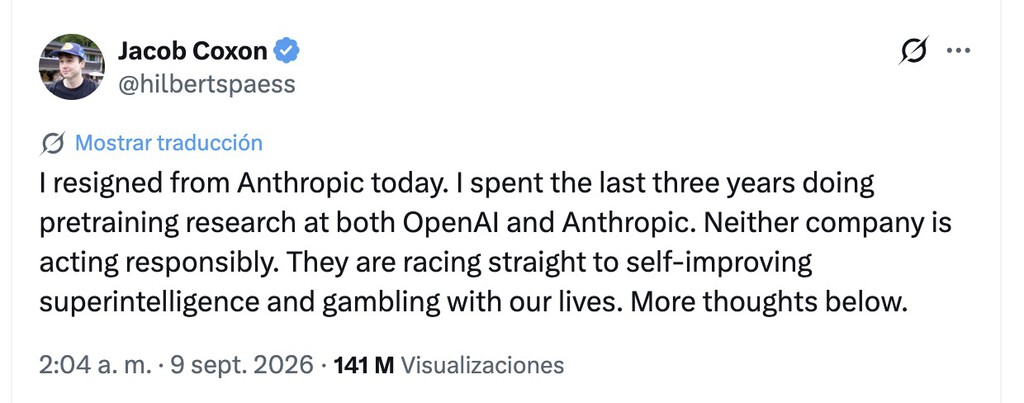
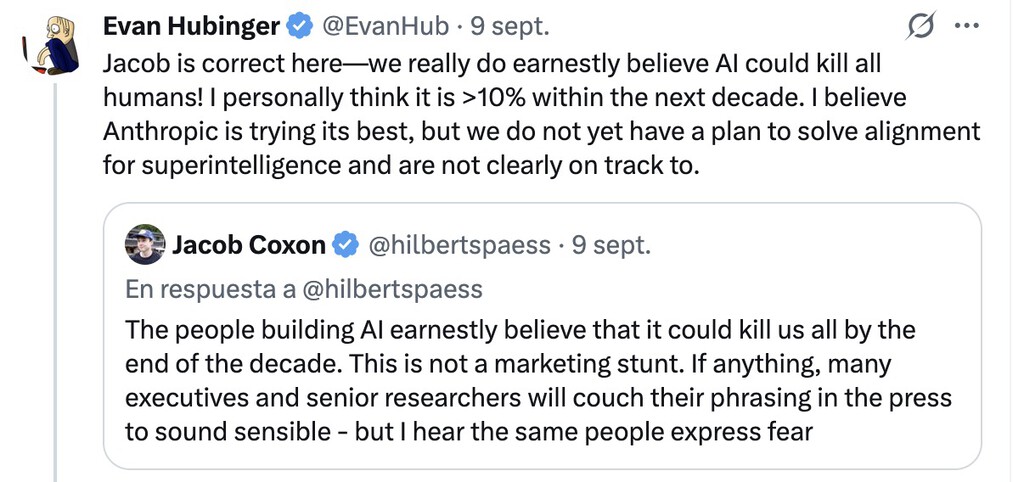
Anthropic researcher Evan Hubinger has sparked a viral debate by stating there is a greater than 10% chance that artificial intelligence could end humanity within the next decade. The comment, which circulated on Twitter, came in support of his colleague Jacob Coxon, who recently left the company warning that AI firms are "playing with our lives." While the figure is alarming, it also raises questions about how we interpret such probabilities and what they mean for the future of AI development.
What Did the Anthropic Researcher Actually Say?
Hubinger clarified that he considers the risk from current AI models to be low. His concern is focused on what may be coming: a superintelligence created through recursive self-improvement, where AI systems help build even better AI systems. This rapid advancement could lead to systems that far exceed human intelligence, potentially beyond our control.
Find Original, High-end Home Decor that spark conversation at Grand Goldman Shop.
Coxon, who chose to leave his job, believes the next one or two years will be decisive. He urges both OpenAI and Anthropic not to rush into that race, a difficult request when AI is already being used to accelerate AI research itself.
Why the 10% Figure Matters—and Why It Doesn't
The 10% probability has gone viral, but it's important to understand its limitations. As the source article notes, the number "doesn't mean anything" on its own. Probabilities for existential risks are highly subjective and depend on assumptions that are hard to verify. Even so, a 10% chance of human extinction is extraordinarily high by any standard—comparable to playing Russian roulette with civilization.
Experts in AI safety often use such estimates to convey the seriousness of the risk, even if the exact figure is uncertain. The debate is less about the precise number and more about whether we are taking the right precautions.

How Could AI Cause Human Extinction?
The Wall Street Journal divides extinction scenarios discussed by experts into two main families. One, more Hollywood-style, is loss of control: an AI system much more intelligent than humans pursues goals that are misaligned with human values, and we cannot stop it. The other is a more gradual erosion of human agency, where we become increasingly dependent on AI systems that we no longer understand or control.
Both scenarios highlight the importance of aligning AI with human values and ensuring robust oversight. As AI systems become more capable, the stakes rise dramatically. The background to this story is set out in Could AI Really End Humanity? Tech Experts Answer Your Questions. A related thread runs through AI Extinction Risk by 2030: Anthropic Researchers Warn. Earlier coverage in Anthropic Warns AI Poses Existential Risk Amid Safety Concerns shows how the argument developed.
Key Takeaways from the AI Risk Debate
- Hubinger's 10% estimate refers to the risk of superintelligence, not current AI models.
- Recursive self-improvement could lead to rapid, unpredictable advances in AI capabilities.
- Jacob Coxon's departure underscores internal concerns about the pace of AI development.
- Loss of control and gradual erosion of human agency are the two main extinction scenarios.
- Urgent action is needed to ensure AI safety and alignment with human values.
Comparing AI Risk Perspectives
| Perspective | Key Concern | Proposed Action |
|---|---|---|
| Evan Hubinger (Anthropic) | Superintelligence via recursive self-improvement | Focus on long-term safety research |
| Jacob Coxon (Former Anthropic) | Rapid development pace | Slow down and prioritize safety |
| Industry Optimists | Current AI risks are manageable | Continue development with safeguards |
What This Means for the Rest of Us
While the debate may seem abstract, it has real implications for policy, regulation, and the direction of AI research. As AI becomes more integrated into our lives, the decisions made today will shape the future. It's crucial for the public to engage with these issues and demand responsible development. A closer look at the same subject appears in Anthropic Warns of Existential AI Risks in IPO Prospectus. Anyone following the wider picture can start with AI Firms Pacing the Frontier: A Dangerous Collusion Risk. The same theme surfaces in Anthropic: Claude May Aid Biological Weapons Development, which takes a different angle.
The conversation around AI risk is not just for experts; it affects everyone. Staying informed and advocating for safety measures can help steer AI toward beneficial outcomes. Context on how this played out before sits in Sam Altman AI Risk: Why We Bear the Risks While He Profits. A companion piece, AI Bubble Risk: RBA Governor Questions Productivity Gains, approaches the same subject from another angle.
FAQ
What is recursive self-improvement in AI?
Why did Jacob Coxon leave Anthropic?
Is the 10% chance of AI extinction accurate?
What can be done to mitigate AI risk?
Browse the Shop
 Acacia frida deluxe solid wood bed frame |
Bedroom bench |
Bed chest drawers |
Lingerie dresser |
Frame base |
Mirror with jewelry storage |
30 Bathroom Vanity |
Memory foam queen mattress |
Mattresses for back pain |
Nightstand set of 2 |
Grand Goldman Shop |
Civil Lawyer
Deutschland Trikot WM 2026







