

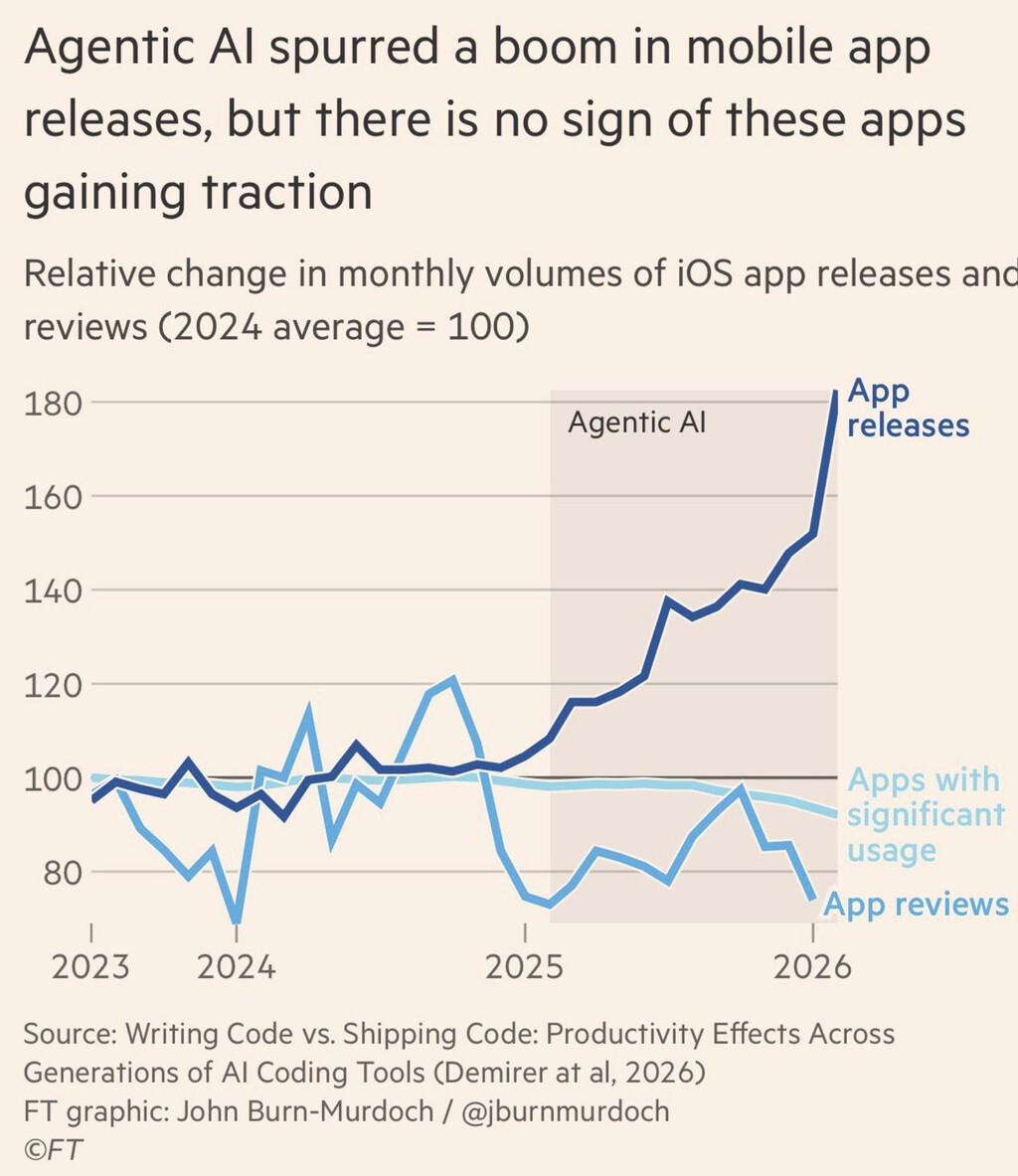
A new MIT study reveals that AI coding tools like Claude Code and Codex have triggered a surge in app launches, but most of these apps are being ignored by users. The research monitored thousands of developers before and after they adopted AI agents, uncovering a troubling pattern: more apps are reaching app stores, yet consumer interest remains flat.
The study, led by MIT economics professor Mert Demirer, highlights what researchers call a "funnel effect." Many developers start using AI to experiment with code, but few projects progress to final software releases. Even when apps do launch, they generate almost no engagement.
Find Original Home Decor sparking conversation at Grand Goldman Shop.

Why AI Coding Tools Create a Launch Surge
AI coding tools lower the barrier to entry for software development. Even people without technical backgrounds can use Claude Code or similar agents to generate functional code. This accessibility has led to a wave of new projects, but the MIT research shows that most of these projects never make it to market.
The initial experience of using AI to code can feel empowering—like being able to build anything. However, the study found that manual quality control, code review, and deployment processes become bottlenecks. These steps often require engineering knowledge that non-technical creators lack.
The Funnel Effect: From Experiment to Launch
The MIT team observed that while many developers begin using AI tools, the transition from experimentation to a polished, launched app is rare. The funnel narrows significantly at the deployment stage. Without proper engineering support, projects stall.
This isn't to say no projects succeed. Some do evolve into final products. But the majority remain as attempts—casualties of the gap between AI-assisted coding and professional software development.
More Apps, Same Consumption
Despite the increase in app store submissions, consumer behavior hasn't changed. The volume of apps on the App Store and Google Play Store has grown dramatically, but the actual usage of these new apps is negligible. In other words, producing more doesn't mean selling more. The longer history behind the story is traced in AI Coding Tools Flood App Stores But Users Ignore Them.
This disconnect between supply and demand suggests that AI tools may be creating a glut of low-quality apps that fail to attract users. The study's findings challenge the assumption that easier development automatically leads to market success. The background to this story is set out in AI Coding Tools Like Claude Code Turn Developers Into Enter-Key Pushers. A related thread runs through Claude Code: AI Programming Tool for Your Terminal Explained. Earlier coverage in Meta Ignored Teen Harm Research, Tennessee Lawyers Tell Jury shows how the argument developed.
Key Takeaways from the MIT Research
- AI coding tools like Claude Code enable more people to start coding, but few projects reach launch.
- Manual quality control and deployment processes are major bottlenecks for non-technical creators.
- App store submissions have surged, but consumer engagement remains flat.
- Producing more apps does not equate to market success; adoption is key.
- The study highlights a "funnel effect" where experimentation rarely leads to finished products.
What This Means for Developers and Investors
For developers, the MIT study underscores the importance of engineering rigor. AI can assist with coding, but successful apps still require testing, iteration, and user feedback. Relying solely on AI without these steps often leads to failure. A closer look at the same subject appears in Chinese Developers Now Earn 52% of App Store Revenue Abroad. Anyone following the wider picture can start with Ai Video: latest articles. The same theme surfaces in AI Is Changing How Apps Are Built: The Rise of Personalized Software, which takes a different angle.
For investors, the findings suggest caution when evaluating AI-driven development trends. A flood of apps doesn't necessarily signal a healthy ecosystem; it may indicate wasted effort and resources. Context on how this played out before sits in ChatGPT Codex: What It Is and How to Use the AI Coding Agent. A companion piece, Hostinger Hermes Agent: AI Automation Without Coding Skills, approaches the same subject from another angle.
Comparison of AI-Assisted vs. Traditional Development
| Aspect | AI-Assisted Development | Traditional Development |
|---|---|---|
| Ease of starting | High (low barrier) | Low (requires skills) |
| Quality control | Often manual, bottleneck | Built into process |
| Deployment success | Low (many projects stall) | Higher (structured) |
| App store volume | High | Moderate |
| User engagement | Low (many ignored) | Variable but higher |
FAQ
What did the MIT study find about AI coding tools?
The MIT study found that AI coding tools lead to more app launches but few successful products. Most projects stall due to bottlenecks in quality control and deployment.
Why are so many AI-generated apps ignored?
Because producing more apps doesn't mean users will adopt them. The study shows that consumer interest has not increased despite the surge in app store submissions.
What is the "funnel effect" in AI development?
The funnel effect describes how many developers start using AI to code, but few projects progress to final releases. The process narrows at the deployment stage, where engineering challenges arise.
Who led the MIT research?
The study was led by Mert Demirer, an economics professor at MIT. It monitored thousands of developers before and after they adopted AI agents.
The MIT study serves as a reality check for the AI coding hype. While tools like Claude Code democratize access to coding, they don't replace the need for engineering discipline. The next wave of innovation will likely focus on bridging the gap between AI-assisted creation and successful deployment.
Browse the Shop
 Acacia frida deluxe solid wood bed frame |
Bedroom bench |
Bed chest drawers |
Lingerie dresser |
Frame base |
Mirror with jewelry storage |
30 Bathroom Vanity |
Memory foam queen mattress |
Mattresses for back pain |
Nightstand set of 2 |
Grand Goldman Shop |
Civil Lawyer
Deutschland Trikot WM 2026







