

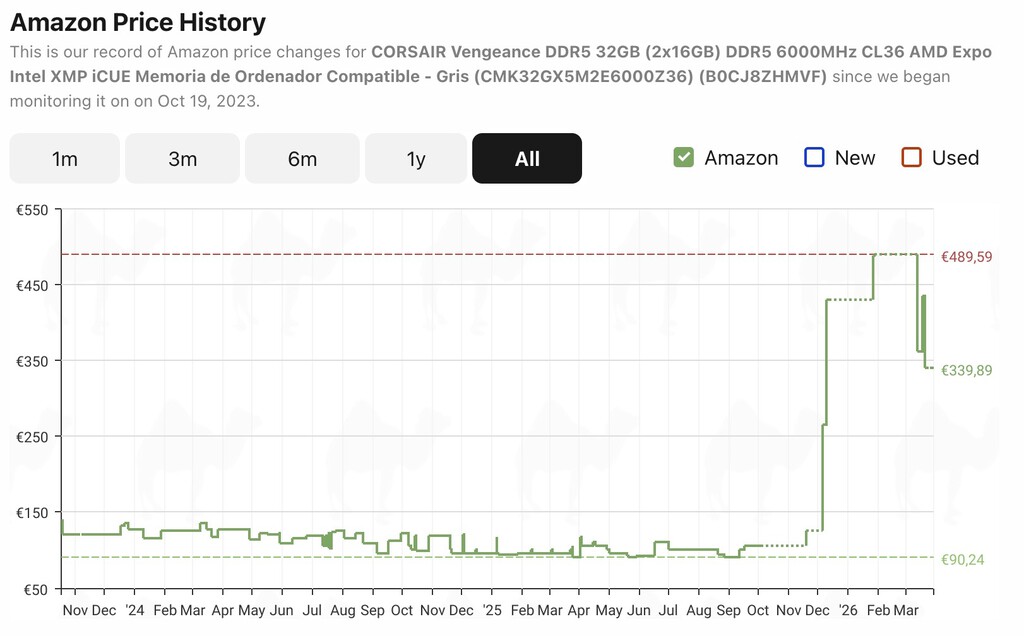
Google Research has unveiled TurboQuant, a new AI memory compression technique that can reduce the working memory of language models by up to six times with minimal loss in quality or performance. The algorithm, detailed in a study published last week, promises to alleviate the memory crisis that has gripped the AI industry—but it could spell trouble for memory chip manufacturers like Micron and SK Hynix.
For months, the AI boom has driven insatiable demand for high-bandwidth memory (HBM) and RAM, creating a supply crunch and soaring prices. TurboQuant offers a potential escape from that bottleneck by dramatically shrinking the memory footprint of AI inference.
Find Original Home Decor sparking conversation at Grand Goldman Shop.

Understanding the KV Cache Bottleneck
To grasp TurboQuant's significance, you need to understand the KV cache. When a large language model processes a long conversation, it must remember the context. Each token processed is stored in the KV cache—a sort of working memory that grows as the conversation lengthens.

The longer the conversation, the more memory the model requires. This cache is one of the main bottlenecks during AI inference (when we actually use the models), and it's a key reason data centers need so much RAM and HBM.
TurboQuant applies a vector quantization method to this cache, compressing it while maintaining model accuracy. In tests, it achieved up to 6x compression without noticeable degradation, according to Google Research.
How TurboQuant Works
TurboQuant leverages vector quantization, a technique that maps high-dimensional vectors to a smaller set of representative points. By applying this to the KV cache, the algorithm reduces the precision of stored activations in a way that preserves the most important information.
Unlike naive compression methods that can introduce errors, TurboQuant is designed to maintain the model's output quality. The study reports that even at 6x compression, performance remains comparable to uncompressed models across various benchmarks.
This is a significant advance because previous compression attempts often traded quality for memory savings. TurboQuant appears to break that trade-off, making it a potential game-changer for deploying large models efficiently.
Why This Matters for the AI Industry
The AI industry has been grappling with a memory crisis. The explosive growth of large language models has led to skyrocketing demand for memory chips, particularly HBM, which is essential for training and inference.
Manufacturers like Micron and SK Hynix have benefited enormously from this surge, enjoying record revenues and expanding production. But TurboQuant threatens to reduce the memory requirements per model, potentially dampening demand growth.
If models can run with 6x less memory, data centers may need fewer memory chips to serve the same number of users. That could lead to a glut in the memory market, putting pressure on prices and profits for chipmakers.
Key Takeaways
- TurboQuant compresses AI working memory up to 6x with minimal quality loss.
- It targets the KV cache, a major bottleneck in AI inference.
- Memory chip makers like Micron and SK Hynix could see reduced demand growth.
- The technique uses vector quantization to maintain model accuracy.
- Data centers may require less RAM and HBM, easing the memory crisis.
Comparing Memory Compression Techniques
TurboQuant isn't the only compression method, but its results stand out. Here's how it compares to other approaches:
| Technique | Compression Ratio | Quality Loss | Target |
|---|---|---|---|
| TurboQuant | Up to 6x | Minimal | KV Cache |
| Quantization (e.g., 8-bit) | 2-4x | Low to moderate | Weights & Activations |
| Pruning | Variable | Moderate to high | Model Parameters |
| Knowledge Distillation | N/A | Low | Model Size |
As the table shows, TurboQuant achieves higher compression with less quality loss than typical quantization or pruning methods. Its focus on the KV cache is particularly impactful because that's where memory usage scales with conversation length.
Implications for Memory Manufacturers
For Micron and SK Hynix, TurboQuant could be a double-edged sword. On one hand, more efficient memory usage might enable new AI applications, expanding the overall market. On the other hand, if each model needs less memory, the demand for their products could grow more slowly than expected.
The memory industry is cyclical, and booms are often followed by busts. TurboQuant might accelerate the transition to a more mature phase, where efficiency gains matter more than raw capacity. That could pressure margins for manufacturers that have invested heavily in capacity expansion.
Investors should watch how quickly TurboQuant is adopted and whether it leads to a measurable reduction in memory demand. If major cloud providers start implementing it, the impact could be significant. The background to this story is set out in Micron CEO Warns RAM Shortage Will Worsen Through 2028. A related thread runs through Micron Profit Surges Past Apple as AI Memory Demand Soars. Earlier coverage in Excellent technique to make concrete look like wood shows how the argument developed.
What to Watch Next
Google Research's publication is just the first step. The next question is whether TurboQuant will be integrated into popular AI frameworks and deployed at scale. If it proves effective in real-world settings, it could become a standard part of the AI stack. A closer look at the same subject appears in Micron Returns to Gaming with GDDR7 Chips for GPUs. Anyone following the wider picture can start with Ai Video: latest articles. The same theme surfaces in Anthropic's Google Broadcom Deal Secures AI Future, which takes a different angle.
We'll also be watching the response from memory manufacturers. They may accelerate development of even higher-capacity HBM or find new markets for their products. The AI memory landscape is evolving rapidly, and TurboQuant is a development worth following closely. Context on how this played out before sits in Gemini 4 Neon: Google's New AI Model for Coding and Complex Tasks. A companion piece, Google TurboQuant Cuts AI Memory 6x: Bad News for Micron, SK Hynix, approaches the same subject from another angle.
FAQ
What is TurboQuant?
What is TurboQuant?
TurboQuant is a memory compression algorithm developed by Google Research that reduces the KV cache size of AI models by up to 6x with minimal loss in quality or performance.
How does TurboQuant affect Micron and SK Hynix?
How does TurboQuant affect Micron and SK Hynix?
TurboQuant could reduce the demand for high-bandwidth memory and RAM, potentially slowing revenue growth for memory manufacturers like Micron and SK Hynix, which have benefited from the AI-driven memory boom.
What is the KV cache and why is it important?
What is the KV cache and why is it important?
The KV cache is a working memory that stores context for language models during inference. It grows with conversation length and is a major bottleneck in AI deployment, driving demand for memory chips.
Will TurboQuant be adopted widely?
Will TurboQuant be adopted widely?
It's too early to tell, but if TurboQuant proves effective in real-world deployments, major AI companies may integrate it into their systems, potentially reducing memory requirements across the industry.
Browse the Shop
 Acacia frida deluxe solid wood bed frame |
Bedroom bench |
Bed chest drawers |
Lingerie dresser |
Frame base |
Mirror with jewelry storage |
30 Bathroom Vanity |
Memory foam queen mattress |
Mattresses for back pain |
Nightstand set of 2 |
Grand Goldman Shop |
Civil Lawyer
Deutschland Trikot WM 2026







