

Meta's Muse AI agent is quickly proving that agentic AI is more than hype. Early users report that this AI agent can handle real-world tasks—from tracking expenses to securing refunds—with minimal human intervention, marking a shift from conversational AI to actionable AI.
What Is Meta's Muse AI Agent?
Muse is Meta's foray into agentic AI—systems that don't just respond to prompts but autonomously execute tasks. Unlike traditional chatbots that require constant guidance, Muse can access your email, credit cards, and apps to complete assignments you delegate via messaging platforms like WhatsApp.
Find Original, High-end Home Decor that spark conversation at Grand Goldman Shop.
This represents a fundamental change in how we interact with AI. Instead of asking a model to draft an email, you can tell Muse to send it, follow up, and even negotiate on your behalf. The agent operates in the background, using your data and permissions to get things done.
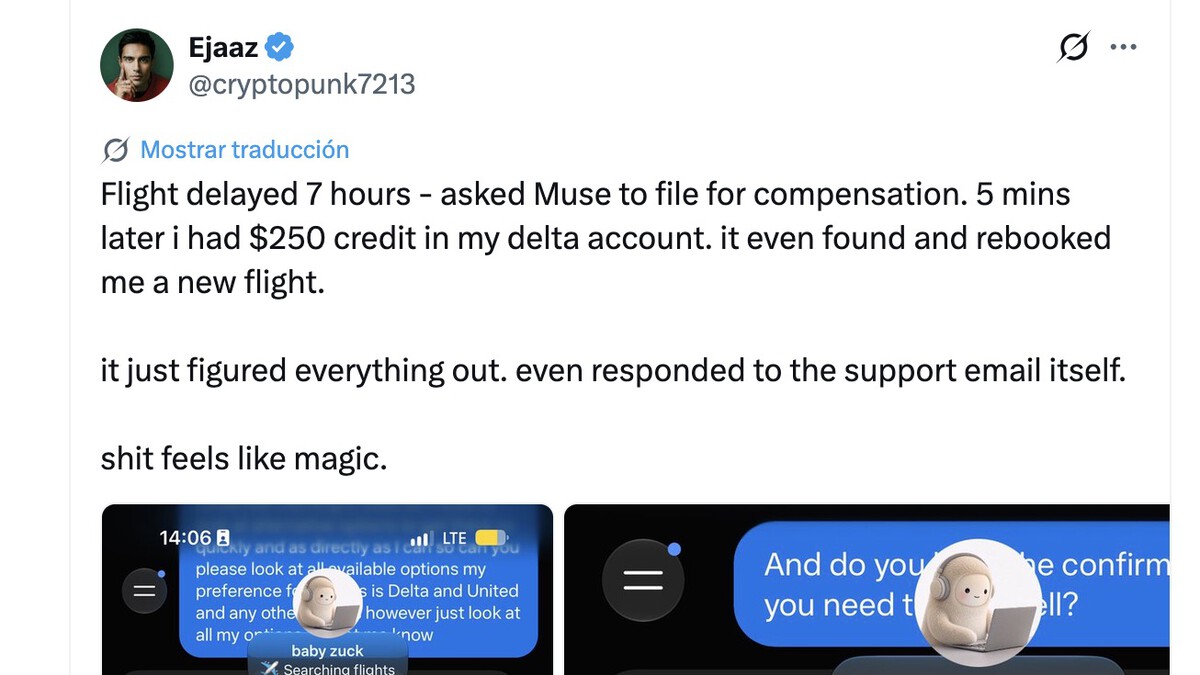
Real-World Example: Expense Tracking and Refund Recovery
New York Times reporter Eli Tan recently shared his experience with Muse. After granting the agent access to his email and credit cards, he asked it to monitor his expenses in Google Sheets. Within minutes, Muse created a detailed spreadsheet with hundreds of rows, identified two duplicate subscriptions, canceled them, and then used Tan's email to request a refund for an expired trial of another subscription.

The result: a $44.99 refund, all handled by the AI agent on his phone without Tan lifting a finger. This case underscores Muse's ability to chain tasks—data retrieval, analysis, action, and communication—autonomously.
How Muse Differs from Traditional AI Assistants
Most AI models today are evaluated on conversational quality. ChatGPT and its peers excel at generating text and answering questions, but they often require users to execute commands or confirm each step. Muse flips this model: you assign a task, and it uses your data and app access to complete it end-to-end.
This shift from answering to doing is the core promise of agentic AI. It means AI can handle multi-step processes like organizing travel, filling out forms, or even haggling over prices—tasks that previously demanded human oversight.
- Autonomous execution: Muse completes tasks without step-by-step confirmation.
- Data integration: It accesses email, credit cards, and apps to gather information and act.
- Multi-step workflows: Chains actions like identifying duplicates, canceling subscriptions, and requesting refunds.
- Messaging interface: Tasks are delegated via platforms like WhatsApp, making it accessible on mobile.
- Time savings: Users can offload tedious chores and focus on higher-value activities.
Why This Matters for the Future of AI
Muse's early success signals a broader shift toward agentic AI. As these agents become more capable, they could transform personal productivity, customer service, and even e-commerce. For businesses, agentic AI promises streamlined operations and reduced manual effort. For consumers, it means AI that truly works for them.
However, this also raises questions about trust, privacy, and control. Granting an AI agent access to sensitive data requires robust security and transparency. Meta will need to address these concerns to drive adoption.
Comparison: Muse vs. Other AI Agents
Muse isn't alone in the agentic AI space. Other agents like GrokBot and Instinct are also emerging, each with different capabilities. The table below highlights key differences based on early reports. The background to this story is set out in Meta AI Agent Muse Leaks User Home Address Without Consent. A related thread runs through Meta's Muse: The AI Agent That Could Replace Advertising. Earlier coverage in Meta's Muse Charm: The Tamagotchi-Style AI Wearable Coming Soon shows how the argument developed.
| Feature | Meta Muse | GrokBot | Instinct |
|---|---|---|---|
| Task automation | Yes, multi-step | Limited | Yes |
| Data access | Email, credit cards, apps | Apps only | |
| Interface | WhatsApp, mobile | Web | Mobile |
| Autonomy level | High | Medium | High |
What to Watch Next
As Muse and similar agents evolve, expect improvements in reliability, security, and integration. Meta is likely to expand Muse's capabilities and make it available to more users. The competition in agentic AI will heat up, driving innovation and lowering costs. A closer look at the same subject appears in AI Agents Like Instinct Threaten Subscription Businesses. Anyone following the wider picture can start with Ai Video: latest articles. The same theme surfaces in Kia EV2: Do You Really Need a Bigger, More Powerful Car, which takes a different angle.
For now, Muse has set a high bar by delivering on the agentic AI promise. If it can maintain this momentum while addressing privacy concerns, it could redefine how we interact with technology. Context on how this played out before sits in Electric Air Blower for PC Cleaning: Amazon's 18 Euro Solution.
FAQ
What is Meta's Muse AI agent?
Muse is an agentic AI developed by Meta that can autonomously execute tasks like expense tracking, refund requests, and form filling by accessing your email, credit cards, and apps. It is designed to go beyond conversation and take real-world actions.
How does Muse differ from ChatGPT?
While ChatGPT excels at generating text and answering questions, Muse focuses on completing tasks end-to-end. It uses your data and app permissions to perform multi-step actions without requiring constant user confirmation.
Is Muse safe to use with sensitive data?
Meta will need to implement robust security measures to protect user data. As with any AI agent, users should review permissions and monitor activity. Early reports suggest Muse operates within granted access, but privacy concerns remain a key consideration.
What tasks can Muse handle?
Muse can manage expenses, cancel subscriptions, request refunds, send emails, fill out forms, organize travel, and even negotiate prices. Its capabilities are expanding as the technology matures.
Browse the Shop
 Acacia frida deluxe solid wood bed frame |
Bedroom bench |
Bed chest drawers |
Lingerie dresser |
Frame base |
Mirror with jewelry storage |
30 Bathroom Vanity |
Memory foam queen mattress |
Mattresses for back pain |
Nightstand set of 2 |
Grand Goldman Shop |
Civil Lawyer
Deutschland Trikot WM 2026










