

Robotic arms are no longer confined to factory floors; they're appearing on home devices like robot vacuums and lawn mowers, and this trend makes perfect sense. The idea is simple: if a robot can extend an arm to move obstacles, it can handle more complex tasks without human intervention.
At CES 2025, Roborock showcased the Saros Z70, a robot vacuum with an articulated arm designed to pick up items like socks. A year and a half later, at IFA Berlin, the concept has evolved into a broader movement: adding arms to all sorts of robots.
Find Original Home Decor sparking conversation at Grand Goldman Shop.

Why Robotic Arms Are Gaining Traction
Automating household chores is challenging because homes are unpredictable. A robot vacuum might navigate an open loft easily, but add furniture, cables, or pets, and it struggles. A robotic arm provides a physical solution: it can move obstacles out of the way.
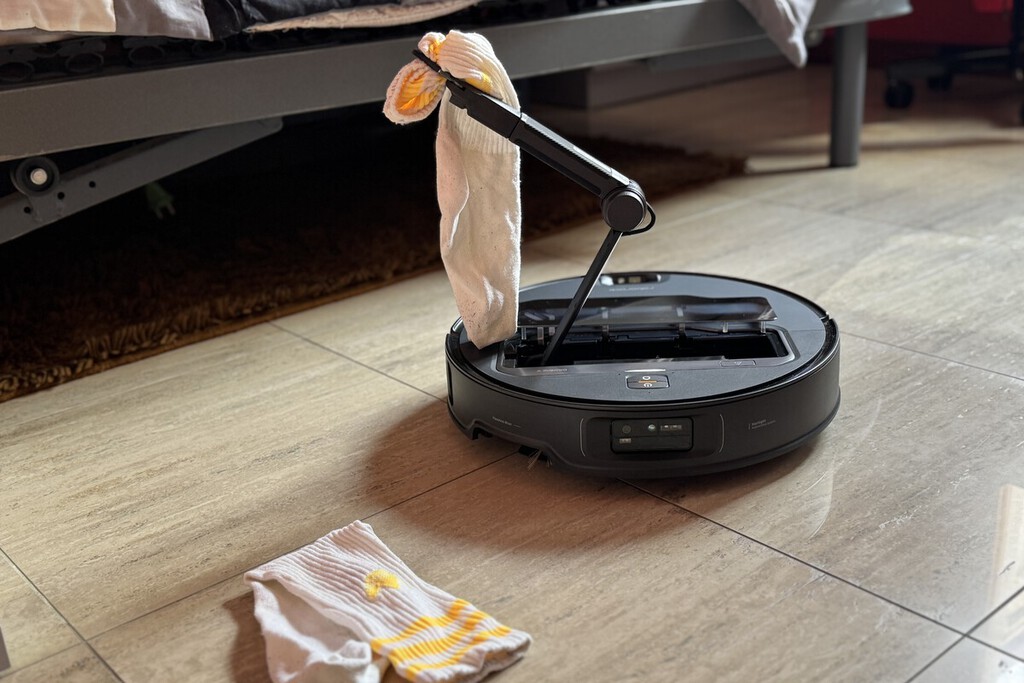
Roborock's Saros Z70 was the pioneer, but competitors are following. Dreame introduced the Cyber10 Ultra, which features an arm that extends up to 33 centimeters and can lift objects weighing up to half a kilogram—200 grams more than Roborock's offering.
This year at IFA, we've seen several domestic robot lawn mowers equipped with arms, indicating that the trend is spreading beyond vacuums.
Key Benefits of Robotic Arms in Home Devices
- Obstacle removal: Arms can pick up socks, toys, and other small items, allowing the robot to clean more thoroughly.
- Increased versatility: A robot with an arm can perform tasks beyond its primary function, such as fetching items or opening doors.
- Improved efficiency: By clearing obstacles, robots can cover more area without human help.
- Enhanced user experience: Less manual intervention means more convenience for homeowners.
- Competitive differentiation: Manufacturers are using arms as a selling point to stand out in a crowded market.
Challenges and Limitations
Despite the enthusiasm, robotic arms in home devices face hurdles. They add complexity and cost, and they must be robust enough to handle various objects without causing damage.
Battery life is another concern: moving an arm requires extra power, which could reduce the robot's runtime. Additionally, the arm's reach and lifting capacity are limited, so it may not handle larger or heavier items.
Safety is also critical, especially in homes with children or pets. The arm must detect obstacles and avoid grabbing sensitive objects or body parts.
Comparison of Robotic Arm Specifications
| Device | Arm Reach | Lifting Capacity | Notable Feature |
|---|---|---|---|
| Roborock Saros Z70 | Not specified | 300 grams | First robot vacuum with arm |
| Dreame Cyber10 Ultra | 33 cm | 500 grams | Extended reach, higher capacity |
| Robot Lawn Mowers (various) | Varies | Not specified | Debuted at IFA 2025 |
As the table shows, Dreame's arm offers greater reach and lifting capacity than Roborock's, but both are limited to lightweight objects. The lawn mower arms are even less documented, suggesting they are still in early stages.
What This Means for the Future of Home Automation
The addition of arms to home robots signals a shift toward more capable, autonomous machines. Instead of single-function devices, we're moving toward multipurpose robots that can interact with their environment physically. The background to this story is set out in CES 2026: Home robots, gadgets and devices of the future. A related thread runs through Roborock Qrevo 2 ProX Robot Vacuum Drops to $399 at PcComponentes. Earlier coverage in Roborock Q10VF Robot Vacuum Drops to $199 in Flash Sale shows how the argument developed.
This could lead to robots that not only clean but also tidy up, fetch items, and assist with daily tasks. However, widespread adoption will depend on cost, reliability, and safety. A closer look at the same subject appears in Aldi's Ambiano Robot Vacuum: Affordable Cleaning Power. Anyone following the wider picture can start with Cecotec Conga Q300 Robot Vacuum: 25,000 Pa and Extendable Mop Review. The same theme surfaces in Amazon Deals October 21: Up to 70% Off Lefant Robot Vacuum, which takes a different angle.
For now, the trend is clear: arms are the new frontier in home robotics, and companies are racing to integrate them. Context on how this played out before sits in Eufy Omni E28 Robot Vacuum Review: Pro Cleaning with Secret Spill. A companion piece, Surprising! This is the trend travel destination in Europe in 2025, approaches the same subject from another angle.
FAQ
What was the first robot vacuum with an arm?
The Roborock Saros Z70, unveiled at CES 2025, was the first robot vacuum to feature an articulated arm. It was designed to pick up small obstacles like socks.
How much can the Dreame Cyber10 Ultra's arm lift?
The Dreame Cyber10 Ultra's arm can lift objects weighing up to 500 grams, which is 200 grams more than the Roborock Saros Z70's capacity.
Are robotic arms on lawn mowers available now?
At IFA 2025, several domestic robot lawn mowers with arms were displayed, but it's unclear if they are commercially available yet. They represent an emerging trend.
What are the main challenges of adding arms to home robots?
Challenges include increased cost and complexity, limited battery life, restricted reach and lifting capacity, and safety concerns around children and pets.
Browse the Shop
 Acacia frida deluxe solid wood bed frame |
Bedroom bench |
Bed chest drawers |
Lingerie dresser |
Frame base |
Mirror with jewelry storage |
30 Bathroom Vanity |
Memory foam queen mattress |
Mattresses for back pain |
Nightstand set of 2 |
Grand Goldman Shop |
Civil Lawyer
Deutschland Trikot WM 2026







