

An interactive AEMET record temperature map built by data analyst Adrián Maqueda shows just how often Spain is breaking heat records, and the picture is stark. According to AEMET data, the country just endured the most extreme June heat wave ever recorded, with June 22 and 23, 2026, ranking as the hottest days for that month since at least 1950. Temperatures ran 7.1 °C above normal, and the map makes clear this is not an isolated event but part of a pattern.
The tool tracks every station in AEMET's network and displays the last heat record each one has broken, updating automatically whenever a new record falls. It works for both maximum and minimum temperatures, giving a station-by-station view of how climate change is reshaping Spain's summers.
Find Original Home Decor sparking conversation at Grand Goldman Shop.

What the AEMET Record Temperature Map Actually Shows
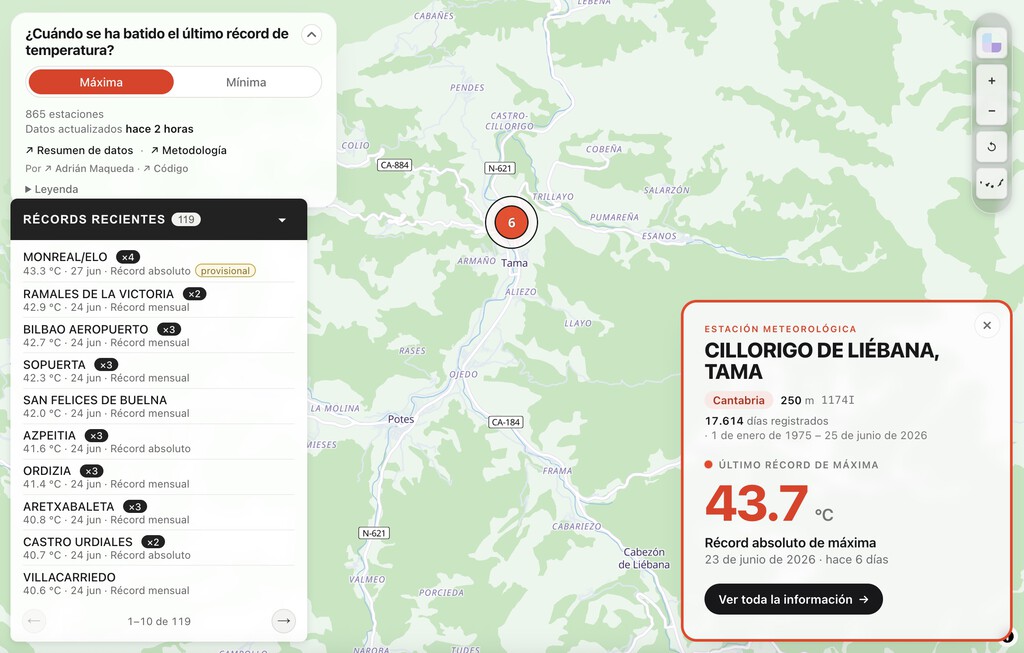
Maqueda's map is a simple but powerful visualization: each weather station is marked with the most recent record it has set, whether for daily high or daily low. Because the map refreshes automatically, it becomes a live scoreboard of climate extremes rather than a static historical snapshot.
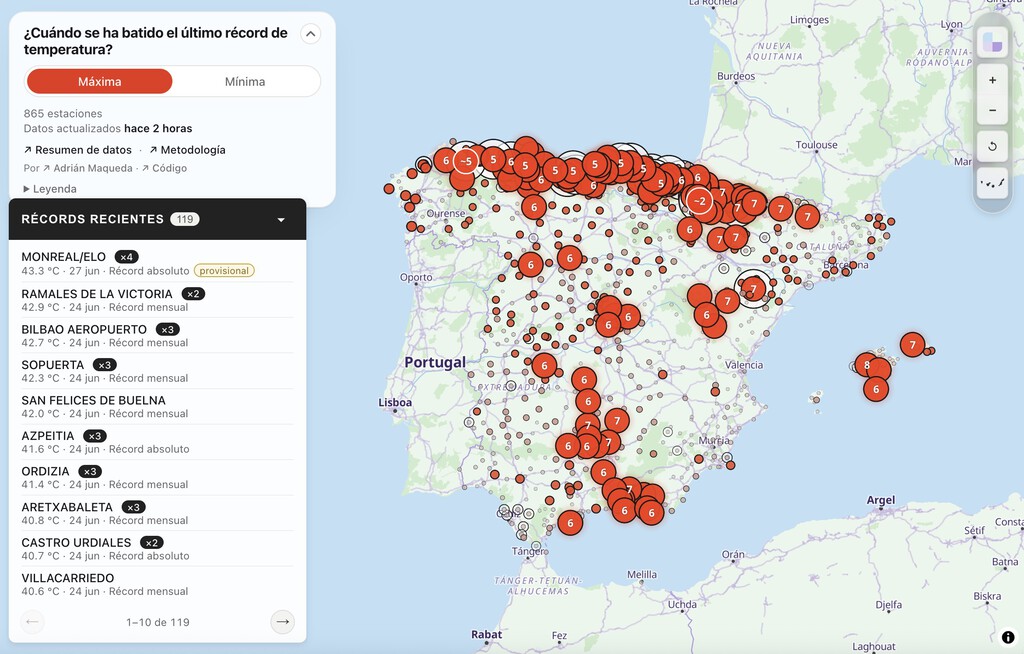
The result is a country dotted with records, many of them set in recent years. That clustering is the real story. When records fall across many stations at once, it signals a systemic shift rather than random weather noise.
Why Minimum Temperatures Matter Too
The map's inclusion of minimum temperatures is significant. Hot nights prevent cities and bodies from cooling down, compounding heat stress during the day. A record warm minimum is often more dangerous for public health than a record high, because it removes the overnight recovery period.
June 2026: The Most Extreme June Heat Wave on Record
AEMET's data places June 22 and 23, 2026, as the warmest days in June since records began in 1950, at 7.1 °C above average. That margin is enormous for a monthly record, and it fits the broader trend of earlier, fiercer heat waves arriving in Spain.
What makes this June notable is not just the peak but the timing. Extreme heat is arriving before the traditional peak of summer, stretching the danger season and catching vulnerable populations off guard.
The 'Coolest Summer of Your Life' Problem
There is a grim running joke among climate scientists: this summer will likely be the coolest of the rest of your life. The AEMET map gives that idea empirical weight. Each year, the baseline shifts, and what once counted as extreme becomes ordinary.
If the pattern holds, the record-breaking June of 2026 could, within a decade or two, be remembered as a fairly normal June. That is the core message the map conveys without a single word of commentary.
Key Takeaways From Spain's Record Heat Data
- June 2026 was unprecedented: June 22–23 were the hottest June days in Spain since at least 1950, at 7.1 °C above normal.
- Records are clustering: The AEMET map shows many stations setting their latest records in recent years, indicating a systemic trend.
- Nights are warming too: The tool tracks minimum temperatures, which are critical for heat health risks.
- The map is live: It updates automatically as new records are set, making it a real-time climate indicator.
- Perception meets data: The feeling that summers are hotter is backed by station-level observations.
How the Map Works and Why It Matters
Maqueda's system pulls readings from AEMET's station network and compares them against historical records. When a station exceeds its previous high or low, the map updates to show the new record and its date. This automation turns a complex dataset into an accessible public tool.
For researchers, journalists, and ordinary citizens, that accessibility matters. Climate data can feel abstract, but a map showing a record set near your hometown makes the trend personal and immediate.
| Metric | Detail | Significance |
|---|---|---|
| Record June days | June 22–23, 2026 | Hottest June days since at least 1950 |
| Temperature anomaly | +7.1 °C above normal | Extreme margin for a monthly record |
| Data source | AEMET station network | Official Spanish meteorological records |
| Map creator | Adrián Maqueda | Data analyst and developer |
| Update method | Automatic | Reflects new records as they occur |
Who Is Affected and What to Watch Next
Spain's increasingly record-hot summers affect everyone, but some groups face sharper risks. Elderly people, outdoor workers, and residents of dense urban areas with little shade are most vulnerable to prolonged heat, especially when nights stay warm. The background to this story is set out in South Korea Heatwave: Highest Temperature Ever Recorded. A related thread runs through Spain's Fourth Heat Wave: AEMET Alerts Extreme Temperatures Amid Fire Crisis. Earlier coverage in What Exactly Is a Heat Wave? AEMET's Golden Rule for Spain shows how the argument developed.
Agriculture is also on the front line. Earlier and more intense heat waves can stress crops during critical growth periods, while water reserves face added pressure. Energy systems, meanwhile, must handle surging demand for cooling. A closer look at the same subject appears in Spain Heat Wave Forecast: Meteorologists Warn of Brutal 45°C. Anyone following the wider picture can start with Spain Faces Worst-Case Heat Wave Scenario as Climate Hotspot. The same theme surfaces in Spain Heatwave Alert: AEMET Warns of Intense Heat Return, which takes a different angle.
What to watch next is whether the clustering of records continues through the rest of summer and into coming years. Each new update to the map will show whether June 2026 was an outlier or a preview of the new normal. Context on how this played out before sits in Spain's AEMET Forecast: No Autumn in Sight as Heat Persists. A companion piece, Mediterranean Sea Temperature Record Broken After 50 Years, approaches the same subject from another angle.
FAQ
What does the AEMET record temperature map show?It displays every station in AEMET's network and the most recent heat record it has broken, for both maximum and minimum temperatures. The map updates automatically whenever a new record is set, making it a live view of Spain's climate extremes.
It displays every station in AEMET's network and the most recent heat record it has broken, for both maximum and minimum temperatures. The map updates automatically whenever a new record is set, making it a live view of Spain's climate extremes.
How extreme was the June 2026 heat wave in Spain?According to AEMET data, June 22 and 23, 2026, were the hottest June days in Spain since at least 1950, running 7.1 °C above normal. It was the most extreme June heat wave ever recorded in the country.
According to AEMET data, June 22 and 23, 2026, were the hottest June days in Spain since at least 1950, running 7.1 °C above normal. It was the most extreme June heat wave ever recorded in the country.
Why are minimum temperatures important in heat records?Warm nights prevent people and cities from cooling down, which increases heat stress and health risks. Record minimum temperatures can be more dangerous than daytime highs because the body gets no overnight relief.
Warm nights prevent people and cities from cooling down, which increases heat stress and health risks. Record minimum temperatures can be more dangerous than daytime highs because the body gets no overnight relief.
Will this June become a normal June in the future?If current warming patterns continue, the record-breaking June of 2026 could eventually be seen as an ordinary June. Each year shifts the baseline, so what is extreme today may become typical within a few decades.
If current warming patterns continue, the record-breaking June of 2026 could eventually be seen as an ordinary June. Each year shifts the baseline, so what is extreme today may become typical within a few decades.
Browse the Shop
 Acacia frida deluxe solid wood bed frame |
Bedroom bench |
Bed chest drawers |
Lingerie dresser |
Frame base |
Mirror with jewelry storage |
30 Bathroom Vanity |
Memory foam queen mattress |
Mattresses for back pain |
Nightstand set of 2 |
Grand Goldman Shop |
Civil Lawyer
Deutschland Trikot WM 2026







