
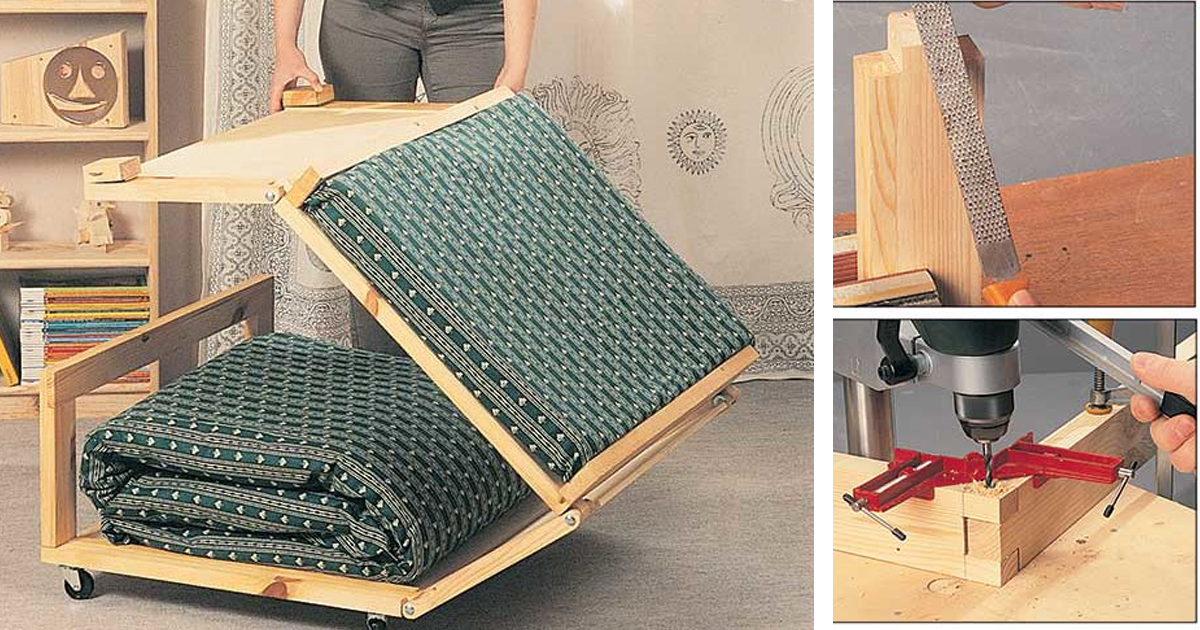
Looking for the ultimate space-saving solution? This DIY wooden sofa bed is a clever and versatile piece of furniture that transforms from a comfortable 800×750 mm footrest into a full 2-meter-long, 80-cm-wide guest bed in seconds. With its wheels and sturdy construction, it also works perfectly as an extra seat. Building this sofa bed requires some woodworking skill—especially for the joints and hinges—but the result is a smart, mobile piece that will impress your guests. Let's dive into the step-by-step guide.
Materials and Tools You'll Need
Essential Tools
- Saw for straight and square cuts
- Jigsaw
- Drill
- Router
- Sander
- Knife or scissors for synthetic sponge
- Sewing machine (optional)
- Finishing tools
Wood and Hardware
- Listel section 25×70 mm (preferably hard, elastic wood): 1 piece (A) 800 mm, 2 (C) 780 mm, 2 (D) 810 mm, 2 (E) 360 mm, 2 (F) 200 mm, 2 (G) 230 mm
- Listel section 17.5×70 mm: 4 pieces (B) 800 mm
- Plywood (poplar or birch for durability)
- Swivel casters (4)
- Hinges and screws
- Cushion foam and fabric
For all your home improvement needs, including tools and hardware, check out our selection. If you're working outdoors, our garden supplies can help with any patio projects.
Find Bleeding Edge Supplements at Scandalous Prices on iHerb.

Step-by-Step Construction of the DIY Sofa Bed
1. Cutting and Preparing the Wood
Start by cutting all listels and plywood panels to the specified dimensions. Precision is key here—use a square saw for clean, accurate cuts. The width of the listels used for the feet must match the height of the casters you choose.
2. Assembling the Frame and Joints
Assemble the main frame using the 25×70 mm listels. The joints are critical: they allow the bed to fold and unfold smoothly. Use a router to create precise mortise and tenon joints, or opt for dowel joints if you prefer. Sand all surfaces thoroughly before assembly.
For a comfortable workspace, consider adding a desk or work surface to your workshop. And don't forget proper lighting to see every detail.
3. Installing the Hinges
The hinges (snodi) are made from the listels themselves. Cut small blocks from the 17.5×70 mm listels and attach them to the frame sections. These will act as pivots, allowing the bed to fold into a compact cube. Test the movement—it should be smooth and effortless.
4. Adding the Swivel Casters
Attach four swivel casters to the base of the headboard section. These wheels make the sofa bed easy to move around. Choose casters with brakes for stability when in use. For outdoor versions, our outdoor patio furniture collection offers durable options.
5. Building the Cushion and Upholstery
Cut the foam to size (800×750 mm for the folded position, but longer for the unfolded bed). Sew a fabric cover with a zipper for easy removal. Add small weights (like lead shot) to the front edges to keep the cover in place when the bed is folded.
6. Final Assembly and Finishing
Attach the cushion to the frame using Velcro or ties. Apply a protective finish to the wood—varnish or oil works well. Let everything dry completely before use.

How the Sofa Bed Works
To transform the footrest into a bed, simply lift the cushion—it pulls the tail of the bed that was hanging against the backrest. Once unfolded, the bed rests on the four casters of the headboard, the side panels that hold the cushion, and the hinged feet at the final section. It's like a hedgehog rolling and unrolling!
Enhance your guest room with matching rugs and curtains for a cozy feel. For the bedroom, browse our beds and mattresses for complete comfort.
Tips for Customizing Your Sofa Bed
- Size adjustments: To make it shorter or narrower, simply cut the listels and plywood panels to your desired dimensions.
- Wood choice: Beech and birch plywood offer superior strength and durability for the joints.
- Storage: Use the hollow space inside the frame for storing extra blankets or pillows.
- Style: Paint or stain the wood to match your decor. Our wall decor collection can help tie the room together.
Frequently Asked Questions
1. Is this project suitable for beginners?
This project requires intermediate woodworking skills due to the precision needed for the joints and hinges. Beginners should start with a simpler project or seek guidance from an experienced woodworker.
2. Can I use different types of wood?
Yes, but hardwoods like beech or birch are recommended for the joints to ensure durability. Softwoods like pine are easier to work with but may wear faster.
3. How much does it cost to build?
Costs vary depending on wood choice and hardware. Expect to spend around $100–$200 for materials. Compare with our sofas and storage benches for ready-made options.
4. Can I make it larger or smaller?
Absolutely! Adjust the listel lengths and plywood panels to your preferred dimensions. Just ensure the width of the foot listels matches the caster height.
5. How do I clean the cushion cover?
Most covers can be unzipped and machine washed on a gentle cycle. For spot cleaning, use a mild detergent and water. Our home improvement section has upholstery cleaners.
More Space-Saving Ideas
If you love multi-functional furniture, explore our collections for kitchen islands and carts, dining tables, and TV entertainment furniture. For the outdoors, check out pergolas and gazebos to extend your living space.
Happy building, and enjoy your new DIY sofa bed!
Browse Grand Goldman Home Decor
Discover unique craftsmanship home decor and furniture at the Grand Goldman Shop.
Home Decor Shop
 Acacia frida deluxe solid wood bed frame |
Bedroom bench |
Bed chest drawers |
Lingerie dresser |
Frame base |
Mirror with jewelry storage |
30 Bathroom Vanity |
Memory foam queen mattress |
Mattresses for back pain |
Nightstand set of 2 |
Grand Goldman Shop |
Civil Lawyer
Deutschland Trikot WM 2026
Acacia frida deluxe solid wood bed frame |
Bedroom bench |
Bed chest drawers |
Lingerie dresser |
Frame base |
Mirror with jewelry storage |
30 Bathroom Vanity |
Memory foam queen mattress |
Mattresses for back pain |
Nightstand set of 2 |
Grand Goldman Shop |
Civil Lawyer
Deutschland Trikot WM 2026










