

Astronomers have discovered 27 circumbinary planet candidates—worlds that orbit two stars, much like Tatooine in Star Wars. The finding, led by researchers at the University of New South Wales, could dramatically expand our understanding of planetary systems.
Until now, only 18 circumbinary planets were known, making them extreme rarities among the more than 6,000 confirmed exoplanets. This new batch of candidates, if confirmed, would more than double that number.
Find Original Home Decor sparking conversation at Grand Goldman Shop.

Why circumbinary planets are so rare
Most known exoplanets orbit single stars like our Sun. Circumbinary planets, which orbit two stars, are harder to detect because the stars' movements complicate the signals. Only a handful have been confirmed, and the most famous—Tatooine—is fictional.
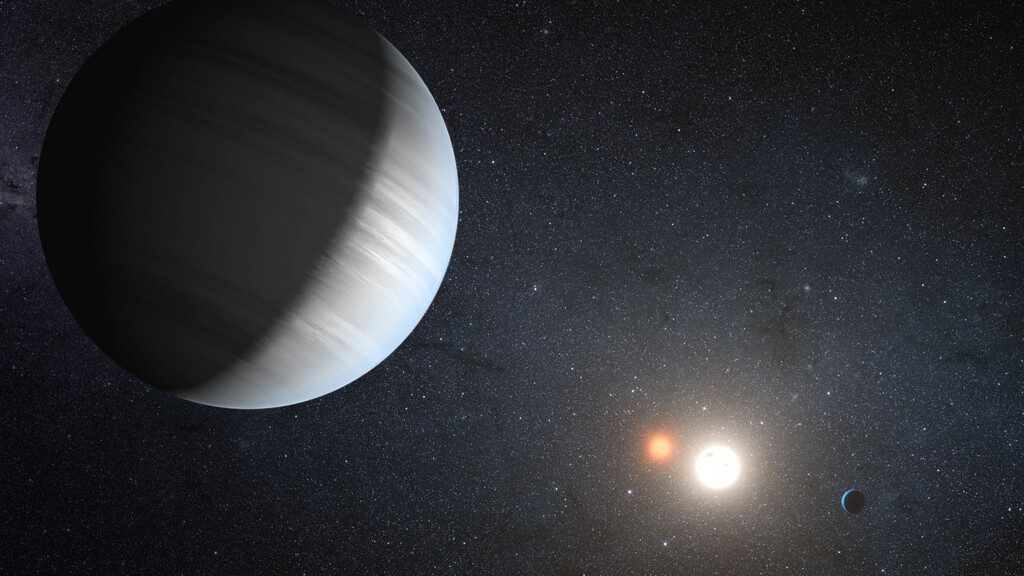
The team's work suggests that these planets might not be as rare as once thought. The key was using a different detection method that had been underutilized.
The method: apsidal precession
The researchers employed a technique called apsidal precession, which tracks changes in the timing of eclipses between the two stars. If those changes can't be explained by general relativity or stellar physics, something else—like a planet—must be perturbing the system.
This method had been used before to study binary star systems, but never to search for planets within them. By applying it to data from the TESS telescope, the team identified 27 candidates.
How apsidal precession reveals hidden planets
When two stars eclipse each other, their orbital dance creates a predictable pattern. A planet's gravity can cause slight variations in that pattern, which apsidal precession can detect. It's like watching a clock that runs a few seconds fast or slow—something is affecting its mechanism.
What this means for the search for alien worlds
If even a fraction of these candidates are confirmed, it would reshape our understanding of where planets can form. Circumbinary planets might be more common than we thought, and this method could be used to find many more.
The discovery also raises questions about habitability. Could a planet with two suns support life? The varying light and heat from two stars would create complex seasons, but some scientists argue it's possible. The background to this story is set out in Over 6,000 Exoplanets Found, But None Like Earth: PLATO Telescope. A related thread runs through Youngest Exoplanet Elias 2-24b Discovered by Chilean Scientists. Earlier coverage in Mysterious Exoplanet GJ 3090 b Orbits Backwards and Defies Explanation shows how the argument developed.
- 27 new candidates for circumbinary planets have been identified using TESS data.
- The method, apsidal precession, tracks eclipse timing variations to infer hidden planets.
- Only 18 circumbinary planets were previously confirmed, making this a significant leap.
- Confirmation of these candidates could more than double the known population.
- The technique could be applied to other binary systems to find even more planets.
Comparison of detection methods
| Method | What it detects | Best for | Limitations |
|---|---|---|---|
| Transit method | Dip in starlight as planet passes | Single-star systems | Requires alignment; less effective for binaries |
| Radial velocity | Wobble in star's motion | Nearby stars | Difficult with two stars |
| Apsidal precession | Eclipse timing variations | Binary systems | Needs precise timing; confirmation required |
What's next for these candidates
The 27 candidates must be confirmed through additional observations. Some may turn out to be false positives caused by other phenomena. Follow-up studies will use other telescopes and methods to verify the planets' existence. A closer look at the same subject appears in What Is an Exoplanet? Inside the Search for Distant Worlds. Anyone following the wider picture can start with Science: latest articles. The same theme surfaces in NASA Finds Two Cotton Candy Planets That Break All Expectations, which takes a different angle.
If confirmed, these worlds would be prime targets for atmospheric studies. Future instruments like the James Webb Space Telescope could analyze their atmospheres for signs of life. Context on how this played out before sits in Star Catcher's $88M Space Power Grid to Recharge Satellites. A companion piece, Supermassive Black Holes May Hinder Habitable Exoplanet Search, approaches the same subject from another angle.
FAQ
What is a circumbinary planet?
A circumbinary planet orbits two stars instead of one. It's like Tatooine from Star Wars, where the planet has two suns.
How were these 27 candidates found?
Researchers used a method called apsidal precession, which looks for changes in the timing of eclipses between two stars. If the changes can't be explained by known physics, a planet might be the cause.
Are these planets confirmed?
No, they are candidates. Further observations are needed to confirm whether they are actually planets.
Why is this discovery important?
It suggests circumbinary planets may be more common than previously thought and demonstrates a new way to find them.
Browse the Shop
 Acacia frida deluxe solid wood bed frame |
Bedroom bench |
Bed chest drawers |
Lingerie dresser |
Frame base |
Mirror with jewelry storage |
30 Bathroom Vanity |
Memory foam queen mattress |
Mattresses for back pain |
Nightstand set of 2 |
Grand Goldman Shop |
Civil Lawyer
Deutschland Trikot WM 2026







