

The Iberian eclipse trio will bring three opportunities to see the same phenomenon: Baily's Beads. This rare and beautiful effect occurs during total solar eclipses when sunlight streams through the Moon's rugged terrain, creating a string of bright pearls along the lunar edge.
On August 12, the first of the three eclipses will sweep across the Iberian Peninsula, drawing skywatchers to the path of totality. For those who have never experienced a total solar eclipse, the event promises awe—but understanding Baily's Beads can deepen the experience.
Find Original Home Decor sparking conversation at Grand Goldman Shop.

What Are Baily's Beads?
Baily's Beads are brilliant points of light that appear along the Moon's edge just as totality begins and ends. They form because the Moon's surface is not smooth; it is covered with valleys, craters, and mountains. When the Sun's light filters through these irregularities, it creates a series of bright beads rather than a continuous ring.
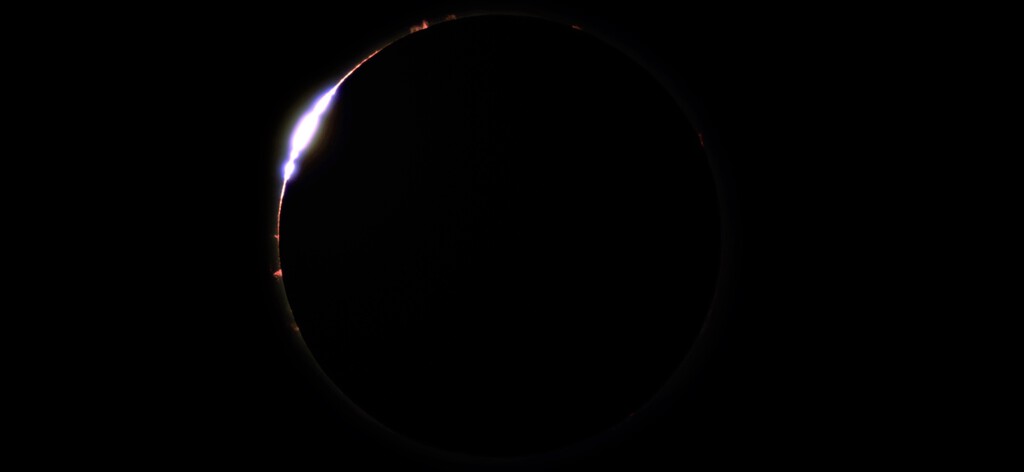
Named after 19th-century astronomer Francis Baily, who popularized their description, these beads are a fleeting but memorable sight. They are most visible during the diamond ring effect, when a single bead shines brightly just before totality.
Why Do Baily's Beads Occur?
The phenomenon is a direct result of the Moon's topography. As the Moon moves across the Sun, its uneven limb allows sunlight to pass through gaps between lunar mountains and valleys. Each gap acts like a pinhole, focusing light into a bright spot. The number and arrangement of beads depend on the specific lunar terrain along the edge at that moment.
The Iberian Eclipse Trio: Three Chances to Witness
The Iberian eclipse trio refers to three solar eclipses visible from the Iberian Peninsula within a relatively short period. The first occurs on August 12, followed by two more in the coming years. Each offers a unique opportunity to observe Baily's Beads, provided you are within the path of totality.
For the August 12 eclipse, the path of totality crosses parts of Spain and Portugal, making it a prime destination for eclipse chasers. Many are already planning travel to locations within the shadow band.
What to Expect on August 12
During the partial phases, the Sun will gradually be obscured. As totality approaches, watch for Baily's Beads to appear along the receding edge of the Sun. They last only a few seconds, so keep your eyes on the sky—and use proper solar filters until totality begins.
How to Observe Baily's Beads Safely
Safety is paramount when observing any solar eclipse. Never look directly at the Sun without certified eclipse glasses or solar filters, except during the brief period of totality when the Sun is completely covered.
- Use ISO 12312-2 certified eclipse glasses during partial phases.
- Position yourself within the path of totality for the best view of Baily's Beads.
- Arrive early to set up equipment and find a clear vantage point.
- Use binoculars or a telescope only with proper solar filters.
- During totality, remove filters to see Baily's Beads and the corona.
Baily's Beads are best seen with the naked eye, but binoculars can enhance the view if used safely. Remember that the beads appear just before and just after totality, so be prepared.
Comparing the Three Eclipses in the Trio
Each eclipse in the Iberian trio will have different characteristics, including the duration of totality and the specific lunar terrain that produces the beads. The table below summarizes key details.
| Eclipse | Date | Type | Visibility in Iberia |
|---|---|---|---|
| First | August 12, 2026 | Total | Path of totality across Spain and Portugal |
| Second | August 2, 2027 | Total | Southern Spain |
| Third | January 26, 2028 | Annular | Partial in Iberia |
Note that the third eclipse is annular, meaning the Moon will not completely cover the Sun, so Baily's Beads may appear differently or not at all. Totality is required for the classic bead effect. The background to this story is set out in Solar Eclipse in Cornwall: A Magical Communal Experience. A related thread runs through Solar Eclipse Communal Magic: Cornwall's Skyward Moment. Earlier coverage in Europe Solar Eclipse 2026: Rare Spectacle Draws Millions shows how the argument developed.
Why Baily's Beads Matter to Astronomers
Historically, Baily's Beads helped scientists study the Moon's topography. By observing the timing and pattern of the beads, astronomers could map the lunar limb. Today, they remain a beautiful reminder of the intricate dance between Earth, Moon, and Sun. A closer look at the same subject appears in Solar Eclipse Night: A Social Phenomenon Despite Clouds. Anyone following the wider picture can start with Free Eclipse Glasses in Spain: Where to Get Them Before the Solar Eclipse. The same theme surfaces in Best Solar Telescopes for Safe Solar Eclipse Viewing, which takes a different angle.
For eclipse enthusiasts, capturing Baily's Beads on camera is a challenge and a thrill. The beads are bright and fast, requiring precise timing and exposure settings. Context on how this played out before sits in Solar Eclipse Viewing Tips from Real Observers.
FAQ
What exactly are Baily's Beads?
Baily's Beads are bright spots of sunlight that shine through the Moon's valleys and craters during a total solar eclipse. They appear as a string of glowing pearls along the edge of the Moon just before and after totality.
Can I see Baily's Beads without a telescope?
Yes, Baily's Beads are visible to the naked eye during totality, but you must use certified eclipse glasses during the partial phases. Binoculars or telescopes with solar filters can provide a closer view, but safety must come first.
Will the Iberian eclipse trio guarantee a view of Baily's Beads?
Only if you are within the path of totality during a total solar eclipse. The first two eclipses in the trio are total, offering the best chance. The third is annular, so Baily's Beads may not be visible.
How long do Baily's Beads last?
Baily's Beads typically last only a few seconds, depending on the eclipse and your location. They appear just before totality begins and just after it ends, so timing is crucial.
As the August 12 eclipse approaches, skywatchers across Iberia are preparing for a celestial spectacle. Whether you are a seasoned chaser or a first-time observer, Baily's Beads are a highlight not to be missed.
Browse the Shop
 Acacia frida deluxe solid wood bed frame |
Bedroom bench |
Bed chest drawers |
Lingerie dresser |
Frame base |
Mirror with jewelry storage |
30 Bathroom Vanity |
Memory foam queen mattress |
Mattresses for back pain |
Nightstand set of 2 |
Grand Goldman Shop |
Civil Lawyer
Deutschland Trikot WM 2026







