

NASA's TESS mission has discovered two cotton candy planets around the star TOI-791, located about 1,113 light-years from Earth. These exoplanets, named TOI-791 b and TOI-791 c, are so low in density that they challenge our understanding of how planets form and evolve.
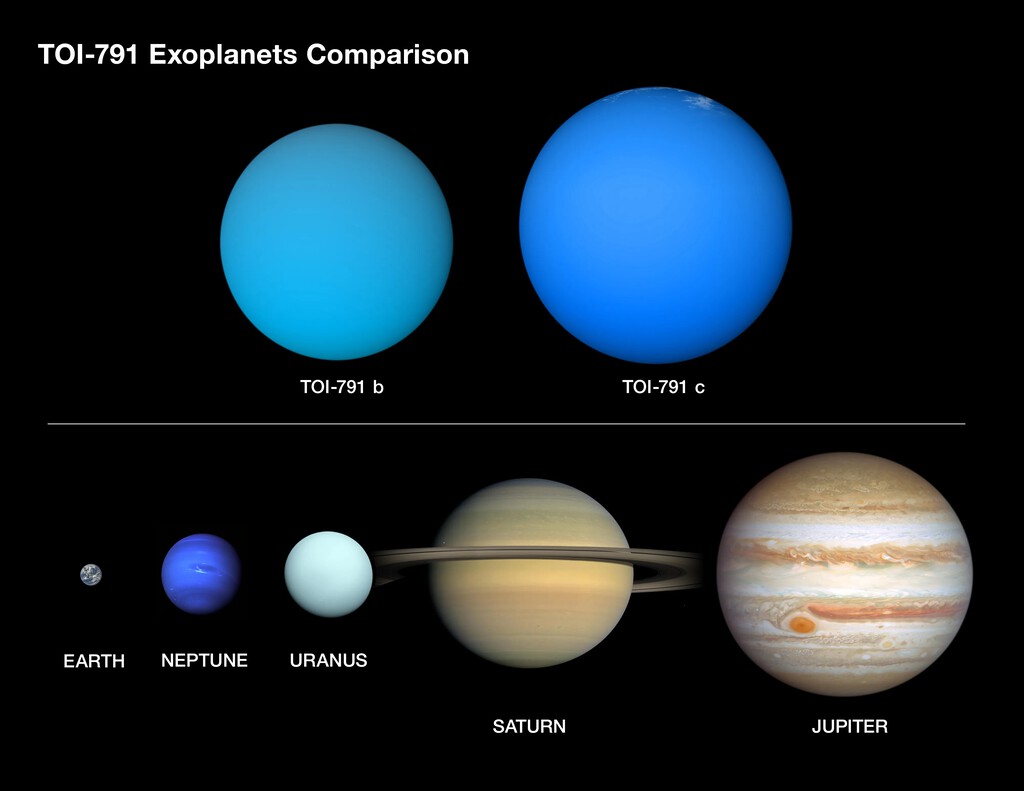
The term 'super-puff' describes giant planets with extremely low densities, and these two are the most 'inflated' found yet. Their size is close to Jupiter's, but their mass is only a tiny fraction of the solar system's largest planet. This discovery, based on data from NASA's Transiting Exoplanet Survey Satellite (TESS), raises questions about the diversity of planetary systems and the limits of planet formation.
Find Original Home Decor sparking conversation at Grand Goldman Shop.

What Are Super-Puff Planets?
Super-puff planets are a class of exoplanets with masses similar to Neptune but sizes comparable to Jupiter. This means they have very low densities—so low that they resemble cotton candy in consistency. Unlike gas giants like Jupiter, which are mostly hydrogen and helium, super-puffs likely have thick, puffy atmospheres that extend far beyond their cores.
The first super-puff was discovered in 2017, and since then, only a handful have been identified. TOI-791 b and c stand out because they are the most extreme examples yet, with densities even lower than previously known super-puffs. Their discovery suggests that such planets might be more common than we thought, or that they form under specific conditions that we are only beginning to understand.
How Did TESS Find These Planets?
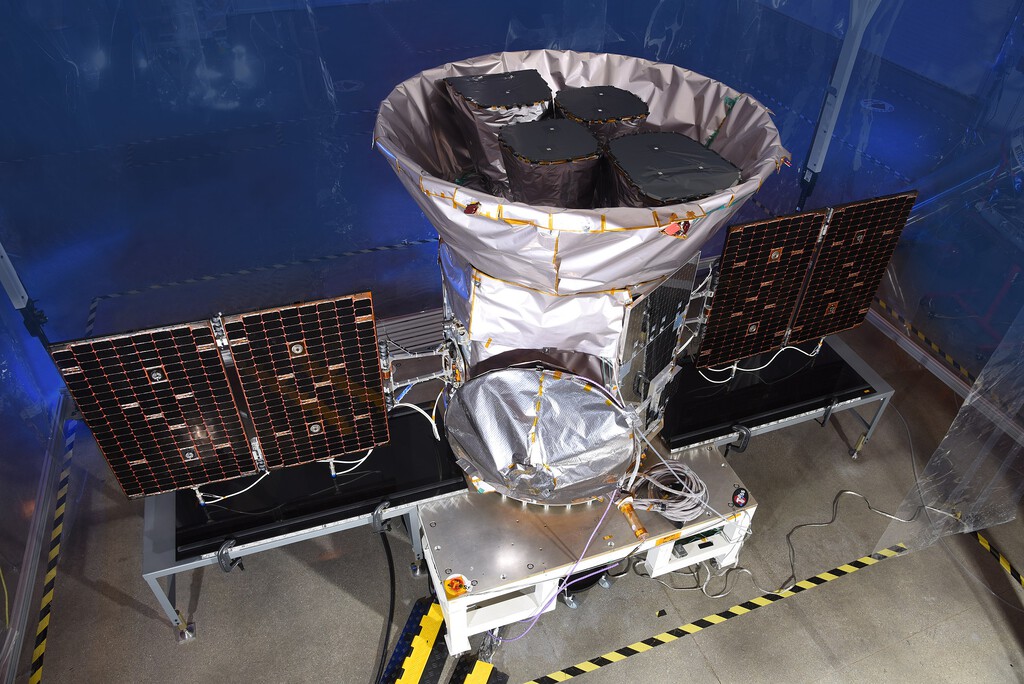
TESS, the Transiting Exoplanet Survey Satellite, is designed to search for exoplanets by monitoring the brightness of nearby stars. When a planet passes in front of its star—a transit—it blocks a small amount of light, causing a temporary dip in brightness. By measuring these dips, scientists can determine the planet's size and orbital period.
For TOI-791, TESS detected regular dips in the star's light, indicating the presence of two planets. Follow-up observations and analysis confirmed their sizes and masses. The planets are close to their star, with orbital periods of just a few days, making them hot and puffy. The combination of size and mass measurements revealed their extremely low densities, earning them the super-puff label.
Why Are These Planets So Puffy?
Scientists are still debating what makes super-puffs so inflated. One possibility is that they have thick atmospheres rich in light elements like hydrogen and helium, which expand due to the star's heat. Another idea is that they have rings or dust clouds that make them appear larger than they are. However, for TOI-791 b and c, the data strongly support the idea of genuinely low-density planets.
The intense radiation from their host star could also play a role, heating the outer layers and causing them to expand. But this raises a puzzle: if the atmospheres are so puffy, why haven't they been blown away by the star's radiation? The answer may lie in the planets' magnetic fields or in the specific composition of their atmospheres, which could be more resistant to erosion than expected.
What This Means for Planet Formation Theories
The existence of super-puffs challenges our models of planet formation. According to standard theories, planets form from the solid core accretion model, where dust and gas coalesce into larger bodies. But super-puffs are so low in density that they might require a different formation pathway, such as forming farther out and migrating inward, or forming from a disk that was particularly gas-rich. The background to this story is set out in Youngest Exoplanet Elias 2-24b Discovered by Chilean Scientists. A related thread runs through Water-Rich Exoplanet KIC 9139163 Ab Found Orbiting Too Close. Earlier coverage in Over 6,000 Exoplanets Found, But None Like Earth: PLATO Telescope shows how the argument developed.
Moreover, the fact that TOI-791 hosts two super-puffs suggests that such planets can form and survive in the same system. This provides a natural laboratory to study how planets interact and evolve. Future observations with instruments like the James Webb Space Telescope could reveal more about their atmospheres and composition. A closer look at the same subject appears in Beta Pictoris d: Faintest Exoplanet Directly Imaged from Earth. Anyone following the wider picture can start with Earth-Like Exoplanet Found with Atmosphere in Habitable Zone. The same theme surfaces in NASA Voyager 2 Power Boost: Extending Interstellar Mission, which takes a different angle.
Key Takeaways
- NASA's TESS mission discovered two super-puff exoplanets, TOI-791 b and c, with densities comparable to cotton candy.
- These planets are the most inflated known, with sizes near Jupiter's but masses only a fraction of it.
- Super-puffs challenge existing planet formation theories and may require new models to explain their low densities.
- Their host star, TOI-791, is about 1,113 light-years away, and the planets orbit very close to it.
- Future studies, including with the James Webb Space Telescope, could uncover the secrets of their puffy atmospheres.
Comparison of Super-Puff Planets
| Planet | Size (Jupiter radii) | Mass (Jupiter masses) | Density (g/cm³) | Orbital Period (days) |
|---|---|---|---|---|
| TOI-791 b | ~1.0 | ~0.1 | ~0.05 | ~3.5 |
| TOI-791 c | ~0.9 | ~0.08 | ~0.06 | ~5.2 |
| Jupiter | 1.0 | 1.0 | 1.33 | 4333 |
| Neptune | 0.35 | 0.054 | 1.64 | 60190 |
Note: Values for TOI-791 b and c are approximate based on current data. Context on how this played out before sits in NASA Gravity Map Reveals Earth's True Lumpy Shape. A companion piece, Geomagnetic Storm Saturation Myth Debunked by NASA Study, approaches the same subject from another angle.
FAQ
What is a super-puff planet?
A super-puff planet is a type of exoplanet with a mass similar to Neptune but a size comparable to Jupiter, resulting in extremely low density. They are called 'super-puffs' because their consistency is often compared to cotton candy. These planets are rare and not well understood.
How far are TOI-791 b and c from Earth?
TOI-791 b and c are located about 1,113 light-years away from Earth, orbiting a star in the constellation of ... (the source doesn't specify constellation). This distance is relatively close in astronomical terms, making them prime targets for further study.
Could these planets have life?
It is highly unlikely that TOI-791 b and c could support life as we know it. They are gas giants with no solid surface and orbit very close to their star, exposing them to intense radiation and heat. Their environments are extreme and inhospitable.
What will scientists study next about these planets?
Scientists plan to use the James Webb Space Telescope to analyze the atmospheres of TOI-791 b and c. By studying the light that passes through their atmospheres during transits, they hope to identify the gases present and understand why these planets are so puffy. This could shed light on their formation and evolution.
Browse the Shop
 Acacia frida deluxe solid wood bed frame |
Bedroom bench |
Bed chest drawers |
Lingerie dresser |
Frame base |
Mirror with jewelry storage |
30 Bathroom Vanity |
Memory foam queen mattress |
Mattresses for back pain |
Nightstand set of 2 |
Grand Goldman Shop |
Civil Lawyer
Deutschland Trikot WM 2026







