

Most people replace a pillow only when it stops looking like a pillow. In practice, a pillow can be quietly past its useful life long before it visibly falls apart: it flattens overnight, it needs punching into shape twice a night, or you wake with a stiff neck you blame on your mattress. Because pillows sit directly under your head for seven or eight hours a night, they absorb sweat, skin oils and dust, and they lose loft with every night of compression. A sensible replacement window is roughly every one to two years for basic polyester fills and up to three or four years for dense latex or well-made memory foam, but the material matters less than how the pillow behaves for you.
This guide is about judging that moment, not about selling you a set of pillows every January. We cover the signs that a pillow is finished, how the main fill types age differently, and six currently sold pillow families worth considering if you are replacing one. We have not physically tested these pillows, so nothing below is a lab result or a measured score — it is a buying framework built from published specifications, construction details and the patterns that show up repeatedly in owner reviews.
Find Original Home Decor sparking conversation at Grand Goldman Shop.


How we chose
We started from the question readers actually ask: which pillow will still support my neck in two years, and which will be a flat pancake by next spring? The picks below were filtered on four criteria. First, fill type and stated density — a pillow that names its foam density or fill weight is easier to judge than one that only says "premium." Second, construction that survives washing or at least has a removable, washable cover, since hygiene is half the reason to replace a pillow at all. Third, availability of the family in Spain through Amazon, with enough size and firmness options to suit side, back and stomach sleepers. Fourth, the weight of owner feedback: we looked for families with long-running review histories and consistent complaints, not just consistent praise. We deliberately included a mix of budget polyester, memory foam, latex and adjustable fills, because the right replacement interval depends heavily on which of those you buy.
Comparison table
| Product | Best for | Key feature | Verdict |
|---|---|---|---|
| IKEA KLUBBSPORRE | Combination sleepers | Memory foam core with cooling gel layer | Good middle ground if you flip between back and side |
| TEMPUR Original | Back and side sleepers wanting firm support | Dense viscoelastic foam, slow return | Long-lived but heavy; not for stomach sleepers |
| Eli & Elv Latex | Hot sleepers and allergy sufferers | Talalay latex, breathable and naturally dust-mite resistant | Best bet for a cooler, longer-lasting fill |
| Coop Home Goods Adjustable | Anyone who can never find the right loft | Shredded memory foam you add or remove | Most forgiving option; needs occasional refilling |
| Beckham Hotel Collection | Budget replacement and guest rooms | Down-alternative microfibre, machine washable | Cheap enough to replace yearly without guilt |
| Tempur-Pedic NeckPillow | Neck pain and side sleepers | Contoured foam with a raised neck roll | Specialist shape; try before committing |
| Snuggledown | Traditional feather and down feel | Natural fill with a cotton cover | Comfortable but needs regular fluffing and shorter cycles |
IKEA KLUBBSPORRE
- Memory foam core with a gel layer aimed at reducing heat build-up
- Ergonomic shape with a slightly higher edge for side sleeping
- Widely available and easy to buy in person to check the loft
- Cover is removable and washable, which helps between replacements
The KLUBBSPORRE is the pillow we would point a combination sleeper toward first, because its shape gives a bit of neck support without the rigid feel of a pure contour pillow. The gel layer is a modest cooling measure rather than a cure for night sweats, and the foam will still compress over time — expect to reassess somewhere in the two-to-three-year range rather than treating it as a decade purchase.
It suits people who rotate between their back and side and want one pillow for both. Skip it if you sleep mostly on your stomach, where the raised edge will push your head too high.
TEMPUR Original
- Dense viscoelastic foam that holds its shape for years
- Firm, slow-returning feel that supports the neck rather than sinking
- Available in multiple heights for different body sizes
- Long replacement interval relative to polyester fills
TEMPUR's original foam is the reference point for people who like a firm, unyielding pillow. It is heavy and it sleeps warm, and the slow-return foam takes a night or two to get used to, but the density is why this family tends to outlast cheaper foam by a wide margin. If you are replacing a flattened polyester pillow and want to stop replacing it annually, this is the trade you are making.
Best for back and side sleepers who want firm support and do not mind weight. Skip it if you overheat easily or sleep on your stomach.
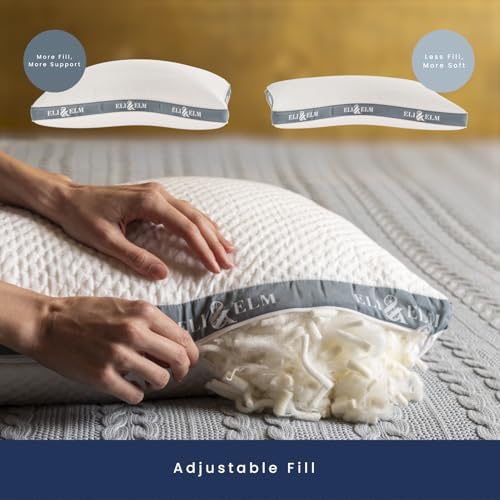
Eli & Elv Latex
- Talalay latex is breathable and springs back immediately
- Naturally resistant to dust mites, a plus for allergy sufferers
- Holds loft well, so the replacement cycle is longer than foam
- Firmer, bouncier feel than memory foam
Latex is the fill we would recommend to anyone whose main complaint is that pillows go flat and hot. It does not mould to your head the way foam does, so it feels more like a traditional pillow with better resilience, and it resists the dust-mite build-up that makes old pillows unpleasant. The trade-off is a higher upfront cost and a firmer feel that some side sleepers find too springy.
This is for hot sleepers, allergy sufferers and anyone tired of foam that slowly collapses. Skip it if you want a soft, sink-in pillow.
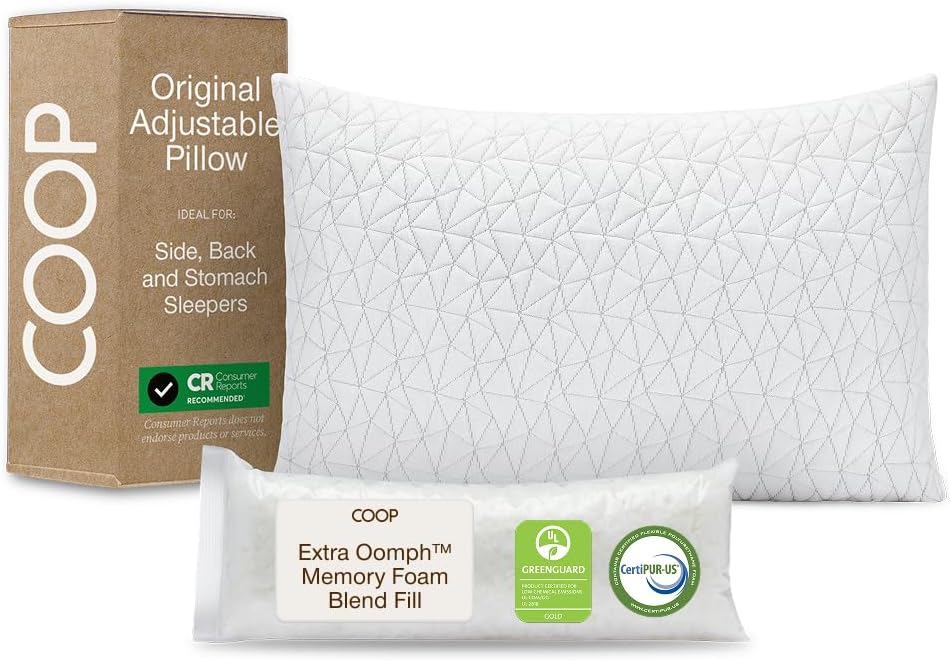
Coop Home Goods Adjustable
- Shredded memory foam fill you can remove or top up
- Lets you tune loft precisely instead of guessing at firmness
- Replacement fill is sold separately, extending the pillow's life
- Cover is machine washable
Adjustable pillows solve the most common reason people replace a pillow: it was never quite the right height to begin with. With the Coop, you unzip the inner liner, take out handfuls of fill until your neck feels neutral, and keep the spare fill for later. That makes it the most forgiving pick here, though shredded foam does clump and settle, so you will be topping it up every so often rather than replacing the whole pillow.
It is for anyone who has bought three pillows trying to find the right loft. Skip it if you want a smooth, uniform surface — the shredded fill feels lumpy under the hand, even if it supports well.

Beckham Hotel Collection
- Down-alternative microfibre that mimics a soft hotel pillow
- Machine washable, which makes hygiene easy
- Inexpensive enough to replace on a short cycle
- Comes in sets, useful for guest rooms
If your honest answer to "how often should I replace my pillow" is "whenever it gets grim," a cheap washable microfibre pillow is a rational choice. It will flatten faster than latex or dense foam — plan on a yearly swap — but it is soft, light and easy to launder, and the low cost means replacement is not a decision you agonise over. It is not a support pillow for neck pain.
Best for guest rooms, budget replacements and people who prefer a soft pillow. Skip it if you need firm neck support or want a long service life.
Tempur-Pedic NeckPillow
- Contoured shape with a raised roll that supports the neck
- Dense foam that keeps its shape
- Designed specifically for side sleepers and neck discomfort
- Compact size that stays put during the night
The NeckPillow is a specialist rather than a general pick. Its contoured profile puts your neck in a supported position and its small footprint discourages the pillow from migrating across the bed. It is genuinely helpful for some side sleepers with neck stiffness, but the shape is polarising, and stomach sleepers or anyone who likes to sprawl will find it restrictive.
It is for side sleepers with recurring neck discomfort who want a shaped pillow. Skip it if you move a lot in your sleep or sleep on your front.
Snuggledown
- Natural feather and down fill with a traditional feel
- Cotton cover that breathes better than synthetic shells
- Widely available in different firmness grades
- Can be re-lofted with a good shake each morning
Feather and down pillows are the ones people either love or cannot tolerate. They are soft, mouldable and cool, but they need daily fluffing, they compress over time, and they are not the easiest to wash. Snuggledown's range covers the common firmness grades, so you can pick a firmer fill if you need more support. Treat the replacement window as shorter than latex — think two years of regular use — and use a protective cover from day one.
This is for people who grew up with down pillows and find foam too rigid. Skip it if you have dust allergies or want a pillow you never have to fluff.
Buying guide
Signs your pillow is past it
The fold test is the simplest check: fold the pillow in half and let go. A pillow with life left springs back open; one that stays folded is finished. Beyond that, watch for a pillow that needs punching into shape more than once a night, a persistent musty or oily smell despite washing the cover, visible yellowing on the inner pillow, or a return of morning neck stiffness that eased when the pillow was new. If you are waking with blocked sinuses or itchy eyes more often than you used to, an old pillow full of dust mites is a reasonable suspect — and a reason to replace rather than keep washing.
How fill type changes the replacement cycle
Polyester and microfibre fills are the shortest-lived, typically flattening within a year of nightly use; washing them helps but also accelerates clumping. Memory foam holds shape for two to four years depending on density, though it can yellow and crumble at the edges as it ages. Latex is the longest-lived common fill, often good for three to five years, because it springs back rather than staying compressed. Feather and down sit in the middle but need more maintenance. Shredded-foam adjustable pillows are a special case: you can extend their life indefinitely by replacing the fill, which is why they are worth considering if you resent the whole replacement cycle.
Protecting the next pillow
Whatever you buy, use a washable pillow protector under the pillowcase and wash it monthly at a hot enough temperature to deal with dust mites. Air the pillow itself regularly, and check the care label before machine washing — many foam pillows should not go in the machine at all. Rotating between two pillows also doubles the effective life of each, since each one takes half the nightly compression and sweat.
If you share a bed, check whether a partner's restlessness is the real culprit before replacing anything, since the Weighted Blanket Safe discussion covers shared-sleep considerations. Shift workers sleeping through daylight hours should look at Blackout Curtains, where blocking light is treated as the first step before changing bedding. Your next step is to read the White Noise Machines picks, which explain how consistent background sound helps light sleepers settle without altering their pillow.
For the front door, the Smart lock buying guide: the checks that actually matter sets out the checks worth making before you buy.
FAQ
How often should you replace a pillow in normal use?
For a standard polyester or microfibre pillow used every night, plan on roughly once a year. Memory foam typically lasts two to four years, latex three to five, and feather and down somewhere around two years with regular fluffing. These are general ranges, not rules — the fold test and how your neck feels matter more than the calendar.
Can you wash a pillow instead of replacing it?
Sometimes. Polyester and microfibre pillows can usually be machine washed on a gentle cycle and dried thoroughly with dryer balls to break up clumps. Memory foam and latex should generally not be machine washed; spot-clean them and wash the cover instead. Washing removes sweat and dust mites but does not restore lost loft, so a flattened pillow stays flattened.
Does an expensive pillow last longer?
Often, but not always. Dense memory foam and latex genuinely outlast cheap polyester, so the cost per year can be lower despite a higher upfront price. A well-made pillow with a washable cover also stays hygienic longer. That said, an expensive pillow in the wrong height for your body will still be uncomfortable from night one.
How do I know if my pillow is causing neck pain?
If neck stiffness eases during the day and returns after sleep, the pillow is a likely contributor. Try a different loft first — adding or removing fill, or folding a towel under the pillow — before buying. If the pain persists for more than a couple of weeks, or comes with numbness or tingling, see a clinician rather than shopping for pillows.
Are dust mites a real reason to replace a pillow?
Yes. Pillows accumulate skin cells and moisture, which is exactly what dust mites need. Encasing the pillow in a washable, tightly woven protector and washing it monthly does most of the work, but a pillow that is years old and cannot be washed is worth replacing, particularly if you have asthma or allergies.
Should side and back sleepers replace pillows at different rates?
Not dramatically, but side sleepers tend to compress the pillow more unevenly, so loss of loft shows up faster. Back sleepers often get a little longer out of the same pillow. Stomach sleepers need a very low loft to begin with, which means many standard pillows are the wrong purchase regardless of age.
There is no single correct replacement date, but there is a reliable method: check loft with the fold test every few months, wash the protector monthly, and replace when the pillow stops springing back or your neck starts complaining. If you are buying now, match the fill to how you sleep — latex for hot sleepers, dense foam for firm support, adjustable shredded foam if you have never found the right height — and treat the replacement cycle as part of the cost rather than a surprise.
As an Amazon Associate we earn from qualifying purchases.







