

High-speed smuggler boats, known as pateras, are overwhelming the Guardia Civil in Murcia and Baleares, and the root cause is a simple speed gap. On September 2, off Cabo Cope (Águilas), a 10-meter boat with two outboard engines ignored orders from a Guardia Civil patrol. An officer fired two warning shots. Instead of stopping, the boat rammed the patrol vessel, leaving three agents with minor injuries. The occupants threw gasoline canisters into the sea and fled. They were carrying 28 people.
That scene highlights a growing challenge: modern smuggling boats are faster and more powerful than ever, and law enforcement is struggling to keep up. The physics are straightforward: a 350hp outboard can cover about 400 nautical miles, and these boats can mount up to four such engines. They cross from Algeria to Murcia in just 3 or 4 hours. A classic patera with a 115 or 150hp engine takes between 8 and 48 hours. This isn't just a crime story; it's a story about technology and speed on the water.
Find Original, High-end Home Decor that spark conversation at Grand Goldman Shop.
The Speed Gap: Why Interceptions Fail
The secretary of the AUGC in Murcia sums it up in three words: "We lack speed." He is calling for interceptor boats capable of 55 to 60 knots, or 102 to 111 km/h. It sounds like a union complaint, but at sea it's pure arithmetic: without speed, there is no boarding, no identification, and no arrests, so the smugglers simply flee.
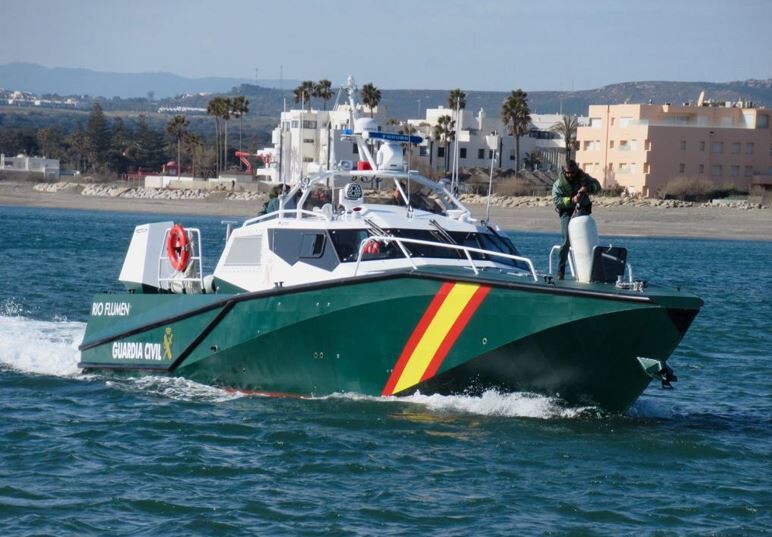
This problem has been building for years. Traditional wooden boats with sputtering engines now share the water with 10- to 15-meter semi-rigid planing boats. These modern pateras land on beaches, turn around, and return for the next group. According to Colonel Pulido, this method has been used in Murcia for about 10 years. What has changed, according to the AUGC, is capacity: these boats can carry 60 to 70 people per trip.
Who Is on Board and What It Means
The people on board are often migrants seeking a better life, but the boats themselves are operated by smuggling networks. The use of high-powered engines and large fuel capacity allows them to make the crossing quickly, reducing the time they are exposed to detection. However, it also puts passengers at greater risk, as these boats are often overloaded and not designed for safety.
The Guardia Civil's inability to intercept these boats has serious implications. It undermines border security and puts agents in danger, as seen in the September 2 incident. It also allows smuggling networks to operate with impunity, knowing that their boats can outrun patrols.
Key Takeaways
- High-speed pateras with multiple 350hp engines can cross from Algeria to Spain in 3-4 hours, while traditional boats take 8-48 hours.
- Guardia Civil patrol boats lack the speed to intercept these vessels, leading to failed pursuits and dangerous confrontations.
- The AUGC is calling for interceptor boats capable of 55-60 knots to close the speed gap.
- Modern pateras can carry 60-70 people per trip, increasing the risk to passengers and complicating law enforcement efforts.
- The problem has existed for about a decade in Murcia but has intensified with more powerful boats.
Comparing Boat Capabilities
| Boat Type | Engine Power | Speed | Range | Capacity | Crossing Time (Algeria to Murcia) |
|---|---|---|---|---|---|
| Traditional Patera | 115-150hp | Moderate | Limited | Smaller groups | 8-48 hours |
| High-Speed Patera | Up to 4 x 350hp | High (approx. 400 Nm range) | 400 Nm per engine | 60-70 people | 3-4 hours |
| Guardia Civil Patrol Boat | Varies | Insufficient (lacks speed) | Varies | N/A | N/A |
| Proposed Interceptor | High-performance | 55-60 knots (102-111 km/h) | Designed for pursuit | N/A | N/A |
The table illustrates the stark contrast between the boats used by smugglers and the capabilities of current patrol vessels. The high-speed pateras have a significant advantage in speed and range, making them difficult to catch. The longer history behind the story is traced in What Is Spain's Maricarmen Decree and Why Housing Could Spark a New 15-M.
What's Being Done and What to Watch
The AUGC is advocating for faster interceptor boats, but it's unclear if or when these will be deployed. In the meantime, the Guardia Civil continues to face dangerous situations, as evidenced by the September 2 incident. The use of warning shots is a last resort, and the fact that the boat rammed the patrol vessel shows the desperation and determination of the smugglers. The background to this story is set out in Spain's Guardia Civil Buys Remote Phone Hacking System for 2.5M. A related thread runs through Spain's Guardia Civil Faces Vehicle Crisis: 500,000 km Cars and 200,000 km. Earlier coverage in Spain's Basque Y High-Speed Rail: Seven Viaducts in Seven Kilometers shows how the argument developed.
This issue is not isolated to Spain; it reflects a broader trend in maritime security where criminal networks exploit technology to stay ahead of law enforcement. As boats become faster and more capable, authorities must adapt or risk losing control of their waters. A closer look at the same subject appears in Spain's High-Speed Rail Reliability Crisis: What the AVE Fire Reveals. Anyone following the wider picture can start with High-Speed Rail Revolution: How Dynamic Countries Lead the Way. The same theme surfaces in High-Speed Rail Revolution: Why Britain Lags Behind Global, which takes a different angle.
For now, the Guardia Civil is left with limited options. The speed gap is a physical reality that cannot be ignored. Without faster boats, interceptions will remain rare, and the dangerous cat-and-mouse game will continue. Context on how this played out before sits in Shanghai Maglev: The World's Only Commercial High-Speed Maglev Ride. A companion piece, Mark Wood: High-Speed Hero Who Gave Body and Soul to England, approaches the same subject from another angle.
FAQ
What are high-speed pateras?
High-speed pateras are modern smuggling boats equipped with powerful outboard engines, often multiple 350hp units, allowing them to cross from North Africa to Spain in just a few hours. They are larger and faster than traditional pateras.
Why can't the Guardia Civil intercept them?
The Guardia Civil's patrol boats lack the speed to catch these high-speed vessels. The AUGC states that they need interceptor boats capable of 55-60 knots to effectively pursue and board the smugglers' boats.
How many people can these boats carry?
According to the AUGC, modern pateras can carry 60 to 70 people per trip, significantly more than traditional boats. This increases the risk to passengers and complicates rescue and law enforcement operations.
What happened on September 2?
A high-speed patera ignored orders from a Guardia Civil patrol off Cabo Cope. When an officer fired warning shots, the boat rammed the patrol vessel, injuring three agents. The occupants fled after throwing gasoline canisters into the sea.
Browse the Shop
 Acacia frida deluxe solid wood bed frame |
Bedroom bench |
Bed chest drawers |
Lingerie dresser |
Frame base |
Mirror with jewelry storage |
30 Bathroom Vanity |
Memory foam queen mattress |
Mattresses for back pain |
Nightstand set of 2 |
Grand Goldman Shop |
Civil Lawyer
Deutschland Trikot WM 2026










