

Jing-Jin-Ji is China's ambitious megacity project that aims to merge Beijing, Tianjin, and Hebei province into a single urban powerhouse of over 110 million residents. This colossal conurbation, spanning more than 200,000 square kilometers—twice the size of Portugal—represents a radical rethinking of how to organize one of the world's most populous regions.
What Is Jing-Jin-Ji and Why Does It Matter?
Jing-Jin-Ji is not a city built from scratch but a strategic integration of three existing administrative areas: Beijing (Jing), Tianjin (Jin), and Hebei (Ji). The goal is to create a cohesive megalopolis that can better manage population density, economic activity, and public services.
Find Original Home Decor sparking conversation at Grand Goldman Shop.

With projections of 110 to 130 million inhabitants, this region would be larger than most countries. The scale is unprecedented, and its success or failure could set a precedent for urban planning worldwide.
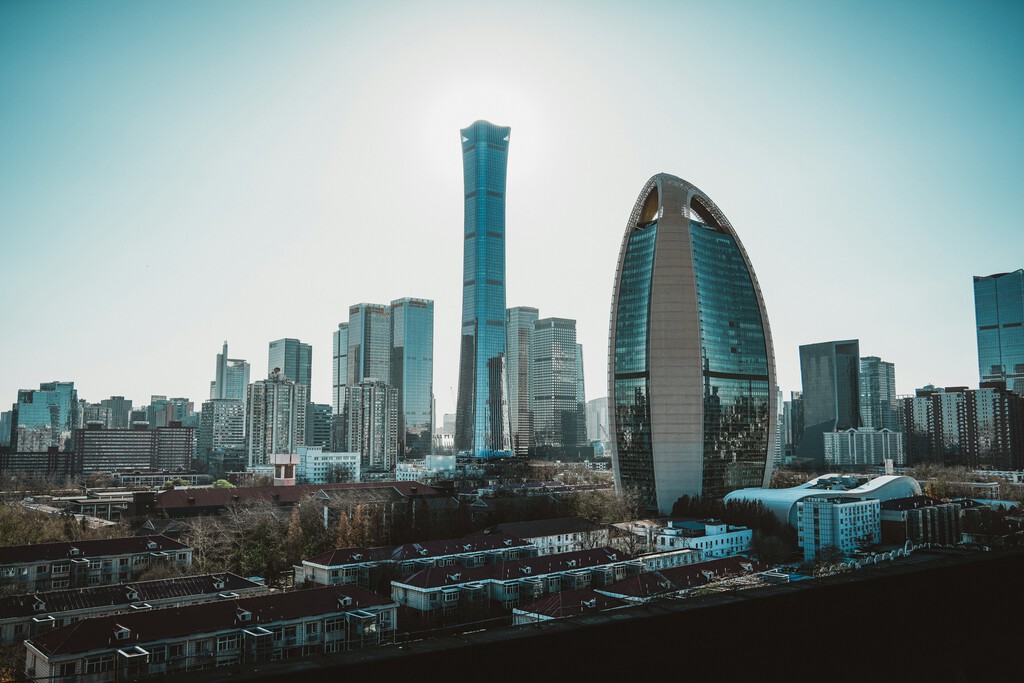
The Challenges Driving This Mega-Integration
Beijing alone hosts over 20 million permanent residents, more than the entire population of Romania or the Netherlands. Daily commutes can stretch for hours, and essential services struggle to keep pace with demand.
Pollution, traffic congestion, and inefficient resource distribution have made the capital increasingly unlivable. Jing-Jin-Ji seeks to alleviate these pressures by distributing functions and populations across a wider area.
Key Drivers Behind the Project
- Population pressure: Beijing's overwhelming density strains infrastructure and housing.
- Economic integration: Combining the strengths of Beijing's political and cultural clout, Tianjin's port and industry, and Hebei's manufacturing base.
- Environmental concerns: Reducing pollution by relocating heavy industry and improving regional coordination.
- Transport connectivity: High-speed rail networks to link the region's far-flung corners.
How Jing-Jin-Ji Compares to Other Megacities
While Tokyo, Delhi, and Shanghai are often cited as the world's largest urban areas, Jing-Jin-Ji's planned scale surpasses them all. The table below highlights key metrics.
| Megacity/Region | Population (approx.) | Area (km²) | Key Features |
|---|---|---|---|
| Jing-Jin-Ji | 110-130 million | 200,000+ | Multi-center integration, high-speed rail |
| Tokyo | 37 million | 13,500 | Dense core, advanced transit |
| Delhi | 32 million | 1,484 | Rapid growth, infrastructure gaps |
| Shanghai | 26 million | 6,340 | Financial hub, port city |
As the data shows, Jing-Jin-Ji is not just bigger—it's fundamentally different in structure. Instead of a single core, it envisions a network of interconnected cities and towns.
What This Means for Residents and Businesses
For the 110 million people who call this region home, the project promises improved public services, shorter commutes, and cleaner air. Businesses stand to benefit from a larger, more integrated market and better logistics.
However, challenges remain. Coordinating policies across three administrative zones is complex. Ensuring equitable development and avoiding ghost cities will require careful planning.
The Future of Jing-Jin-Ji
As the project advances, observers will watch how China balances growth with livability. The integration of Beijing, Tianjin, and Hebei could become a model for other densely populated regions. The same theme surfaces in Malbork Castle: The World's Largest Brick Castle Built in 1274, which takes a different angle. Context on how this played out before sits in Jing-Jin-Ji: China's 110 Million Megacity Explained.
For now, Jing-Jin-Ji remains a work in progress—a bold experiment in urban organization that could redefine what a megacity looks like. As energy and infrastructure demands grow, innovations like China's 582-ton magnet for artificial sun fusion energy highlight how the country is pushing technological boundaries to support such massive undertakings. The background to this story is set out in China's Subway Stations in Empty Fields: A Long-Term Urban Planning Strategy. A related thread runs through Trending: latest articles.
The success of this megalopolis will depend on continued investment in sustainable energy and smart infrastructure. The same drive for scale seen in Jing-Jin-Ji is mirrored in other ambitious projects, such as China's 582-ton magnet for artificial sun fusion energy, which aims to unlock nearly limitless power. Earlier coverage in Sułoszowa: The 700-Year-Old Polish Village on One 9-Kilometer Street shows how the argument developed. A closer look at the same subject appears in Spain's Housing Deficit: The Land Lock Stalling 2.9 Million Homes.
As Jing-Jin-Ji evolves, it will serve as a test case for how far integration can go. The lessons learned here could influence urban policies across Asia and beyond, much like how China's 582-ton magnet for artificial sun fusion energy is advancing fusion research globally. Anyone following the wider picture can start with Italy's Corviale: The Kilometer-Long Building That Failed.
FAQ
What is Jing-Jin-Ji?
What is Jing-Jin-Ji?
Jing-Jin-Ji is a megacity project in northern China that integrates Beijing, Tianjin, and Hebei province into a single economic and urban region. It aims to improve coordination and reduce congestion in the capital.
How many people will live in Jing-Jin-Ji?
How many people will live in Jing-Jin-Ji?
Projections suggest the region will host between 110 and 130 million residents, making it one of the largest urban agglomerations in the world.
Why is China building such a massive megacity?
Why is China building such a massive megacity?
The project addresses overcrowding, pollution, and inefficient services in Beijing by distributing population and economic activities across a wider region.
What challenges does Jing-Jin-Ji face?
What challenges does Jing-Jin-Ji face?
Coordinating policies across three administrative areas, ensuring balanced development, and avoiding ghost cities are major hurdles. Success will require sustained investment and careful planning.
Browse the Shop
 Acacia frida deluxe solid wood bed frame |
Bedroom bench |
Bed chest drawers |
Lingerie dresser |
Frame base |
Mirror with jewelry storage |
30 Bathroom Vanity |
Memory foam queen mattress |
Mattresses for back pain |
Nightstand set of 2 |
Grand Goldman Shop |
Civil Lawyer
Deutschland Trikot WM 2026







