

LaLiga has introduced a connected ball technology that adds a new layer of precision to controversial refereeing decisions. Starting from the first matchday of the 2026/27 season, all LaLiga EA Sports matches will be played with a smart ball developed in partnership with Puma, Kinexon, and the Technical Committee of Referees (CTA). This marks the first time such technology is used across an entire top-flight league season, following its previous appearances at the 2022 World Cup and the 2024 men's and 2025 women's European Championships.
The move aims to provide an objective reference for the exact moment of contact with the ball, a crucial piece of information that can reduce uncertainty in decisive plays. While the technology won't eliminate controversy entirely, it represents a significant step toward greater accuracy in a sport where split-second decisions can change the outcome of a match.
Find Original, High-end Home Decor that spark conversation at Grand Goldman Shop.
What Is the Connected Ball Technology?
The connected ball is a high-tech soccer ball equipped with an inertial measurement unit (IMU) sensor located at its center. This sensor, developed by Kinexon, contains an accelerometer and a gyroscope that capture precise data on the ball's movement and position. The data is transmitted in real time to a network of antennas installed in the stadium, allowing officials to determine exactly when the ball was touched and by whom.
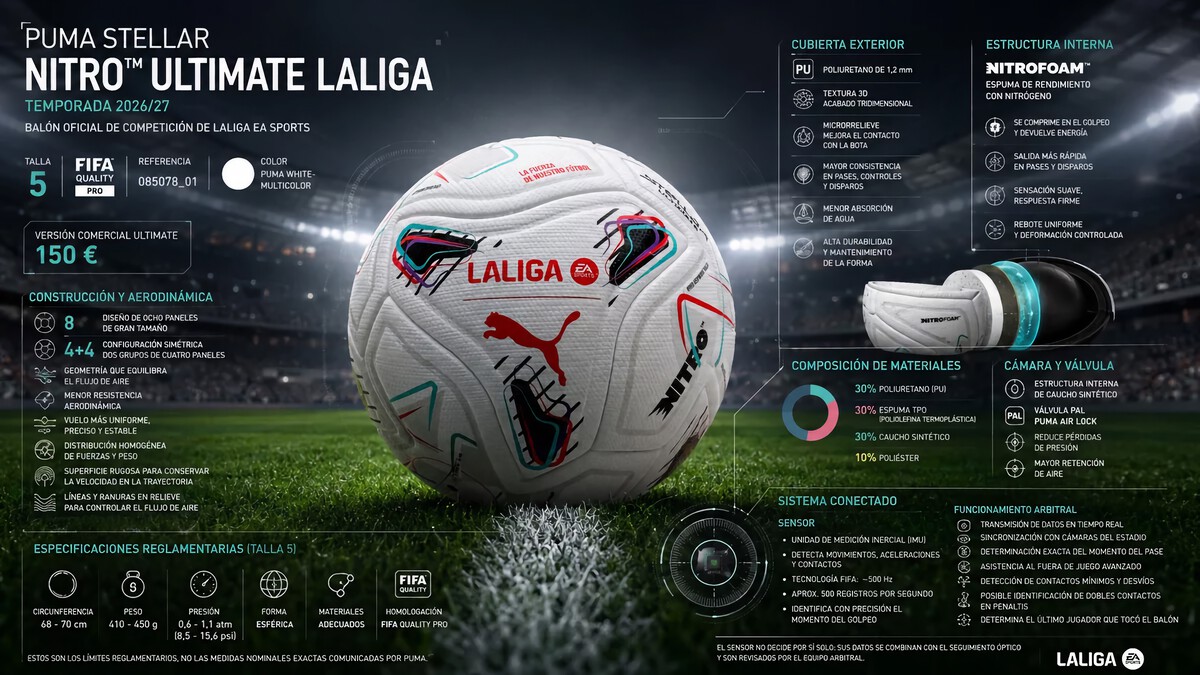
According to Ricardo Resta, director of LaLiga's Football Intelligence & Performance department, this technology is the most accurate available for refereeing and competition tracking. "It provides greater precision because, of all the technologies currently available for refereeing and competition monitoring, it is the most precise of all," he stated. The system is designed to complement existing tools like VAR and goal-line technology, offering an additional layer of data to help referees make more informed decisions.
How Does the Connected Ball Work?
The ball's sensor samples data at a high frequency—reportedly 500 times per second—and sends it to a local positioning system (LPS) that triangulates the ball's position using stadium antennas. This allows the system to detect the exact moment of a touch, such as a handball or a foul, with millimeter-level accuracy. The data is then processed and displayed to VAR officials, who can use it to confirm or overturn on-field decisions.
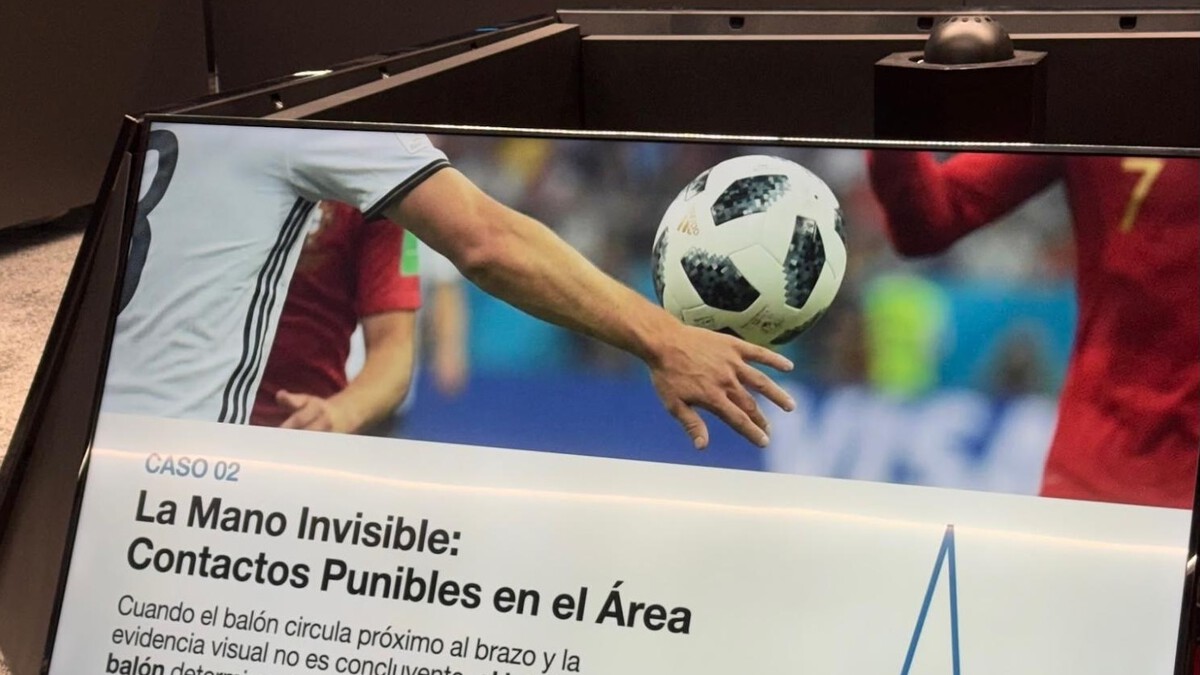
One of the key benefits is the ability to determine the point of contact for offside decisions. By combining the ball's touch data with player tracking data, the system can create a more accurate offside line, reducing the margin of error that often leads to contentious calls. Additionally, the technology can help identify the last player to touch the ball before it goes out of play, aiding in throw-in and corner kick decisions.

Key Components of the System
- Inertial Measurement Unit (IMU): A sensor at the ball's center that measures acceleration and rotation.
- Stadium Antennas: A network of receivers that pick up the ball's signal and triangulate its position.
- Real-Time Data Processing: Software that analyzes the sensor data and provides actionable insights to referees.
- Integration with VAR: The data is fed into the video assistant referee system for review.
- Player Tracking: Combined with optical tracking systems to determine offside and other positional offenses.
Why It Matters: Reducing Controversy
The introduction of the connected ball comes at a time when refereeing decisions are under intense scrutiny. High-profile errors, such as the infamous "Hand of God" goal by Diego Maradona in 1986, have long been cited as examples of how subjective judgments can shape football history. While the connected ball cannot rewrite the past, it offers a way to minimize human error in the future.
In LaLiga, controversies over handballs, offsides, and penalty decisions are frequent, and fans and clubs often demand greater transparency. The connected ball provides objective data that can be used to explain decisions, potentially increasing trust in refereeing. However, it's important to note that the technology is a tool, not a replacement for human judgment. Referees will still interpret the data within the laws of the game.
Comparison with Previous Technologies
The connected ball is not the first technology to aid referees, but it is the most advanced in terms of precision and real-time data. Goal-line technology, for instance, uses cameras to determine if the ball has crossed the line, but it doesn't provide information about touches. VAR relies on video replays, which can be inconclusive due to camera angles and frame rates. The connected ball fills this gap by offering exact touch data. The background to this story is set out in Trending: latest articles. A related thread runs through Movistar Plus: Watch LaLiga and Champions for €9.99 a Month. Earlier coverage in Movistar Plus Plan Libre: 9.99 Euros for LaLiga and Champions League shows how the argument developed.
| Technology | Function | Precision | Used in LaLiga |
|---|---|---|---|
| Connected Ball | Detects exact moment of touch | Millimeter-level | Yes (from 2026/27) |
| Goal-Line Technology | Determines if ball crossed the line | High (camera-based) | Yes |
| VAR | Video review of decisions | Depends on camera angles | Yes |
| Optical Tracking | Player and ball movement | High (but not touch-specific) | Yes |
What to Watch Next
As the 2026/27 season progresses, the connected ball will be tested in real match conditions. LaLiga has not announced whether the technology will be used in other competitions, such as the Copa del Rey, but its success in the league could pave the way for broader adoption. The league is also expected to release educational content to help fans understand how the system works and how it influences decisions. A closer look at the same subject appears in Bill Wyman's Metal Detecting Passion After the Rolling Stones. Anyone following the wider picture can start with Manchester City Financial Scandal Could Transform Football Business. The same theme surfaces in FC Copenhagen Women: Startup-Like Brand Needs Results, which takes a different angle.
For now, the connected ball represents a significant investment in fairness and accuracy. While it won't end all debates, it provides referees with a powerful tool to make more informed calls. As Ricardo Resta emphasized, the technology is the most precise available, and its integration into LaLiga marks a new era in football innovation. Context on how this played out before sits in Why Mail-In Voting Fraud Is Nearly Impossible in Spain. A companion piece, LaLiga's Connected Ball Tech Brings Precision to Controversial Calls, approaches the same subject from another angle.
FAQ
What is the connected ball in LaLiga?
The connected ball is a soccer ball equipped with an inertial sensor that provides real-time data on the exact moment of contact, helping referees make more accurate decisions.
How does the connected ball improve refereeing?
It offers objective data on touches, which can be used to confirm handballs, offsides, and other close calls, reducing the margin of error in decisive plays.
Is the connected ball used in other leagues?
It has been used in FIFA tournaments like the 2022 World Cup and Euro 2024, but LaLiga is the first top-flight league to adopt it for an entire season.
Will the connected ball eliminate controversial decisions?
While it provides more accurate data, referees still interpret the laws of the game, so some controversy may remain, but it should reduce errors significantly.
Browse the Shop
 Acacia frida deluxe solid wood bed frame |
Bedroom bench |
Bed chest drawers |
Lingerie dresser |
Frame base |
Mirror with jewelry storage |
30 Bathroom Vanity |
Memory foam queen mattress |
Mattresses for back pain |
Nightstand set of 2 |
Grand Goldman Shop |
Civil Lawyer
Deutschland Trikot WM 2026










