

Spain inflation may have cooled from its 2022 peak, but for Spanish households, the real problem is that wages have not kept pace with grocery prices. While food and non-alcoholic beverage inflation slowed to 2.7% year-on-year in September, down from 10.5% three years ago, the cumulative effect of years of rising prices continues to squeeze family budgets.
The key figure is 39.5%. That's the cumulative increase in the cost of a typical shopping basket over the past five years, according to the OCU (Organization of Consumers and Users). Even as annual price growth moderates, the compounded effect leaves households far behind where they were in 2021.
Find Original Home Decor sparking conversation at Grand Goldman Shop.

Spain Inflation: A Cooling Trend, But Not a Recovery
The latest data from Spain's National Statistics Institute (INE) shows that food inflation has eased significantly. In September, food and non-alcoholic beverages rose 2.7% compared to the same month last year, a sharp deceleration from the 10.5% rate seen in 2022 following the Ukraine war.
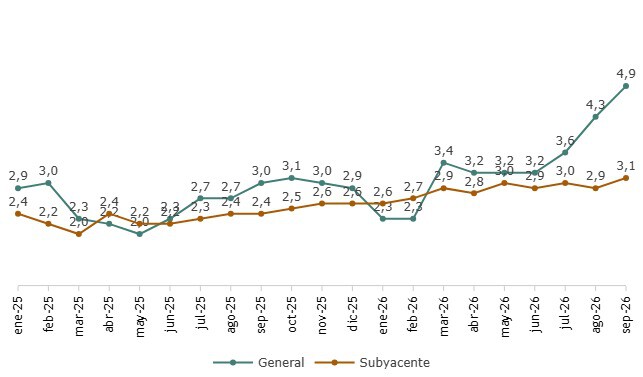
This slowdown is welcome news, but it doesn't mean prices are falling—they're just rising more slowly. For households, the damage has already been done by years of above-average increases.

The OCU Basket: A 39.5% Surge Since 2021
The OCU's annual supermarket price study tracks a basket of 244 items, including food, cleaning products, drugstore goods, and personal hygiene products. Its 2026 study found that the basket's cost rose 1.8% over the past year, down from 2.5% in 2025. However, when looking at the cumulative increase over five years, the OCU found a staggering 39.5% rise.
This figure is crucial because it reflects the real burden on households. While the annual inflation rate has moderated, the compound effect of five years of increases means families are paying nearly 40% more for the same goods than they were in 2021.
Wages vs. Inflation: The Purchasing Power Gap
The core issue is that wage growth has not matched this cumulative price surge. Even with recent wage increases, the average Spanish worker's paycheck buys significantly less than it did five years ago. This gap between wage growth and inflation is what economists call a loss of purchasing power.
According to the OCU, the moderation in price increases is not enough to offset the previous years of sharp rises. Households are still feeling the pinch, especially lower-income families who spend a larger share of their income on essentials like food and hygiene products.
Why the 39.5% Figure Matters
The 39.5% cumulative increase is a more accurate reflection of the strain on household finances than the current annual inflation rate. It shows that even if prices stop rising altogether, families would still be paying far more than they were five years ago. To recover lost purchasing power, wages would need to rise substantially—or prices would need to fall, which is unlikely.
This context explains why consumer confidence remains fragile despite the easing of inflation. People are still adjusting their spending habits, trading down to cheaper brands, and cutting back on non-essentials.
The Role of Supermarket Competition
The OCU study also highlights the importance of supermarket competition. By comparing prices across chains, the OCU helps consumers identify the cheapest options. However, even the most budget-conscious shopping cannot fully offset a 39.5% increase over five years.
Retailers have been under pressure to keep prices low, but they also face higher costs for energy, transportation, and labor. The result is a delicate balance where prices may stabilize but remain elevated.
What This Means for Household Budgets
For Spanish households, the practical impact is clear: the weekly shopping trip costs significantly more than it did in 2021. Even with inflation cooling, families are not experiencing relief in their wallets. Many are still cutting back on other expenses to afford basic necessities.
This situation is particularly acute for low-income households, who spend a higher proportion of their income on food and other essentials. For them, the 39.5% increase represents a severe blow to their standard of living.
Looking Ahead: Will Wages Catch Up?
The big question is whether wages will eventually catch up with the cumulative price increases. Recent wage agreements in Spain have included increases, but they have generally lagged behind inflation. Without significant wage growth, households will continue to feel the squeeze.
Economists suggest that for purchasing power to recover, wage growth must outpace inflation for a sustained period. However, with inflation still positive, that would require substantial wage increases—something that may be difficult for many employers to sustain. The background to this story is set out in Australian Grocery Prices Rise 7% at Major Supermarkets. A related thread runs through UK Grocery Price Inflation Rises Again: Shoppers Seek Deals. Earlier coverage in Spain's Minimum Wage Rise in 2026: Inflation Eats the Gains shows how the argument developed.
The Iran War and Future Risks
Geopolitical risks, such as the ongoing conflict with Iran, could also impact energy prices and, consequently, inflation. While the current situation is far from the chaos of 2022, any new spike in energy costs could reverse the cooling trend and further erode purchasing power. A closer look at the same subject appears in Albanese Backs Ukraine with $60m as Grocery Prices Surge. Anyone following the wider picture can start with Electronic Shelf Labels Could Cost Jobs and Raise Grocery Prices. The same theme surfaces in EU Joint Energy Purchasing: Europe's Bold Move to Buy Power as One Country, which takes a different angle.
For now, the data suggests that Spain inflation is moderating, but the cumulative effect of years of increases means households are still struggling. The gap between wage growth and price increases remains the central challenge. Context on how this played out before sits in Australia's Real Wages Drop While Corporate Profits Soar. A companion piece, Championship Spending Record: £903m Wages Fuel Promotion Chase, approaches the same subject from another angle.
FAQ
What is the current inflation rate for food in Spain?
As of September, food and non-alcoholic beverage inflation in Spain stood at 2.7% year-on-year, down from 10.5% three years ago. This indicates a significant cooling in price increases for groceries.
How much have grocery prices risen in the last five years?
According to the OCU's 2026 study, the cost of a typical shopping basket has increased by 39.5% cumulatively over the past five years. This figure includes food, cleaning products, and personal hygiene items.
Have wages kept up with inflation in Spain?
No, wage growth has not matched the cumulative increase in prices. Even with recent wage increases, the average Spanish worker's purchasing power has declined, as wages have not risen by 39.5% over the same period.
What can households do to cope with rising prices?
Households can use resources like the OCU's supermarket comparison to find the cheapest options, adjust spending habits, and prioritize essential purchases. However, structural solutions require wage growth or government intervention.
Browse the Shop
 Acacia frida deluxe solid wood bed frame |
Bedroom bench |
Bed chest drawers |
Lingerie dresser |
Frame base |
Mirror with jewelry storage |
30 Bathroom Vanity |
Memory foam queen mattress |
Mattresses for back pain |
Nightstand set of 2 |
Grand Goldman Shop |
Civil Lawyer
Deutschland Trikot WM 2026







