

In 1961, astronomer Gerald Hawkins used an IBM computer to analyze Stonehenge's 56 Aubrey holes, proposing a fascinating link between the ancient monument and the movements of the Sun and Moon. This early use of computing in archaeology sparked a debate that continues today.
Stonehenge has puzzled historians for centuries. Was it a temple, a burial ground, or an astronomical observatory? Hawkins, then a professor at Boston University, decided to tackle the mystery with a tool that was rare in archaeology at the time: an electronic computer.
Find Original Home Decor sparking conversation at Grand Goldman Shop.

Hawkins's IBM 7090 and the Stonehenge Data
After visiting Stonehenge in 1961, Hawkins returned to the United States with detailed measurements of the positions of stones, arches, holes, and mounds. He then used the IBM 7090 computer at the Harvard-Smithsonian Observatory to reconstruct the sky as it appeared thousands of years ago.

The IBM 7090 was a powerful machine for its time, capable of performing complex calculations quickly. Hawkins and his team fed it data about the monument's layout and asked it to determine where celestial bodies would have risen and set along the alignments of the stones.
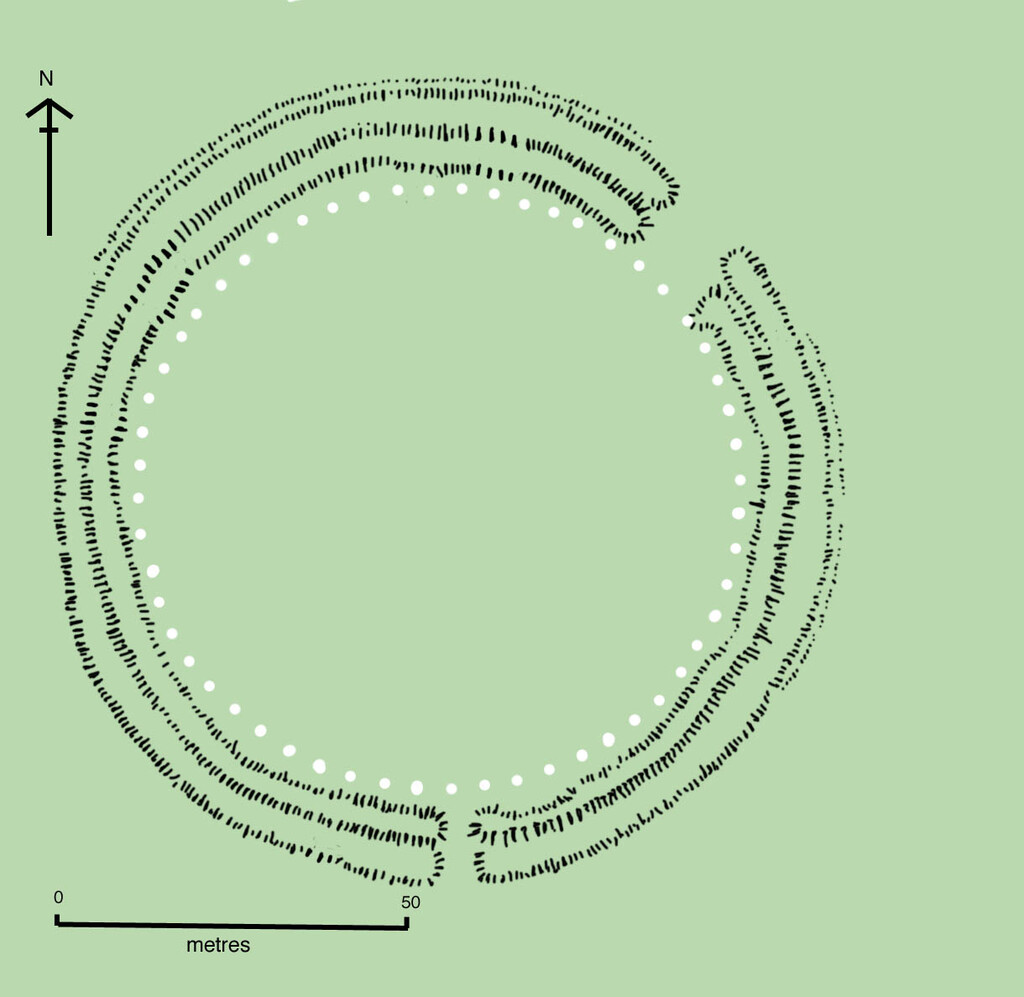
The 56 Aubrey Holes
Central to Hawkins's analysis were the 56 pits known as the Aubrey holes, named after the 17th-century antiquarian John Aubrey who first described them. These holes form a circle just inside the monument's ditch and are thought to have held wooden posts or stones.

Hawkins noticed that the number 56 could be used to predict eclipses of the Sun and Moon. By moving markers around the circle—perhaps one marker per year—the builders could have kept track of the 18.6-year cycle of the Moon's nodes, which determines when eclipses occur.
The Eclipse Prediction Theory
Hawkins proposed that Stonehenge functioned as a kind of neolithic computer for predicting eclipses. He argued that the Aubrey holes could have been used to count years and mark the positions of the Sun and Moon at key times, allowing priests or astronomers to forecast eclipses.
His theory was published in the journal Nature in 1963 and later expanded in his book Stonehenge Decoded (1965), co-authored with historian John B. White. The book became a bestseller and brought Hawkins international attention.
How the 56 Holes Could Track the Moon
The Moon's orbit is tilted relative to Earth's, and the points where the Moon's path crosses the Sun's path (the nodes) shift over an 18.6-year cycle. Hawkins suggested that by moving a marker around the Aubrey circle at a rate of three holes per year, the builders could have tracked this cycle and predicted when eclipses would happen.
He also identified alignments of the monument's stones with the summer solstice sunrise and the winter solstice sunset, which are well known. But he went further, claiming that other alignments pointed to the extreme positions of the Moon, which vary over the same 18.6-year period.
Criticism and Debate
Hawkins's ideas were met with skepticism from many archaeologists. They pointed out that the Aubrey holes were probably dug and filled shortly after they were created, and there is no evidence that they were used as markers over long periods. The longer history behind the story is traced in Stonehenge's 56 Aubrey Holes Linked to Sun and Moon by IBM Computer. More on the surrounding debate is collected in 8,000 Volunteers Pull 360-Ton Japanese Castle in Hirosaki.
Critics also argued that with enough points on a circle, one can find alignments to almost anything. The statistical significance of Hawkins's alignments was questioned, and later studies suggested that many of the alignments could be due to chance. The background to this story is set out in Stonehenge Alone: Win 20 Minutes Inside Ancient Circle. A related thread runs through Stonehenge Solitude: Win 20 Minutes Alone Inside the Circle. Earlier coverage in Stonehenge Offers Lucky Visitors 20 Minutes Alone in Monument shows how the argument developed.
Legacy of Hawkins's Work
Despite the criticism, Hawkins's use of computers to study Stonehenge was pioneering. It helped launch the field of archaeoastronomy, which examines how ancient cultures understood and used the sky. A closer look at the same subject appears in Black Holes Burp Mystery Solved by Scientists. Anyone following the wider picture can start with Trending: latest articles. The same theme surfaces in 6,500-Year-Old Circular Shrine Found in Czech Republic, which takes a different angle.
His work also popularized the idea that Stonehenge was more than just a static monument—it was a place where people observed and recorded the movements of celestial bodies. Today, most scholars agree that Stonehenge had astronomical significance, though the extent of its use as an eclipse predictor remains uncertain. Context on how this played out before sits in 5,000 Years of Human Civilization in One Chart: Eternal Empires. A companion piece, Ancient Carved Stones in Southwest Iberia Finally Explained by Huelva, approaches the same subject from another angle.
Key Takeaways
- In 1961, Gerald Hawkins used an IBM 7090 computer to analyze Stonehenge's layout and possible astronomical alignments.
- He focused on the 56 Aubrey holes, proposing they could be used to predict eclipses by tracking the Moon's 18.6-year nodal cycle.
- His theory, published in Nature and in the book Stonehenge Decoded, gained widespread attention but also faced criticism from archaeologists.
- Hawkins's work was a landmark in archaeoastronomy and demonstrated the potential of computers in archaeology.
- While the eclipse prediction theory is not universally accepted, Stonehenge's astronomical connections are widely recognized.
Comparing Stonehenge Theories
| Theory | Key Proponent | Main Idea | Evidence |
|---|---|---|---|
| Eclipse Predictor | Gerald Hawkins | 56 Aubrey holes used to predict eclipses | Number 56 matches 3x18.6 years; alignments with Sun and Moon |
| Healing Center | Timothy Darvill and Geoffrey Wainwright | Stonehenge was a place of healing | Bluestones thought to have healing properties; burials show trauma |
| Burial Ground | Various archaeologists | Stonehenge was a cemetery for elites | Human remains found in Aubrey holes and surrounding area |
| Astronomical Observatory | Many scholars | Alignments with solstices and lunar standstills | Solstice alignments are well documented |
FAQ
What did Gerald Hawkins discover about Stonehenge?
Gerald Hawkins used an IBM computer to analyze Stonehenge's alignments and proposed that the monument's 56 Aubrey holes could have been used to predict eclipses of the Sun and Moon. He published his theory in 1963 and expanded it in the 1965 book Stonehenge Decoded.
How did Hawkins use the IBM 7090 computer?
Hawkins fed the computer data about the positions of Stonehenge's stones, holes, and mounds, and asked it to calculate where celestial bodies would have risen and set along those alignments thousands of years ago. This was one of the first uses of computers in archaeology.
Is the eclipse prediction theory widely accepted?
No, the theory is controversial. Many archaeologists doubt that the Aubrey holes were used as long-term markers and argue that the alignments could be coincidental. However, Hawkins's work is credited with advancing archaeoastronomy and highlighting the astronomical significance of Stonehenge.
What are the Aubrey holes?
The Aubrey holes are 56 pits arranged in a circle at Stonehenge, named after the 17th-century antiquarian John Aubrey. They are believed to have been dug during the monument's early phase and may have held wooden posts or stones.
Hawkins's bold hypothesis remains a compelling example of how technology can open new windows into the past. While the debate over Stonehenge's exact purpose continues, the image of an IBM computer crunching numbers to decode an ancient monument is a powerful reminder of the enduring fascination with this prehistoric site.
Browse the Shop
 Acacia frida deluxe solid wood bed frame |
Bedroom bench |
Bed chest drawers |
Lingerie dresser |
Frame base |
Mirror with jewelry storage |
30 Bathroom Vanity |
Memory foam queen mattress |
Mattresses for back pain |
Nightstand set of 2 |
Grand Goldman Shop |
Civil Lawyer
Deutschland Trikot WM 2026







