

The first beach bar in history has a surprising origin: a shipwreck and a looting that took place in Cádiz, Spain, in the 18th century. This is the story of how the chiringuito, the iconic Spanish beach bar, was born from tragedy and opportunity.
Today, when hunger strikes, you can simply look for a chiringuito and grab a bite. A beer, a tortilla skewer, olives, espetos, or torreznos. But what if I told you that this invention—the format of having an aperitif on a terrace—was born from a terrible shipwreck?
Find Original Home Decor sparking conversation at Grand Goldman Shop.

The Shipwreck That Started It All
February 1, 1752, at dusk. A storm had sunk hours earlier, in front of La Barrosa beach, between the towers of El Puerco and Bermeja, a mythical ship. Barely two and a half arms' lengths from the shore. Cádiz learned about it that same night. Two deputies and a foreman named Matías Capolino crossed the bay and erected, before dawn, the first six huts next to the Torre del Puerco. Thus began the longest rescue on the Cádiz coast. And, unbeknownst to anyone then, the oldest beach business in Spain.
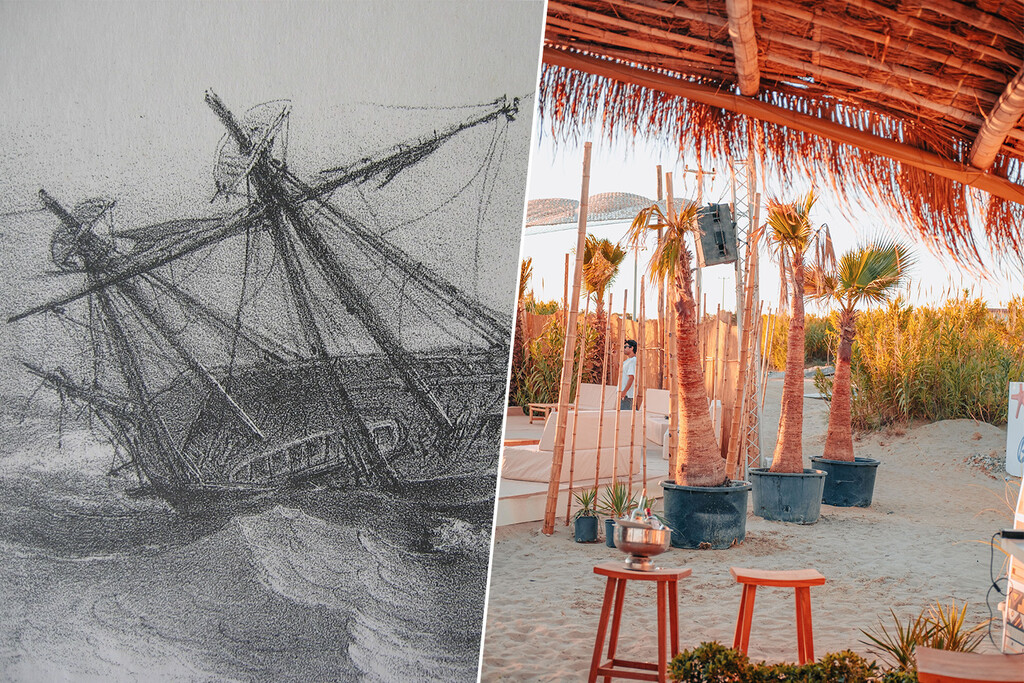
The ship was officially named San Francisco de Asís. It was built in 1738 at the shipyards of Guarnizo. In 1740, it was renamed El Soberbio by order of its owner: Guillermo Terry, a Cádiz shipowner from an Irish family that had swapped Cork for Cádiz half a century earlier. Generations later, they would found the brandy wineries that still bear their surname. Terry made his fortune in trade with the Indies and through his closeness to Minister José Patiño, the man who was then redesigning the Spanish navy under Philip V.
By 1750, the Irish were already the third-largest foreign colony in Cádiz, behind the Genoese and the French. The Terry family was one of the most prominent. The shipwreck of El Soberbio was a human and economic tragedy, but it also marked the beginning of an unexpected business venture.
The Rescue and the Birth of the Chiringuito
The rescue operation was massive. The ship was carrying a valuable cargo of goods from the Americas, and the authorities had to act quickly to salvage what they could. But the sea was rough, and the wreck was close to the shore, making it accessible to looters. To prevent looting and organize the salvage, the first beach structures were built: simple huts made of wood and thatch.
These huts served as shelters for the rescue teams and as storage for the recovered goods. But they also became a gathering place for the curious and those looking to make a profit. Soon, food and drink were being sold from these huts, and the concept of the beach bar was born.
The chiringuito, as we know it today, evolved from these humble beginnings. The word itself may come from the Andalusian pronunciation of 'chiringo', a small rope used by fishermen, or from the Catalan 'xiringuito', a small beach bar. Regardless of its etymology, the chiringuito has become a symbol of Spanish beach culture.
Why This Story Matters
This story matters because it shows how unexpected events can lead to lasting cultural innovations. The chiringuito is not just a place to eat and drink; it is a social institution that brings people together. It represents the Spanish way of life: enjoying the outdoors, good food, and good company.
Moreover, the story highlights the resilience and entrepreneurial spirit of the people of Cádiz. Faced with a disaster, they found a way to turn it into an opportunity. This is a lesson that resonates today, in a world where adaptability and creativity are more important than ever. A companion piece, 2,600 Medieval Coins Unearthed in Kolomna Reveal Hidden Power, approaches the same subject from another angle. The longer history behind the story is traced in Extremadura Monastery Reveals 1491 Columbus Meeting Site.
For those interested in the history of commerce and entrepreneurship, this story is a fascinating example. It shows how businesses can emerge from unexpected circumstances and how they can evolve over time. If you are intrigued by how historical events shape modern industries, you might enjoy exploring financial history and business origins. The background to this story is set out in Spain's Bar Map: Which Province Has the Most Bars Per Capita. A related thread runs through Concrete and Beach Glass Bar!. Earlier coverage in How The Most Gorgeous Celebrities Would Look If They Were Born As Men shows how the argument developed.
The Evolution of the Chiringuito
From those first huts in 1752, the chiringuito has come a long way. Today, they are a common sight on beaches all over Spain, offering a variety of food and drinks. They range from simple kiosks to full-fledged restaurants. Some are famous for their espetos (sardine skewers), while others specialize in seafood or traditional tapas. A closer look at the same subject appears in 27 Best Beach Bars in Europe for Cocktails Seafood and Sunset Views. Anyone following the wider picture can start with Trending: latest articles. The same theme surfaces in Ceuta: The Portuguese City That Chose Spain Over Portugal, which takes a different angle.
The chiringuito has also adapted to modern times. Many now offer Wi-Fi, sunbeds, and even live music. But the essence remains the same: a place to relax, enjoy the sea, and socialize. This evolution reflects broader trends in tourism and hospitality, which you can learn more about in business and hospitality trends. Context on how this played out before sits in Asus ROG Xbox Ally X20: OLED, Dolby Vision, and What's New.
What to Watch Next
The story of the first chiringuito is a reminder that history is all around us. Next time you visit a beach bar, take a moment to appreciate its origins. You might also want to explore other historical connections to modern life, such as the history of automobiles and their impact on society or the evolution of fashion and style.
For those interested in travel and culture, the legacy of the chiringuito is just one of many fascinating stories from Spain. You can discover more about French culture and history or ancient Egyptian civilization. Each place has its own unique history that shapes its present.
FAQ
What was the first chiringuito?
The first chiringuito was established in 1752 on La Barrosa beach in Cádiz, Spain, after the shipwreck of the ship El Soberbio. It started as a series of huts for rescue operations and evolved into a beach bar.
Why is it called a chiringuito?
The term 'chiringuito' likely comes from the Andalusian word 'chiringo', meaning a small rope used by fishermen, or from the Catalan 'xiringuito'. It refers to a small, informal beach bar.
What happened to the ship El Soberbio?
El Soberbio shipwrecked on February 1, 1752, near La Barrosa beach. The rescue operation led to the construction of the first beach huts, which eventually became the first chiringuito.
Who was Guillermo Terry?
Guillermo Terry was an Irish shipowner based in Cádiz, owner of the ship El Soberbio. His family later founded brandy wineries that still exist today.
Browse the Shop
 Acacia frida deluxe solid wood bed frame |
Bedroom bench |
Bed chest drawers |
Lingerie dresser |
Frame base |
Mirror with jewelry storage |
30 Bathroom Vanity |
Memory foam queen mattress |
Mattresses for back pain |
Nightstand set of 2 |
Grand Goldman Shop |
Civil Lawyer
Deutschland Trikot WM 2026







