

The US military drones program is set to receive an unprecedented $53.6 billion in the Pentagon's fiscal year 2027 defense budget request, a massive increase that signals a new era in warfare. This allocation is part of a $1.5 trillion defense budget, the largest year-over-year increase in military spending since World War II.
A Historic Budget Increase
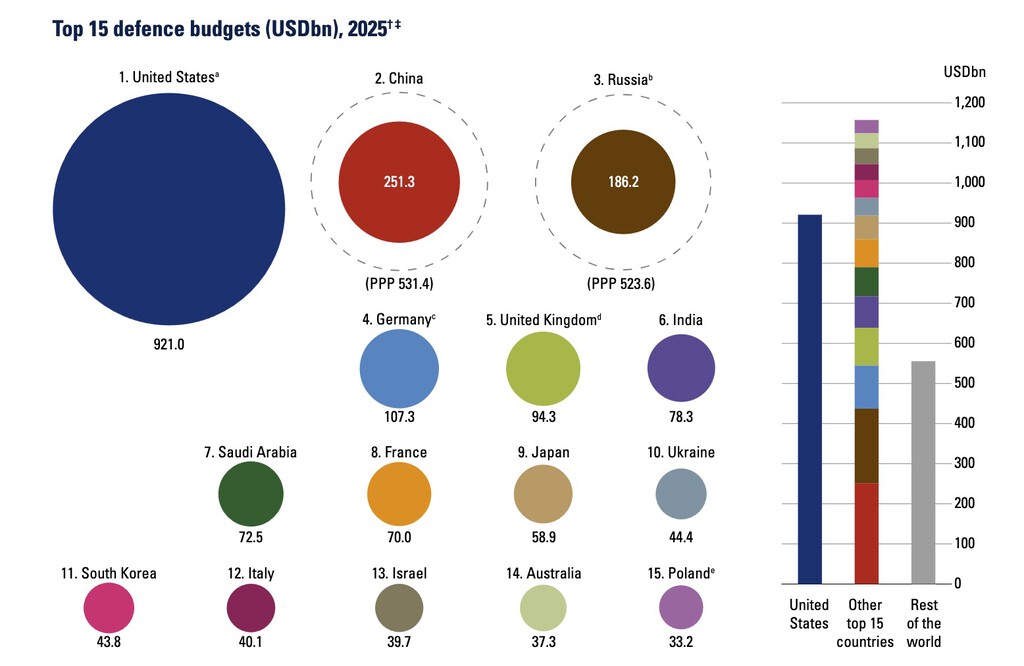
The $1.5 trillion defense budget represents a significant escalation in military spending. To put it in perspective, the $53.6 billion earmarked for drones and autonomous warfare technologies alone exceeds the entire defense budget of Ukraine or countries like South Korea or Italy. Spain's defense budget is even further behind.
Find Original Home Decor sparking conversation at Grand Goldman Shop.

This surge in funding reflects the Pentagon's recognition that drones have become a decisive factor in modern conflicts. The war in Ukraine, for instance, has demonstrated the outsized impact of unmanned systems on the battlefield.
The Defense Autonomous Warfare Group (DAWG)
Managing this massive drone investment is the Defense Autonomous Warfare Group (DAWG), an agency established in late 2025. In the 2026 budget, DAWG received just $226 million, but for 2027, that figure is set to multiply nearly 240-fold.
This dramatic increase underscores the Pentagon's commitment to staying ahead in the rapidly evolving field of autonomous warfare. The agency will oversee the procurement and development of drones and related technologies, aiming to ensure the US military is prepared for future conflicts.
Investing in Existing Technology
Interestingly, the Pentagon has acknowledged that the vast majority of the requested funds will be used to purchase technology that already exists, rather than to develop future solutions. Lieutenant General Steven Whitney, a senior official on the Joint Staff, admitted that technological evolution on the battlefield now happens in weeks, not years.
This admission highlights a critical challenge: by the time new technology is fielded, it may already be obsolete. The Pentagon's approach seems to prioritize immediate capability over long-term innovation, a strategy that could have mixed results. The background to this story is set out in Hegseth's $1.5 Trillion Defense Budget: Military Spending. A related thread runs through Hegseth’s $1.5T Defense Budget Signals Military-Industrial Chaos. Earlier coverage in Hegseth Budget: $1.5 Trillion Defense Spending Plan Explained shows how the argument developed.
Key Takeaways
- The $53.6 billion drone budget is part of a $1.5 trillion defense budget, the largest increase since WWII.
- The Defense Autonomous Warfare Group (DAWG) will manage the funds, with its budget growing from $226 million to nearly $54 billion.
- Most of the money will buy existing technology, not develop future systems.
- The rapid pace of technological change means newly acquired drones could quickly become outdated.
- This investment signals a shift toward autonomous warfare and unmanned systems.
Comparison of Defense Budgets
| Country/Program | Defense Budget (USD) |
|---|---|
| US Drone Program (FY2027) | $53.6 billion |
| Ukraine (total defense) | ~$50 billion |
| South Korea (total defense) | ~$50 billion |
| Italy (total defense) | ~$30 billion |
| Spain (total defense) | ~$20 billion |
Note: Figures are approximate and for comparison only.
What This Means for the Future of Warfare
The massive investment in drones and autonomous systems indicates that the US military is betting big on unmanned technology. This could lead to a paradigm shift in how wars are fought, with implications for strategy, ethics, and international security. A closer look at the same subject appears in Hegseth's $1.5tn Defense Budget Reveals Military-Industrial Chaos. Anyone following the wider picture can start with Hegseth Budget: $1.5tn Defense Spending Push Sparks Chaos. The same theme surfaces in Hegseth Defense Budget Strategy Faces Bipartisan Backlash, which takes a different angle.
However, the focus on existing technology raises questions about the Pentagon's ability to innovate. If adversaries develop more advanced systems, the US could find itself at a disadvantage. The coming years will reveal whether this spending spree yields a decisive edge or merely maintains the status quo. Context on how this played out before sits in Autonomous Drones in AI-Driven Warfare: Risks and Ethics. A companion piece, Ukraine Drone War: Inside the 7 August Guardian Weekly, approaches the same subject from another angle.
FAQ
What is the $53.6 billion in the US defense budget for?
The $53.6 billion is allocated specifically for drones and autonomous warfare technologies, managed by the Defense Autonomous Warfare Group (DAWG). This funding aims to enhance the US military's capabilities in unmanned systems.
Why is the Pentagon buying existing technology instead of developing new drones?
The Pentagon recognizes that technological advancements on the battlefield occur rapidly, often within weeks. To maintain readiness, they prioritize acquiring proven technology that can be deployed immediately, even if it risks becoming obsolete sooner.
How does the US drone budget compare to other countries' defense budgets?
The $53.6 billion drone budget exceeds the entire defense budgets of Ukraine, South Korea, and Italy. It is also significantly larger than Spain's defense budget, highlighting the scale of US investment in autonomous warfare.
What is the Defense Autonomous Warfare Group (DAWG)?
DAWG is an agency created in late 2025 to oversee the development and procurement of autonomous warfare technologies, including drones. Its budget is set to grow from $226 million in 2026 to nearly $54 billion in 2027.
Browse the Shop
 Acacia frida deluxe solid wood bed frame |
Bedroom bench |
Bed chest drawers |
Lingerie dresser |
Frame base |
Mirror with jewelry storage |
30 Bathroom Vanity |
Memory foam queen mattress |
Mattresses for back pain |
Nightstand set of 2 |
Grand Goldman Shop |
Civil Lawyer
Deutschland Trikot WM 2026







