

PLD Space has put Spain at the center of Europe's reusable rocket race with the MIURA 9, a vehicle designed to evolve toward full reusability through propulsive landing. The Spanish company, based in Elche, presented the new specifications on September 10 during a visit by Prime Minister Pedro Sánchez to its headquarters.
The rocket was previously known as MIURA 5 Block 1.2 and has now been renamed MIURA 9. PLD Space has not announced that it will debut as a fully reusable rocket; instead, the company explains that it is conceived to evolve toward complete reusability. That distinction matters for how the project is understood and funded.
Find Original, High-end Home Decor that spark conversation at Grand Goldman Shop.
Why PLD Space Is Betting on Reusability
Europe has been launching rockets for decades, but that does not mean it has solved the next stage of the space race. While the United States has grown accustomed to seeing first stages return to Earth and fly again, Europe is still working to turn reusability into an industrial capability of its own. PLD Space wants to change that.
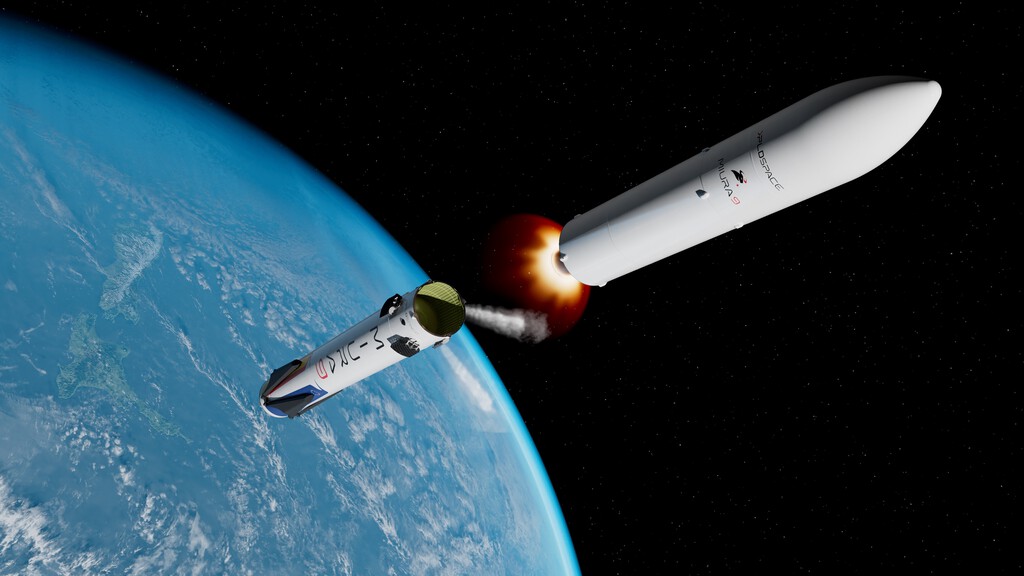
The company has moved from demonstrating technology with MIURA 1 to setting much larger goals. MIURA 9 touches precisely one of the pieces that has most transformed the space business in recent years: the ability to recover and reuse hardware. That shift has reshaped launch economics and lowered barriers to access for satellite operators.
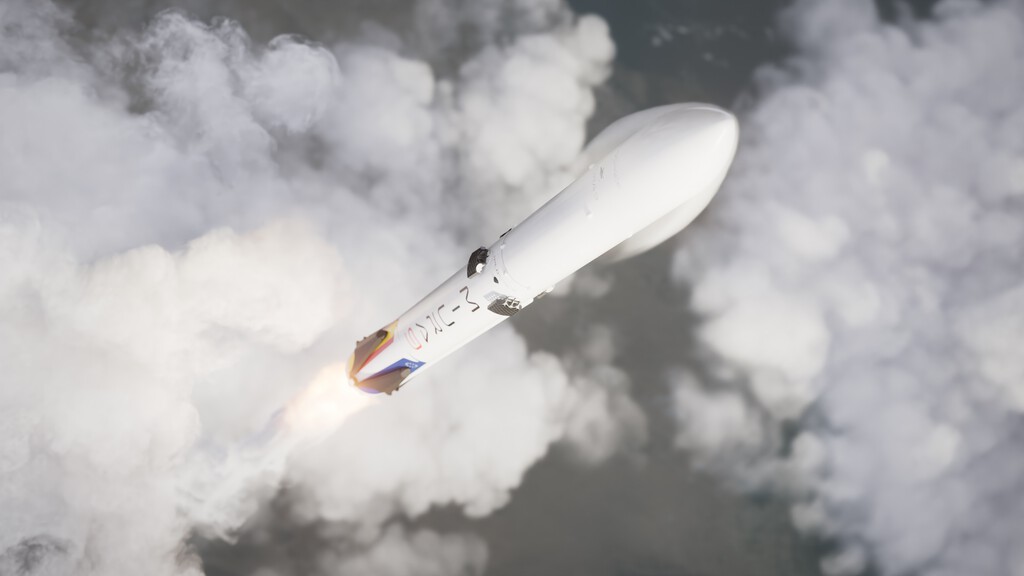
To understand why PLD Space wants to follow this path, it helps to look at the United States. SpaceX nearly failed: its first three Falcon 1 launches failed, and Elon Musk later recounted how close the company came to running out of money. Reusability was not an overnight success but a hard-won engineering and business evolution.
What We Know About MIURA 9
MIURA 9 is not yet a reusable rocket in operation. PLD Space describes it as a vehicle conceived to evolve toward full reusability via propulsive landing. That means the architecture is being designed with the intention of eventually returning and reusing stages, rather than starting as a fully reusable system from day one.
The announcement focused on new specifications and the name change from MIURA 5 Block 1.2. The renaming signals a larger vehicle and a broader ambition. The visit by Pedro Sánchez underscores the political dimension: Spain wants to be seen as a leader in European space technology, not just a participant.
For now, key details such as payload capacity, engine configuration, and timeline have not been fully disclosed in the source material. What is clear is that PLD Space is positioning MIURA 9 as a step toward industrial-scale reusability in Europe.
Key Takeaways for Observers
- MIURA 9 is the new name for the vehicle previously called MIURA 5 Block 1.2, reflecting a larger ambition.
- Full reusability is a goal, not a debut feature; the rocket is designed to evolve toward propulsive landing.
- Spain is positioning itself as a potential leader in Europe's reusable rocket efforts.
- The announcement came during a high-profile political visit, highlighting government support for the project.
- Europe still lags the U.S. in operational reusability, and PLD Space aims to close that gap.
How MIURA 9 Fits Europe's Space Landscape
Europe's launch industry has historically relied on expendable rockets such as Ariane 5 and Vega. The continent is now developing new vehicles, including Ariane 6, but full reusability remains a work in progress. PLD Space's MIURA 9 is one of several private efforts aiming to change that.
The comparison with SpaceX is inevitable. Falcon 9 demonstrated that reusing first stages can reduce costs and increase launch cadence. European companies are now trying to replicate that model with smaller vehicles and different market strategies. PLD Space's approach starts with a vehicle that can evolve, rather than one that promises reusability from the first flight.
| Feature | MIURA 9 (PLD Space) | Falcon 9 (SpaceX) |
|---|---|---|
| Country | Spain | United States |
| Reusability status | Designed to evolve toward full reusability | Operational first-stage reuse |
| Landing method | Propulsive landing (planned) | Propulsive landing (operational) |
| Current stage | Specifications announced, name changed | Routine reuse and high cadence |
What This Means for Spain and Europe
Spain has not traditionally been a major player in orbital launch. PLD Space's progress, from MIURA 1 to MIURA 9, signals a shift. The company's headquarters in Elche has become a focal point for national space ambition, and government visits lend credibility and potential funding support.
For Europe, the stakes are strategic. Dependence on non-European launch providers has been a concern, especially for institutional and security-related payloads. A reusable European rocket could offer more flexibility and reduce reliance on foreign suppliers. PLD Space's effort is one piece of that larger puzzle.
However, challenges remain. Reusability requires not just engineering but also operational infrastructure, regulatory approval, and a customer base willing to fly on a new vehicle. PLD Space will need to demonstrate not only that it can land a rocket but also that it can refurbish and relaunch it economically. The longer history behind the story is traced in Solar Flare Risk: Sun Could Be 30 Times More Destructive Than 2003.
What to Watch Next
The next milestones will likely include technical details about MIURA 9's engines, payload capacity, and test schedule. PLD Space has not announced a first flight date for the reusable configuration. Observers should watch for updates on propulsive landing tests and any government contracts or partnerships. The background to this story is set out in Miura 5 Rocket Enters System-Level Testing Ahead of 2027 Debut. A related thread runs through Science: latest articles. Earlier coverage in 70 Years of Space Launches Visualized in Three Charts shows how the argument developed.
Competition within Europe is also heating up. Other companies and agencies are pursuing reusable concepts, and the European Space Agency has signaled interest in supporting such technologies. PLD Space's ability to secure funding and talent will be critical. A closer look at the same subject appears in Einstein Was Right: Black Hole Image Confirms Relativity. Anyone following the wider picture can start with NASA's Lunar South Pole Landing Plan Draws Astronaut Pushback. The same theme surfaces in Mercadona to Roll Out Bizum Pay Checkout Across Spain, which takes a different angle.
The renaming from MIURA 5 Block 1.2 to MIURA 9 suggests a significant redesign or scale-up. That could mean a more capable vehicle but also a longer development timeline. Balancing ambition with execution is the central challenge. Context on how this played out before sits in Building on Mars Without Earth Bricks: Gelatin and Yeast Solution. A companion piece, PLD Space MIURA 9: Spain's Reusable Rocket Ambition, approaches the same subject from another angle.
FAQ
What is MIURA 9?
MIURA 9 is a rocket developed by the Spanish company PLD Space, previously known as MIURA 5 Block 1.2. It is designed to evolve toward full reusability through propulsive landing, though it is not yet operational as a reusable vehicle.
Is MIURA 9 reusable now?
No. PLD Space has stated that MIURA 9 is conceived to evolve toward full reusability, meaning reusability is a future goal rather than a current capability. The company has not announced a debut as a fully reusable rocket.
Why does PLD Space matter for Europe?
PLD Space represents a private European effort to develop reusable rocket technology, which Europe currently lacks compared to the United States. Success could reduce Europe's dependence on foreign launch providers and boost its space industry.
What happened on September 10?
During a visit by Spanish Prime Minister Pedro Sánchez to PLD Space's headquarters in Elche, the company presented new specifications for the vehicle and confirmed its renaming from MIURA 5 Block 1.2 to MIURA 9.
Browse the Shop
 Acacia frida deluxe solid wood bed frame |
Bedroom bench |
Bed chest drawers |
Lingerie dresser |
Frame base |
Mirror with jewelry storage |
30 Bathroom Vanity |
Memory foam queen mattress |
Mattresses for back pain |
Nightstand set of 2 |
Grand Goldman Shop |
Civil Lawyer
Deutschland Trikot WM 2026







