

The 70 years of space launches are now captured in three insightful charts by Visual Capitalist, in collaboration with the Hinrich Foundation. Using data from the American Enterprise Institute (AEI), these visualizations reveal who has launched the most rockets, when, and why—from the dawn of the Space Age in 1957 to the present day.
This visual history not only highlights the fierce rivalry of the Cold War but also the emergence of new players and the rise of commercial space. It's a story of technological ambition, geopolitical competition, and shifting paradigms.
Find Original, High-end Home Decor that spark conversation at Grand Goldman Shop.
Three Eras of Space Launches
The charts divide the space age into three distinct eras, each characterized by different dynamics and drivers.
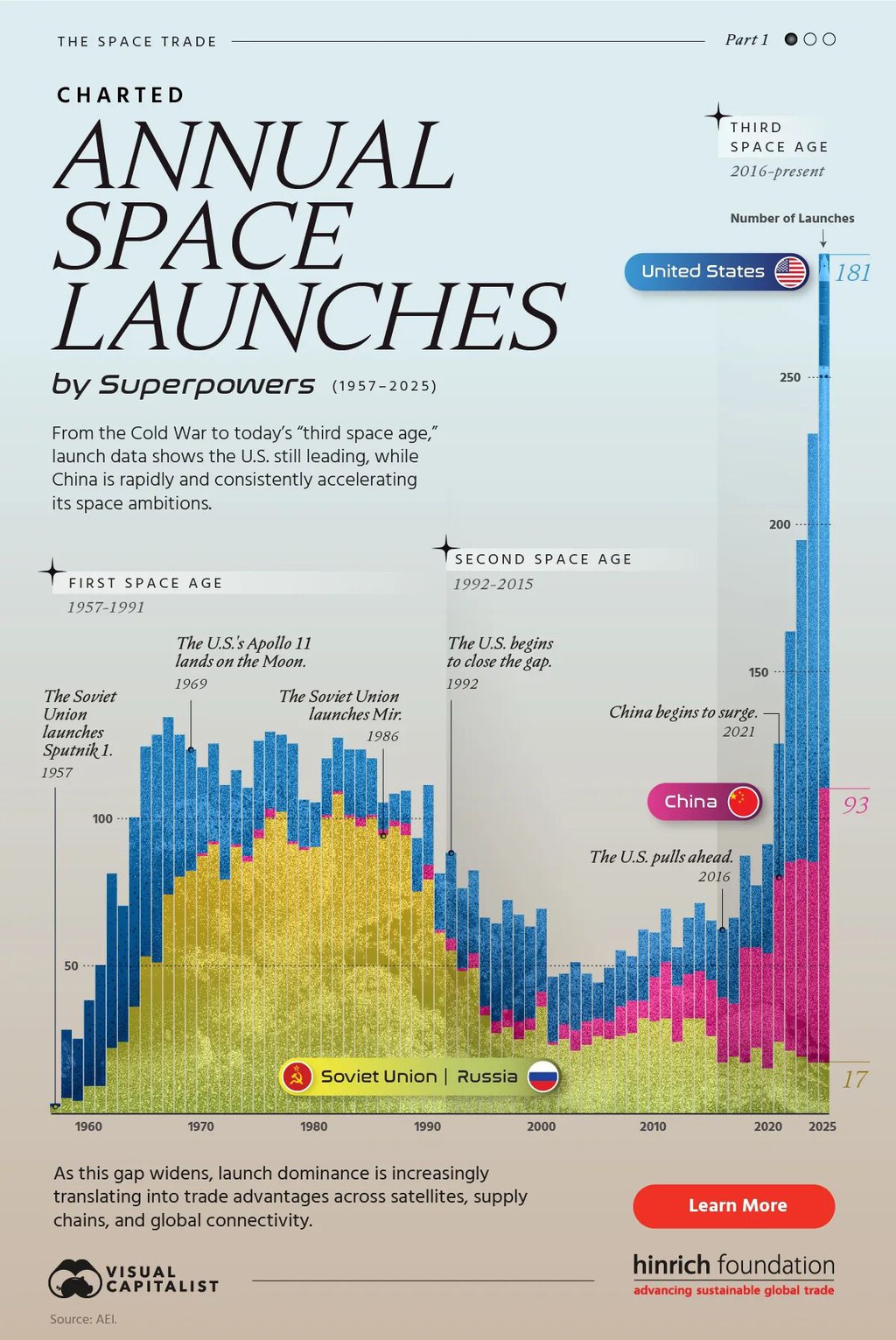
The Cold War Era (1957–1991)
This period was dominated by the intense competition between the United States and the Soviet Union. The launch of Sputnik 1 in 1957 ignited the space race, leading to milestones like Yuri Gagarin's first human spaceflight and the Apollo 11 Moon landing in 1969.
During this era, space launches were a direct indicator of technological and military prowess, with both superpowers striving for supremacy.
The Transition Era (1992–2015)
Following the collapse of the Soviet Union, the space landscape changed. The US and Russia continued to launch, but new players like Europe (via ESA) and China began to emerge. The International Space Station (ISS) became a symbol of international collaboration.
This era saw a diversification of launch capabilities, though the US and Russia still led in total numbers.
The Commercial Space Boom (2016–2025)
The most recent era is marked by the rise of commercial space companies, particularly SpaceX, which revolutionized access to space with reusable rockets. China has also accelerated its space program, becoming a major launch power.
This period is characterized by a significant increase in launch frequency, driven by satellite constellations, commercial interests, and renewed lunar exploration goals.
Who Launches the Most?
The charts clearly show the United States and Russia (as the successor to the Soviet Union) have historically dominated launch counts. However, China's ascent is striking.
In recent years, China has surpassed both the US and Russia in annual launches, reflecting its ambitious space station and lunar exploration programs. Europe's ESA, while technologically advanced, has a more modest launch rate, often relying on commercial providers.
Launch Sites and Materials
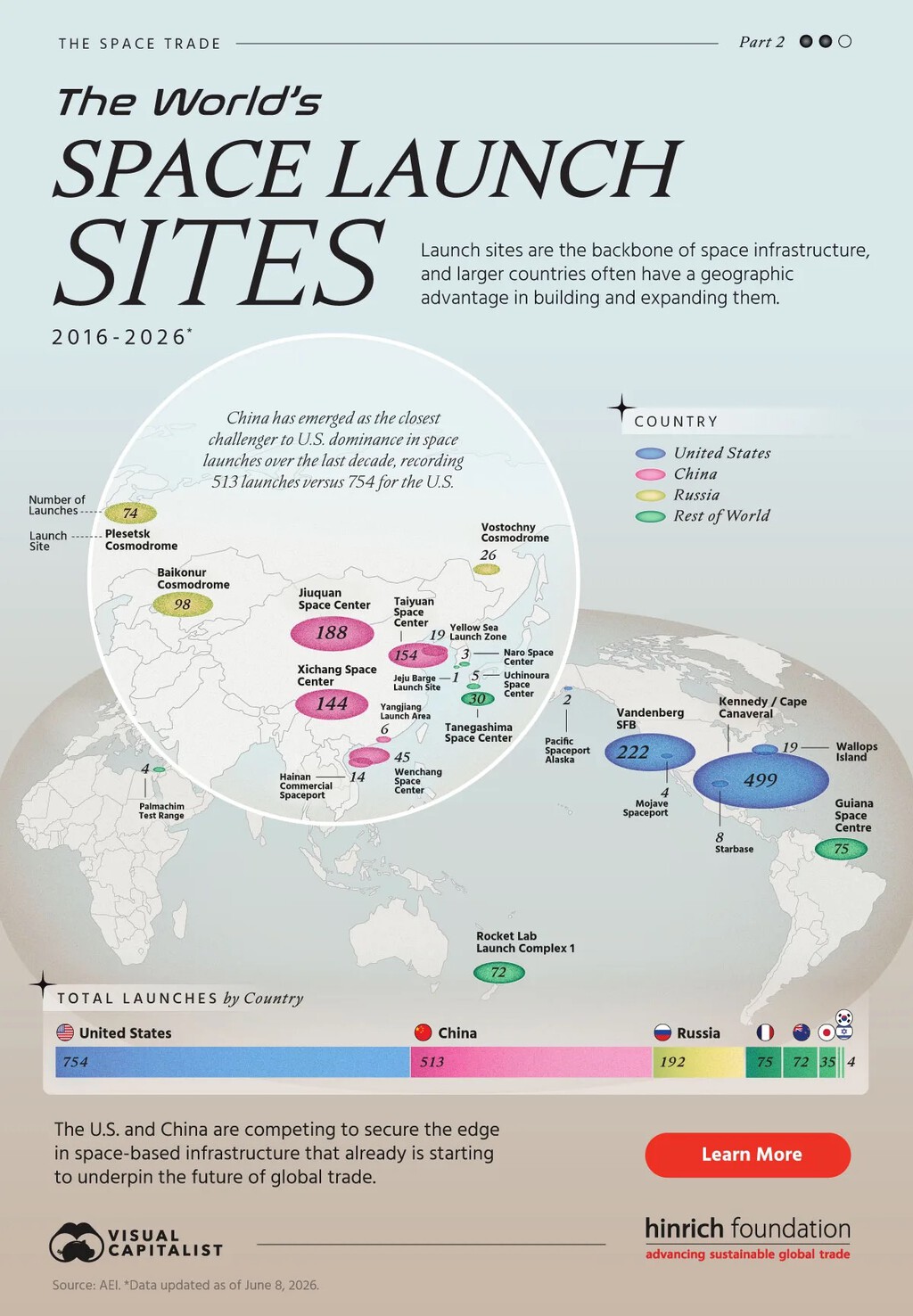
The second and third charts likely detail the launch locations and the materials used in rocket construction. While the excerpt doesn't provide specifics, we can infer that launch sites have expanded beyond the traditional US and Russian bases to include China's new spaceport on Hainan Island and commercial sites like SpaceX's Starbase in Texas. The background to this story is set out in China's Launch Surge: 4 Rockets in 45 Hours Rivals SpaceX. A related thread runs through SpaceX Launches Three Rockets in 13 Hours With Secret US Payload.
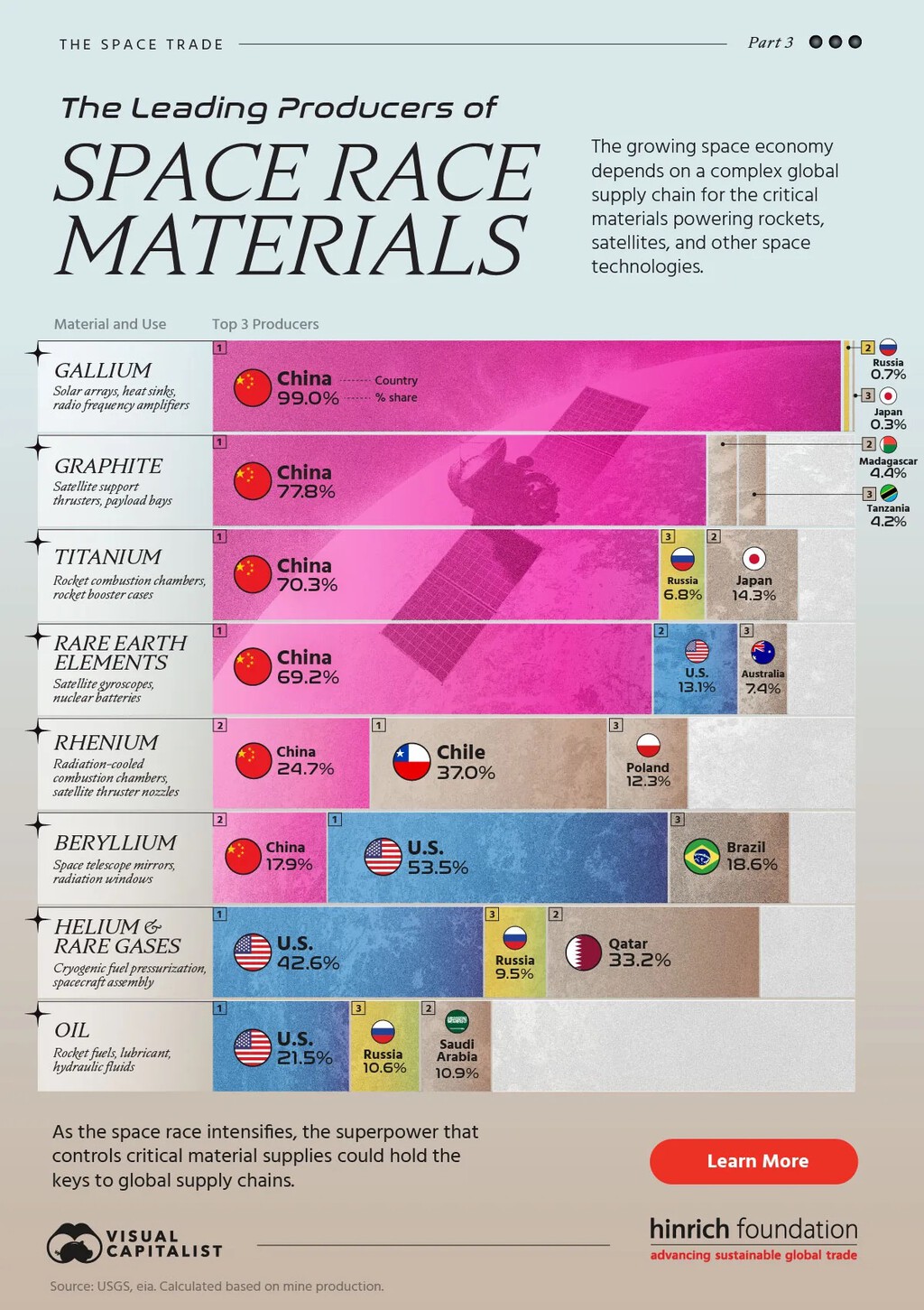
Materials have evolved from early aluminum and steel to advanced composites and reusable alloys, enabling more efficient and frequent launches. Earlier coverage in UK Launches No III Space Effects Squadron to Defend Satellites shows how the argument developed. A closer look at the same subject appears in Science: latest articles.
Key Takeaways
- The space race has evolved from a two-superpower rivalry to a multi-polar landscape with China and commercial entities playing major roles.
- China's launch cadence has surged, challenging US and Russian dominance.
- Commercial space companies like SpaceX have drastically reduced launch costs and increased frequency.
- Europe's ESA remains a significant player but with fewer launches compared to the superpowers.
- The next era of space exploration is focused on lunar colonization and Mars missions.
Comparison of Space Launch Eras
| Era | Time Period | Dominant Players | Key Characteristics |
|---|---|---|---|
| Cold War | 1957–1991 | USA, USSR | Geopolitical rivalry, milestone achievements |
| Transition | 1992–2015 | USA, Russia, ESA, China | International collaboration, ISS, emerging players |
| Commercial Boom | 2016–2025 | USA, China, Commercial | Reusable rockets, satellite constellations, lunar ambitions |
These charts offer a compelling visual narrative of humanity's journey into space, highlighting the shifting balance of power and the relentless pursuit of exploration. Anyone following the wider picture can start with Google Maps Fruit Fly Brain, Community Trains It to Play Doom. The same theme surfaces in Wurtzite Memory Breakthrough: China's Ferroelectric Chip Edge, which takes a different angle.
FAQ
What do the three charts show?
The charts visualize annual space launches by superpowers from 1957 to 2025, divided into three eras: Cold War, Transition, and Commercial Boom. They illustrate launch counts, dominant players, and historical context.
Which country has launched the most rockets?
Historically, the United States and the Soviet Union/Russia have launched the most rockets. However, in recent years, China has surpassed them in annual launches, reflecting its rapid space program expansion.
Why is the commercial space era significant?
The commercial space era, starting around 2016, is significant because companies like SpaceX have introduced reusable rockets, drastically reducing costs and increasing launch frequency. This has democratized access to space and accelerated innovation.
What are the next goals in space exploration?
The current focus is on returning to the Moon and eventually reaching Mars. Both government agencies and private companies are investing in technologies for lunar colonization and deep space exploration.
Browse the Shop
 Acacia frida deluxe solid wood bed frame |
Bedroom bench |
Bed chest drawers |
Lingerie dresser |
Frame base |
Mirror with jewelry storage |
30 Bathroom Vanity |
Memory foam queen mattress |
Mattresses for back pain |
Nightstand set of 2 |
Grand Goldman Shop |
Civil Lawyer
Deutschland Trikot WM 2026







