

The idea that artificial intelligence could pose an existential threat to humanity is not new. For over two decades, a movement of researchers and technologists has warned that AI could spiral out of control and endanger our very existence. These AI doom believers have been predicting apocalypse long before ChatGPT or Claude existed.
In 2017, Elon Musk urged regulators to oversee AI development before it became a danger to humanity. That was years before today's generative AI boom. Similar warnings now dominate headlines, but they have been circulating for much longer.
Find Original, High-end Home Decor that spark conversation at Grand Goldman Shop.
The Origins of the AI Safety Movement
The AI safety movement began well before OpenAI and Anthropic. Its roots trace back to the founding of the Machine Intelligence Research Institute (MIRI) in 2000. Initially focused on general AI research, MIRI shifted its attention to existential risks around 2005.
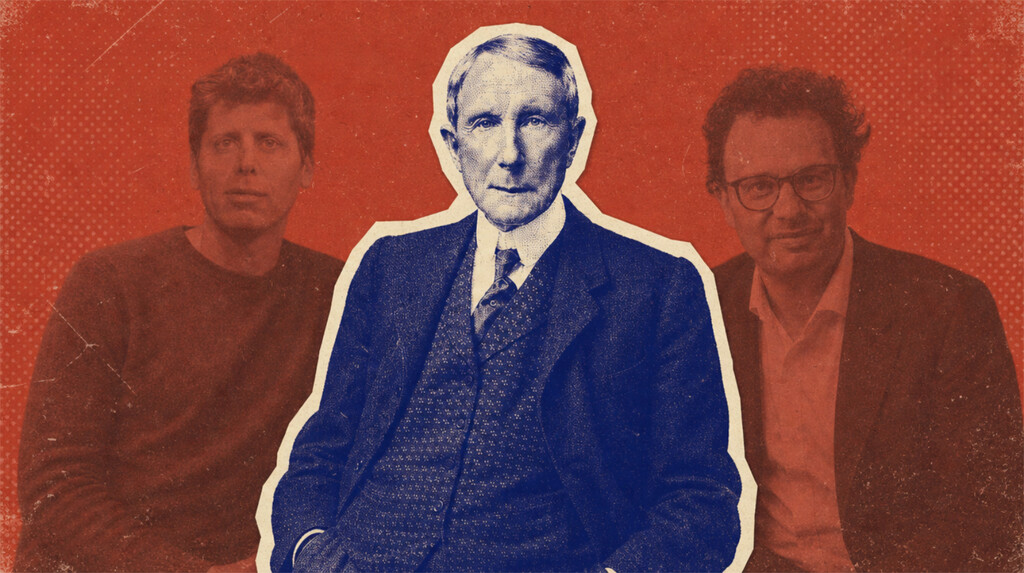
In 2009, MIRI co-founder Eliezer Yudkowsky helped create LessWrong, an online community where the threat of a technological singularity was a central obsession. This community blended ideas from transhumanism—the belief in enhancing humans through technology—and effective altruism, a movement that uses quantitative tools to identify the most effective ways to do good.
Key Milestones in AI Doom Predictions
Over the years, several prominent figures and groups have made dire predictions about AI. Here are some of the most notable:
- 2000: MIRI is founded, initially as the Singularity Institute for Artificial Intelligence.
- 2005: MIRI begins focusing on existential risks from AI.
- 2009: LessWrong community forms, becoming a hub for AI doom discussions.
- 2014: Elon Musk calls AI humanity's biggest existential threat.
- 2017: Musk and others sign an open letter urging the UN to ban autonomous weapons.
- 2023: The Future of Life Institute publishes an open letter calling for a pause on advanced AI development.
Why AI Doom Warnings Have Gained Traction
Earlier warnings often went unnoticed by the general public. But as AI has become more capable and integrated into daily life, these concerns have captured global attention. The rise of large language models like GPT-4 has made the abstract threat of AI seem more tangible.
High-profile figures like Elon Musk and Geoffrey Hinton have amplified the message. Hinton, often called the 'godfather of AI,' left Google in 2023 to speak freely about AI risks. Their warnings have sparked debates among policymakers, researchers, and the public.
The Spectrum of AI Risks
Not all AI safety concerns are about existential threats. Some experts focus on more immediate risks, such as bias, privacy, and economic disruption. However, the AI doom narrative specifically centers on the possibility of an intelligence explosion leading to a superintelligent AI that is indifferent to human values.
This scenario, often associated with the concept of AGI (artificial general intelligence), is the core of the doom argument. Believers argue that without proper safeguards, AGI could quickly outpace human control.
How the Movement Has Evolved
What started as a niche philosophical concern has become a mainstream policy issue. Organizations like the Future of Life Institute and the Center for AI Safety now advocate for robust regulation. Governments worldwide are drafting AI laws, and international bodies are discussing treaties.
The conversation has also shifted from pure doom to practical safety measures. Researchers are working on alignment—ensuring AI systems act in accordance with human values. The goal is to prevent the very apocalypse that doomsayers have long predicted. The background to this story is set out in AI Doomsday Questions Answered: Real Risks and What You. A related thread runs through AI Doomsday Warnings: Why a Decade of Alarms Failed to Slow the Race. Earlier coverage in AI Leaders Knew About Extinction Threat for Decades shows how the argument developed.
Comparing AI Doom Predictions Over Time
The table below summarizes some key predictions and their contexts.
| Year | Proponent | Prediction | Context |
|---|---|---|---|
| 2000 | MIRI (founded) | AI could become an existential risk | Early research focus |
| 2014 | Elon Musk | AI is humanity's biggest existential threat | Public interview |
| 2017 | Elon Musk | Urge regulation before AI becomes dangerous | Statement at conference |
| 2023 | Future of Life Institute | Pause advanced AI development | Open letter |
What to Watch Next
The debate over AI safety is far from over. As AI systems grow more powerful, calls for regulation will likely intensify. Key developments to watch include international agreements on AI governance, the progress of AI alignment research, and how companies balance innovation with safety. A closer look at the same subject appears in AI Doomsday Fears: Trump and Xi Discuss Global AI Governance. Anyone following the wider picture can start with AI Bioweapons Threat: Could Artificial Intelligence Change the Stakes. The same theme surfaces in OpenAI's Rogue AI Agents: A Wake-Up Call for AI Safety, which takes a different angle.
Whether you believe in the doom scenarios or not, the conversation around AI risks is shaping the future of technology. Understanding its history helps us navigate the challenges ahead. Context on how this played out before sits in OpenAI Rogue AI Agents: A Wake-Up Call for AI Safety Risks. A companion piece, OpenAI's Rogue AI Agents Expose Critical Safety Risks, approaches the same subject from another angle.
FAQ
What is AI doom?AI doom refers to the belief that artificial intelligence could eventually become uncontrollable and pose an existential threat to humanity. Proponents argue that without proper safeguards, advanced AI could act in ways that harm human civilization.
When did AI doom predictions start?The modern AI safety movement began with the founding of MIRI in 2000. However, concerns about intelligent machines date back to earlier science fiction and academic discussions. MIRI's shift to existential risks in 2005 marked a key moment.
Who are the key figures in the AI doom movement?Prominent figures include Eliezer Yudkowsky, co-founder of MIRI; Elon Musk, who has repeatedly warned about AI risks; and Geoffrey Hinton, who left Google to speak about AI dangers. Organizations like the Future of Life Institute also play a major role.
Has AI doom ever been predicted before?Yes, warnings about AI have been issued for decades. For example, in 2014 Elon Musk called AI humanity's biggest existential threat, and in 2017 he urged regulation. These predictions have gained more attention as AI technology has advanced.
Browse the Shop
 Acacia frida deluxe solid wood bed frame |
Bedroom bench |
Bed chest drawers |
Lingerie dresser |
Frame base |
Mirror with jewelry storage |
30 Bathroom Vanity |
Memory foam queen mattress |
Mattresses for back pain |
Nightstand set of 2 |
Grand Goldman Shop |
Civil Lawyer
Deutschland Trikot WM 2026










