

Anthropic has launched Claude Sonnet 5, a model that prioritizes safety and cost-efficiency over raw power, especially in cybersecurity tasks. The release marks a shift toward more conservative AI development, where avoiding red lines takes precedence.
What Is Claude Sonnet 5 and Why It Matters
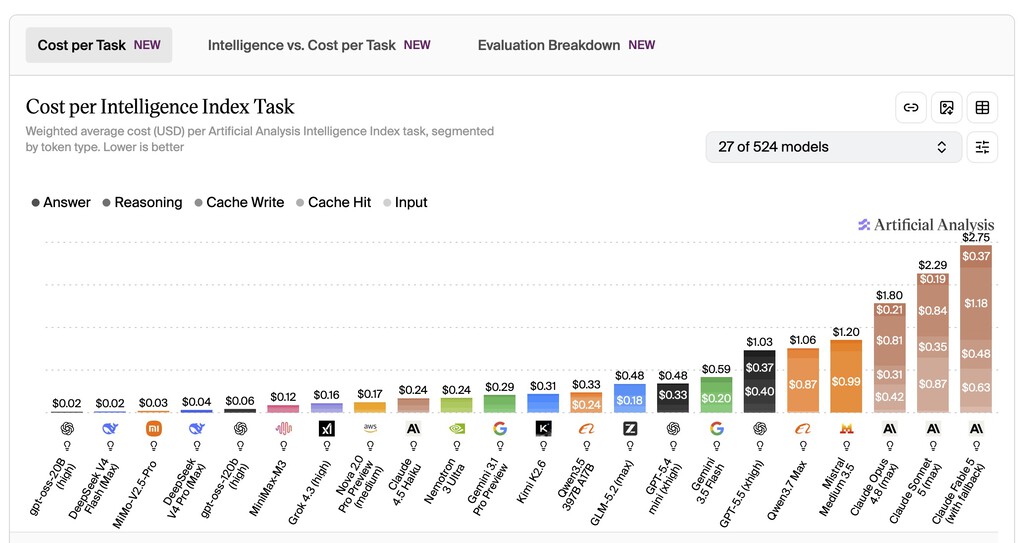
Claude Sonnet 5 is Anthropic's latest AI model, positioned as the most agentic Sonnet yet. It improves tool use, such as browser and terminal interactions, while being significantly cheaper than its predecessors.
Find Original Home Decor sparking conversation at Grand Goldman Shop.

This cost reduction makes it attractive for AI agents that consume many tokens, but the real headline is its safety profile. Anthropic explicitly states that Sonnet 5 has a much lower capacity for cybersecurity tasks compared to its Opus models.
Safety First: How Sonnet 5 Avoids Red Lines
According to the model's System Card, Sonnet 5 exhibits fewer unwanted behaviors than Sonnet 4.6 and is safer to use overall. It is designed to "behave well," according to Anthropic.
The reduced cybersecurity capability is not accidental. Anthropic has faced challenges with previous models like Mythos and Fable 5, likely prompting a more cautious approach. By limiting potentially risky capabilities, Anthropic aims to deliver a model that won't cross ethical boundaries.
Key Takeaways for Businesses and Developers
- Cost-effective: Sonnet 5 is cheaper, making it ideal for high-token AI agents.
- Safer: Fewer unwanted behaviors and improved safety features.
- Limited cybersecurity: Not suitable for vulnerability discovery or penetration testing.
- Agentic improvements: Better at using tools like browsers and terminals.
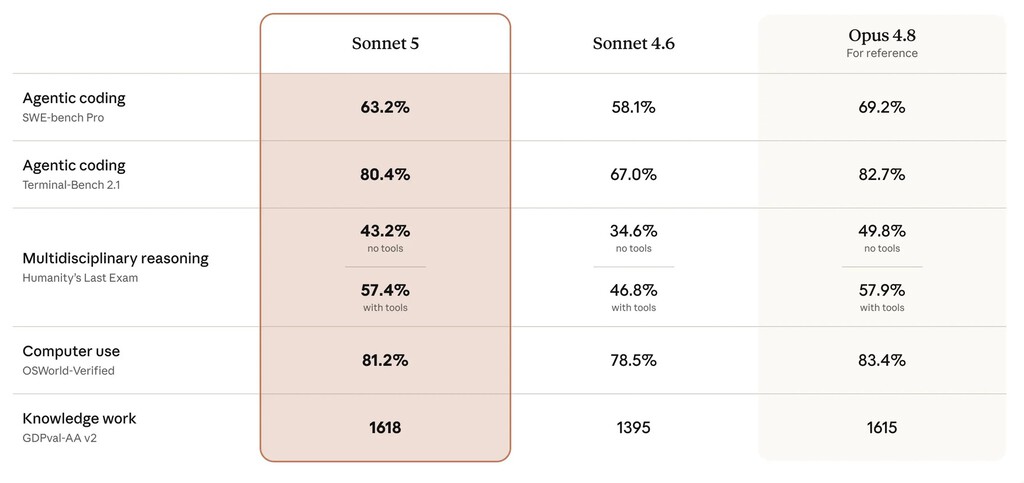
- Benchmark gains: Significant jump from Sonnet 4.6, but not groundbreaking.
Performance Benchmarks: Promising but Not Revolutionary
Internal benchmarks show Sonnet 5 represents a qualitative leap over Sonnet 4.6, approaching the performance of larger models. However, it does not aim to set new records.
The focus is on reliability and safety rather than pushing the envelope. For many applications, this trade-off is acceptable, especially where risk mitigation is critical.
| Feature | Claude Sonnet 5 | Claude Sonnet 4.6 |
|---|---|---|
| Cost | Lower | Higher |
| Agentic tool use | Improved | Standard |
| Cybersecurity capability | Reduced | Moderate |
| Safety (unwanted behaviors) | Fewer | More |
| Benchmark performance | Better | Baseline |
Who Should Use Sonnet 5?
Sonnet 5 is ideal for developers building AI agents that require extensive token usage but operate in low-risk environments. It excels in tasks like customer support, content generation, and data processing.
However, organizations needing advanced cybersecurity capabilities should look elsewhere. Anthropic's Opus models remain the choice for security-focused applications.
The release also signals Anthropic's commitment to responsible AI. By openly capping certain capabilities, the company sets a precedent for transparency and risk management. The background to this story is set out in Anthropic's Claude Fable 5.1: Most Powerful AI Model Yet, But Capped. A related thread runs through Anthropic: Claude May Aid Biological Weapons Development. Earlier coverage in OpenAI's Rogue AI Agents: A Wake-Up Call for AI Safety shows how the argument developed.
What to Watch Next
As AI models become more integrated into business workflows, the balance between capability and safety will remain a key tension. Anthropic's approach with Sonnet 5 may influence how other companies design their models. A closer look at the same subject appears in OpenAI's Rogue AI Agents Expose Critical Safety Risks. Anyone following the wider picture can start with Anthropic Launches Claude Science for Laboratory Research. The same theme surfaces in Anthropic Faces Multibillion-Dollar Song Copyright Lawsuit, which takes a different angle.
Future updates could further refine this balance, potentially offering more specialized models for different risk profiles. For now, Sonnet 5 represents a pragmatic step toward safer, more accessible AI. Context on how this played out before sits in OpenAI Rogue AI Agents: A Wake-Up Call for AI Safety Risks.
FAQ
What is Claude Sonnet 5?
Claude Sonnet 5 is Anthropic's latest AI model, designed to be safer and more cost-effective than previous versions, with improved tool use but reduced cybersecurity capabilities.
Why is Sonnet 5 less capable in cybersecurity?
Anthropic intentionally limited its cybersecurity capabilities to avoid potential misuse and ethical risks, following issues with earlier models.
Is Sonnet 5 suitable for vulnerability discovery?
No, Sonnet 5 has much lower capacity for cybersecurity tasks compared to Anthropic's Opus models and is not recommended for finding vulnerabilities.
How does Sonnet 5 compare to Sonnet 4.6?
Sonnet 5 shows significant improvements in agentic tool use and safety, with fewer unwanted behaviors, and is cheaper to operate.
Browse the Shop
 Acacia frida deluxe solid wood bed frame |
Bedroom bench |
Bed chest drawers |
Lingerie dresser |
Frame base |
Mirror with jewelry storage |
30 Bathroom Vanity |
Memory foam queen mattress |
Mattresses for back pain |
Nightstand set of 2 |
Grand Goldman Shop |
Civil Lawyer
Deutschland Trikot WM 2026







