

The moon migration myth—the bizarre belief that birds flew to the Moon each winter—was once a serious scientific hypothesis. In the 17th century, Charles Morton, a Harvard scholar, proposed that birds disappeared in winter because they migrated to the Moon. This idea, though laughable today, was a genuine attempt to explain a real mystery: where did birds go when the seasons changed?
For centuries, the seasonal disappearance of birds puzzled observers. Without evidence, thinkers proposed wild theories, from hibernation at the bottom of ponds to lunar journeys. It wasn't until a dramatic event in 1822 that the truth began to emerge.
Find Original, High-end Home Decor that spark conversation at Grand Goldman Shop.
The Moon Migration Myth: A 17th-Century Hypothesis
Charles Morton's proposal was not as crazy as it sounds. In an era before telescopes could reveal the Moon's barren surface, and with no way to track bird movements, the Moon seemed as plausible a destination as any. Morton argued that birds flew to the Moon because it was the only place far enough away to explain their complete disappearance.
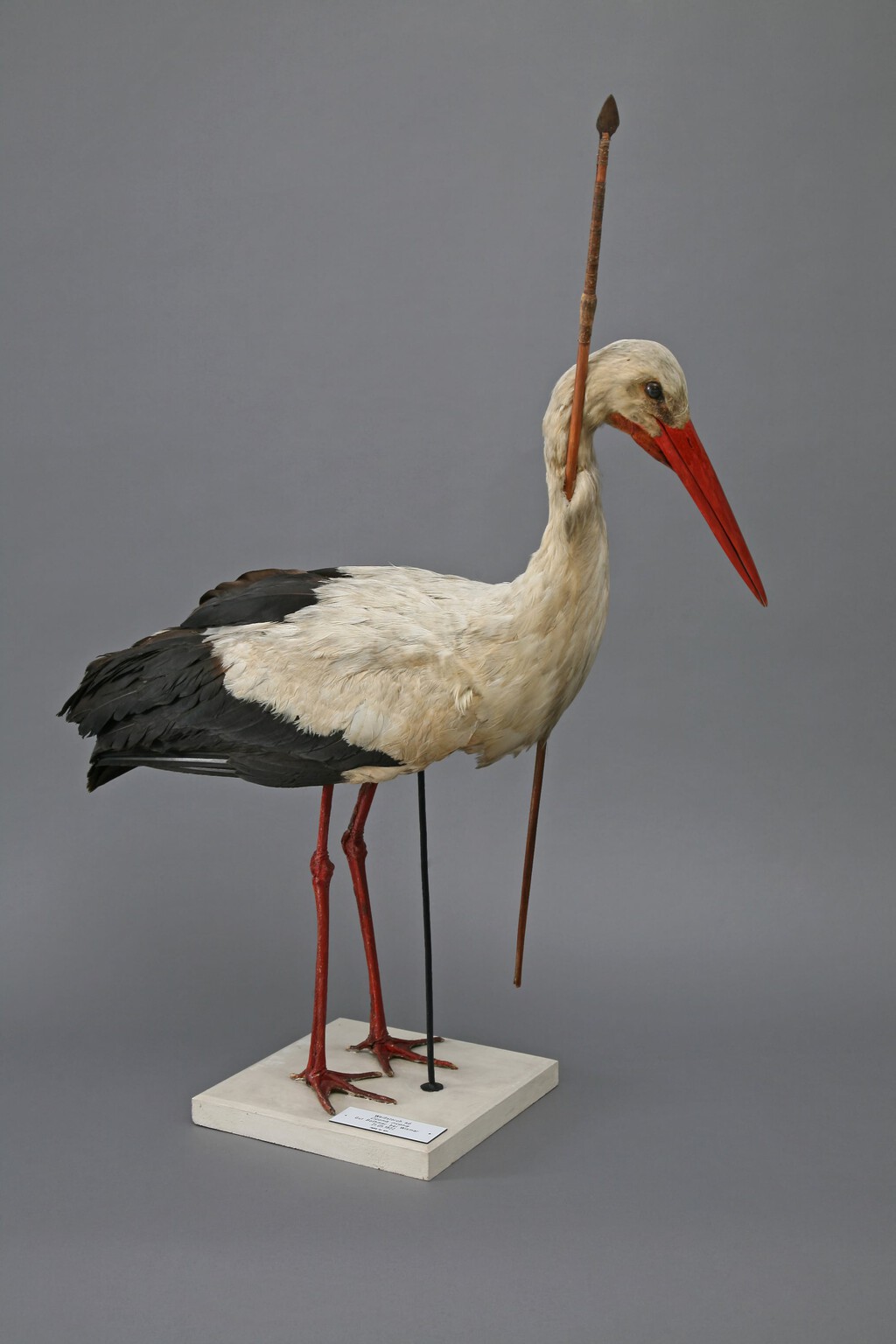
This moon migration myth persisted because there was no better explanation. People observed that swallows and storks vanished in autumn and reappeared in spring, but no one had seen where they went. The idea of migration to distant lands was considered, but without proof, it remained speculative.
Why Did People Believe Birds Migrated to the Moon?
In the 1600s, the scientific method was still developing. Observations were often anecdotal, and experiments were rare. Morton's hypothesis was based on the logical deduction that if birds didn't stay hidden on Earth, they must go somewhere else—and the Moon was the most obvious celestial body.
Moreover, the Moon was thought to have an atmosphere and possibly life. It wasn't until later that astronomers discovered its true nature. So, the moon migration myth was a product of its time, a reasonable guess in the absence of data.
The Arrow That Changed Everything: The 1822 Stork
In 1822, a white stork appeared in a German town with an 80-centimeter arrow piercing its neck. The arrow was not European; it was made of African wood and iron, unmistakably from the African continent. This stork had been shot in Africa and had flown thousands of miles to Europe with the arrow still embedded.
This discovery was a turning point. It provided concrete evidence that birds did not fly to the Moon but migrated to Africa and back. The arrow, now known as the pfeilstorch (arrow stork), became a scientific sensation.
What Was the Pfeilstorch and Why Was It Important?
The pfeilstorch was a white stork that survived being shot with an arrow in Africa and then migrated to Europe. Its arrival in Germany in 1822 was documented, and the arrow was preserved. This was the first hard evidence of long-distance bird migration.
The arrow's origin was key: it proved that the stork had been in Africa, where the arrow was made. This directly contradicted the moon migration myth and supported the idea of migration to distant continents.
How the Arrow Solved the Mystery of Bird Migration
The pfeilstorch was not an isolated case. Over time, more birds with African arrows were found, strengthening the evidence. These findings, combined with advances in tracking technology, eventually led to our modern understanding of bird migration. Context on how this played out before sits in The Moon Migration Myth and the Arrow That Solved Bird Migration.
The moon migration myth faded as scientific methods improved. Today, we know that birds migrate thousands of miles, navigating by stars, magnetic fields, and landmarks. The pfeilstorch was the first clue that unlocked this mystery. The background to this story is set out in White Storks Released in Cornwall: A Rewilding Success Story. A related thread runs through White Storks Return to Derbyshire After 600-Year Absence.
What Other Theories Existed About Bird Disappearance?
Besides the Moon, other theories included hibernation in mud at the bottom of ponds and transformation into other species. These ideas seem absurd now, but they were attempts to explain the inexplicable. The pfeilstorch provided the first solid evidence that migration was the answer. Earlier coverage in Energy Utilities: latest articles shows how the argument developed. A closer look at the same subject appears in AI and Tutors Help Birds Remember Lost Songs for Conservation.
This discovery also highlighted the importance of citizen science—ordinary people reporting unusual observations. The stork was found by chance, but its impact was profound. Anyone following the wider picture can start with Meadow Pipit Decline: A Silent Ecocide in UK Uplands. The same theme surfaces in Tern Colonies in England Show Remarkable Recovery After Decline, which takes a different angle.
Key Takeaways from the Moon Migration Myth
- The moon migration myth was a serious hypothesis proposed by Charles Morton in the 17th century.
- In 1822, a white stork with an 80cm African arrow in its neck provided the first evidence of long-distance migration.
- The pfeilstorch proved that birds migrate to Africa, not the Moon.
- This discovery helped shift scientific thinking toward evidence-based explanations.
- Modern bird migration research builds on these early observations.
Comparison of Bird Migration Theories
| Theory | Proponent | Key Idea | Evidence |
|---|---|---|---|
| Moon migration | Charles Morton (17th century) | Birds fly to the Moon in winter | None; based on disappearance |
| Hibernation | Various | Birds hibernate in mud or hollows | Misinterpreted observations |
| Migration to Africa | Supported by pfeilstorch | Birds travel to warmer regions | Arrow stork and later tracking |
FAQ
What was the moon migration myth?
The moon migration myth was the belief that birds flew to the Moon to spend the winter. It was proposed by Charles Morton in the 17th century as a way to explain the seasonal disappearance of birds.
How did the pfeilstorch change our understanding of bird migration?
The pfeilstorch was a white stork found in Germany in 1822 with an African arrow in its neck. It proved that birds migrate long distances to Africa and back, debunking the moon migration myth.
Why did people believe birds migrated to the Moon?
Without evidence of where birds went, the Moon seemed a plausible destination. Early scientists lacked tracking technology and relied on speculation.
What can we learn from the moon migration myth today?
It reminds us that scientific knowledge evolves with evidence. The pfeilstorch shows the power of observation in correcting mistaken beliefs.
The moon migration myth is a fascinating example of how science progresses. From Charles Morton's lunar hypothesis to the pfeilstorch's arrow, the journey to understand bird migration has been long. Today, we can appreciate the wonder of migration with the tools of modern science, but we also honor those early observers who dared to ask questions.
Browse the Shop
 Acacia frida deluxe solid wood bed frame |
Bedroom bench |
Bed chest drawers |
Lingerie dresser |
Frame base |
Mirror with jewelry storage |
30 Bathroom Vanity |
Memory foam queen mattress |
Mattresses for back pain |
Nightstand set of 2 |
Grand Goldman Shop |
Civil Lawyer
Deutschland Trikot WM 2026










