

Mexico's Interoceanic Corridor of the Isthmus of Tehuantepec (CIIT) is an ambitious multimodal infrastructure project that aims to connect the Atlantic and Pacific oceans across the narrowest part of the country. Unlike the Panama Canal, it is a dry canal—a combination of railways and ports that moves cargo overland in under seven hours.
The project seeks to transport 1.4 million containers annually by 2033, offering an alternative to the Panama Canal for goods moving between Asia and the U.S. East Coast. With three railway lines spanning over 1,200 kilometers and two major ports, the CIIT could significantly alter North American trade routes.
Find Original Home Decor sparking conversation at Grand Goldman Shop.

What Is the Interoceanic Corridor?
The CIIT is a multimodal logistics platform that uses rail to move freight between the ports of Coatzacoalcos on the Gulf of Mexico and Salina Cruz on the Pacific Ocean. Containers are unloaded at one port, transported by train across the Isthmus of Tehuantepec, and reloaded onto ships at the other side.
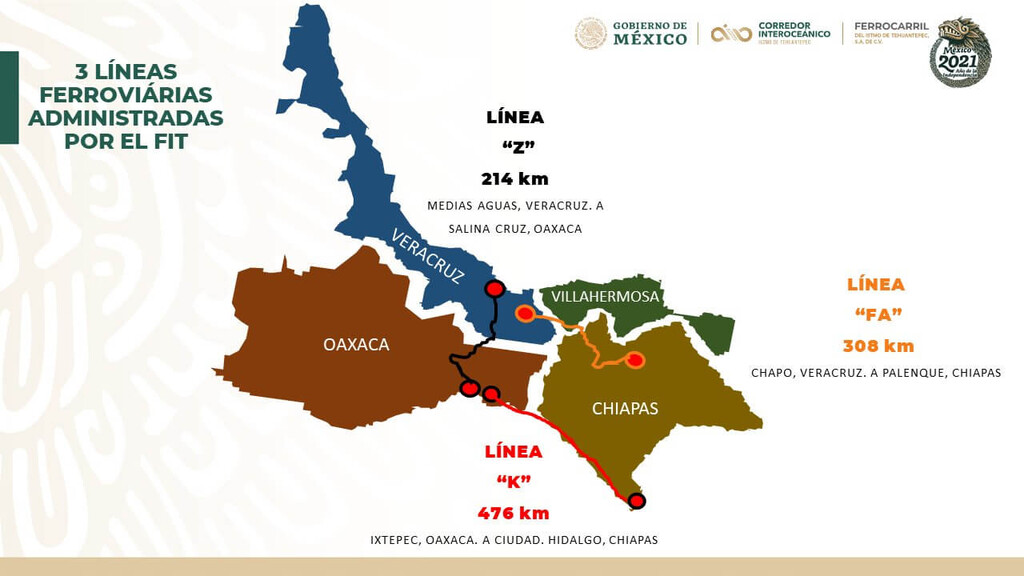
The corridor includes three railway lines: the Coatzacoalcos–Salina Cruz line, the Coatzacoalcos–Palenque line, and the Palenque–Ixtepec line. Together, they cover more than 1,200 kilometers of track, including branches. The project also involves upgrading port facilities and establishing industrial zones along the route.
Mexico's government has positioned the CIIT as a key driver of regional development, aiming to attract manufacturing and logistics companies to the economically disadvantaged southern states of Oaxaca and Veracruz.
Why Mexico Is Building a Dry Canal
The idea of an interoceanic route across the Isthmus of Tehuantepec dates back centuries, but modern interest stems from capacity constraints and geopolitical risks facing the Panama Canal. Drought conditions in recent years have reduced the number of daily transits through Panama, causing delays and higher costs for shippers.
Mexico sees an opportunity to capture some of that traffic, particularly containerized goods from Asia destined for the U.S. East Coast and Europe. The CIIT promises a faster, more predictable alternative—though it faces significant hurdles.
Unlike the Panama Canal, the CIIT does not require locks or dredging, which reduces environmental impact and construction costs. However, it introduces additional handling steps: containers must be unloaded, loaded onto trains, and then reloaded onto ships, adding time and expense.
Key Components and Timeline
The CIIT is being developed in phases. The first phase focuses on rehabilitating existing rail lines and upgrading the ports of Coatzacoalcos and Salina Cruz. Subsequent phases include building new industrial parks and logistics hubs.
- Rail network: Over 1,200 km of tracks connecting the two coasts and linking to other regions.
- Ports: Coatzacoalcos (Veracruz) on the Atlantic and Salina Cruz (Oaxaca) on the Pacific.
- Target capacity: 1.4 million containers per year by 2033.
- Transit time: Less than seven hours from coast to coast.
- Industrial zones: Ten development poles along the corridor to attract investment.
The Mexican government has set an ambitious timeline, with full operations expected by the end of the decade. However, progress has been slow, and questions remain about funding and execution.
How the CIIT Compares to the Panama Canal
The CIIT is not intended to replace the Panama Canal but to complement it, offering an alternative for time-sensitive or high-value cargo. The table below summarizes key differences.
| Feature | Panama Canal | Interoceanic Corridor (CIIT) |
|---|---|---|
| Type | Waterway with locks | Dry canal (rail + ports) |
| Transit time | 8–10 hours | Under 7 hours (rail segment) |
| Capacity | ~14,000 ships per year | 1.4 million containers per year (target) |
| Handling | Direct ship transit | Requires unloading and reloading |
| Environmental impact | High (dredging, locks) | Lower (rail-based) |
While the CIIT avoids the water-intensive locks of Panama, it adds complexity at the ports. Each container must be transferred between ship and rail, which increases costs and the risk of delays. Proponents argue that automation and dedicated terminals can mitigate these issues.
Challenges and Opportunities
The CIIT faces several obstacles. Security along the rail routes is a concern, as is the need for significant investment in port infrastructure. The project also requires coordination among multiple government agencies and private partners.
On the opportunity side, the CIIT could stimulate economic growth in southern Mexico, create jobs, and position the country as a key player in global logistics. It also aligns with nearshoring trends, as companies seek to move production closer to the U.S. market. Context on how this played out before sits in Mexico's Interoceanic Corridor: A Dry Canal Across the Isthmus.
Analysts note that the success of the CIIT will depend on reliable service, competitive pricing, and the ability to attract shipping lines. Without buy-in from major carriers, the corridor may struggle to reach its ambitious targets. The background to this story is set out in Órbigo Canal Modernization Leaves River Dry and Wildlife at Risk. A related thread runs through Science: latest articles.
What to Watch Next
Investors and policymakers should monitor the progress of port upgrades, the awarding of operating contracts, and the development of industrial parks. The first trains are already running, but full commercial operations are still years away. Earlier coverage in Cancún's New Nichupté Bridge to Ease Tourist Zone Traffic shows how the argument developed. A closer look at the same subject appears in Panama Canal Tunnel: The Boring Company's Free Proposal.
Additionally, the CIIT's fate is tied to broader trends in global trade, including the resilience of the Panama Canal and the evolution of U.S.-China relations. If the Panama Canal continues to face capacity issues, the CIIT could become a more attractive option. Anyone following the wider picture can start with China discovers world's largest rare earth deposit at Maoniuping. The same theme surfaces in Iran and Russia Secret Caspian Drone Corridor Exposed, which takes a different angle.
FAQ
What is the Interoceanic Corridor of the Isthmus of Tehuantepec?
What is the Interoceanic Corridor of the Isthmus of Tehuantepec?
The Interoceanic Corridor is a multimodal infrastructure project in Mexico that connects the Atlantic and Pacific oceans via a combination of railways and ports. It is often called a "dry canal" because it moves cargo overland rather than through a waterway.
How does the CIIT compare to the Panama Canal?
The CIIT is a land-based route using rail and ports, while the Panama Canal is a waterway with locks. The CIIT promises faster transit times (under 7 hours) but requires additional handling of containers, which can increase costs and complexity.
What is the target capacity of the CIIT?
Mexico aims to transport 1.4 million containers per year through the CIIT by 2033. This would represent a significant share of the container traffic that currently passes through the Panama Canal.
What are the main challenges facing the CIIT?
The project faces challenges including security along rail routes, the need for significant infrastructure investment, and the difficulty of attracting shipping lines. Coordination among government agencies and private partners is also crucial.
Browse the Shop
 Acacia frida deluxe solid wood bed frame |
Bedroom bench |
Bed chest drawers |
Lingerie dresser |
Frame base |
Mirror with jewelry storage |
30 Bathroom Vanity |
Memory foam queen mattress |
Mattresses for back pain |
Nightstand set of 2 |
Grand Goldman Shop |
Civil Lawyer
Deutschland Trikot WM 2026







