

A Moon city may be impossible due to a severe water shortage, according to a new study that dashes dreams of large-scale lunar colonization. The research, by Martin Elvis and Jonathan McDowell, suggests that the Moon's polar ice deposits can support only a small village, not a thriving city.
The first discovery of water ice on the Moon was hailed as a game-changer for human settlement. It meant future colonists could access water for drinking, agriculture, and fuel. But the new analysis shows that the amount is far more limited than hoped.
Find Original, High-end Home Decor that spark conversation at Grand Goldman Shop.
Lunar Water Ice: A Finite Resource
Scientists estimate that permanently shadowed craters at the lunar poles may hold up to one billion tons of water ice. That sounds like a lot, but when you consider the needs of a city, it's barely enough for a small outpost.
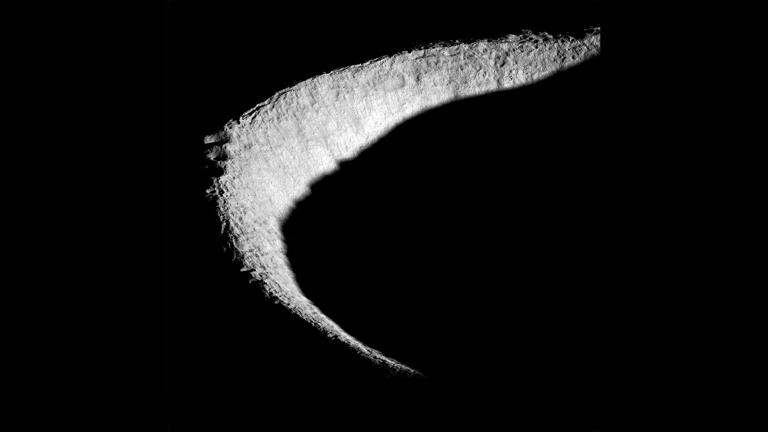
Elvis and McDowell, from the Smithsonian Observatory and Durham University, calculated that this ice could sustain only a few hundred people at most. A city of thousands would quickly exhaust the supply.
Energy: The Good News
Electricity, on the other hand, is not a problem. The Moon has abundant solar energy, especially at the poles where some crater rims receive near-constant sunlight. This could power habitats and life-support systems.
However, energy alone isn't enough. Water is essential for drinking, growing food, and producing oxygen and rocket fuel. Without a reliable water source, a Moon city cannot grow. The background to this story is set out in Science: latest articles.
What This Means for Future Colonization
The study's findings suggest that lunar settlement will be limited in scale. Rather than a sprawling city, we might see a research station or a small village focused on science and resource extraction. A related thread runs through AI Is Minting Millionaires Fast in Silicon Valley — But Many Don't Know What.
This doesn't mean we should give up on the Moon. It means we need to be realistic about its potential and plan accordingly. Earlier coverage in Wind Turbine Blade Recycling Breakthrough: Blades Turned Into Asphalt shows how the argument developed. A closer look at the same subject appears in Youngest Exoplanet Elias 2-24b Discovered by Chilean Scientists.
- Lunar polar ice may hold up to one billion tons of water ice.
- That amount can support only a small village, not a city.
- Electricity from solar power is abundant, especially at the poles.
- Water is needed for drinking, food, and fuel production.
- Future lunar settlements will likely be small and research-focused.
Comparing Lunar Resources
| Resource | Availability | Limitation |
|---|---|---|
| Water ice | Up to 1 billion tons in polar craters | Supports only a small population |
| Solar energy | Abundant at crater rims with near-constant sunlight | Storage needed for shadowed periods |
| Other volatiles | Traces in permanently shadowed regions | Difficult to extract |
FAQ
How much water ice is on the Moon?
Estimates suggest up to one billion tons of water ice exist in permanently shadowed polar craters. However, this is a finite resource that would be quickly consumed by a large settlement.
Can we build a city on the Moon?
Based on current estimates, a large city is not feasible due to limited water. A small village or research station is more realistic.
What about energy for a Moon base?
Energy is less of a constraint. Solar power is abundant, especially at polar crater rims that receive near-constant sunlight. Storage solutions would be needed for periods of darkness.
What are the alternatives for water on the Moon?
Besides polar ice, water could potentially be extracted from lunar minerals or brought from Earth, but these options are expensive and energy-intensive.
The dream of a Moon city may be on hold, but the study clarifies the challenges ahead. With careful planning, a small lunar outpost could still become a reality.
Browse the Shop
 Acacia frida deluxe solid wood bed frame |
Bedroom bench |
Bed chest drawers |
Lingerie dresser |
Frame base |
Mirror with jewelry storage |
30 Bathroom Vanity |
Memory foam queen mattress |
Mattresses for back pain |
Nightstand set of 2 |
Grand Goldman Shop |
Civil Lawyer
Deutschland Trikot WM 2026







