

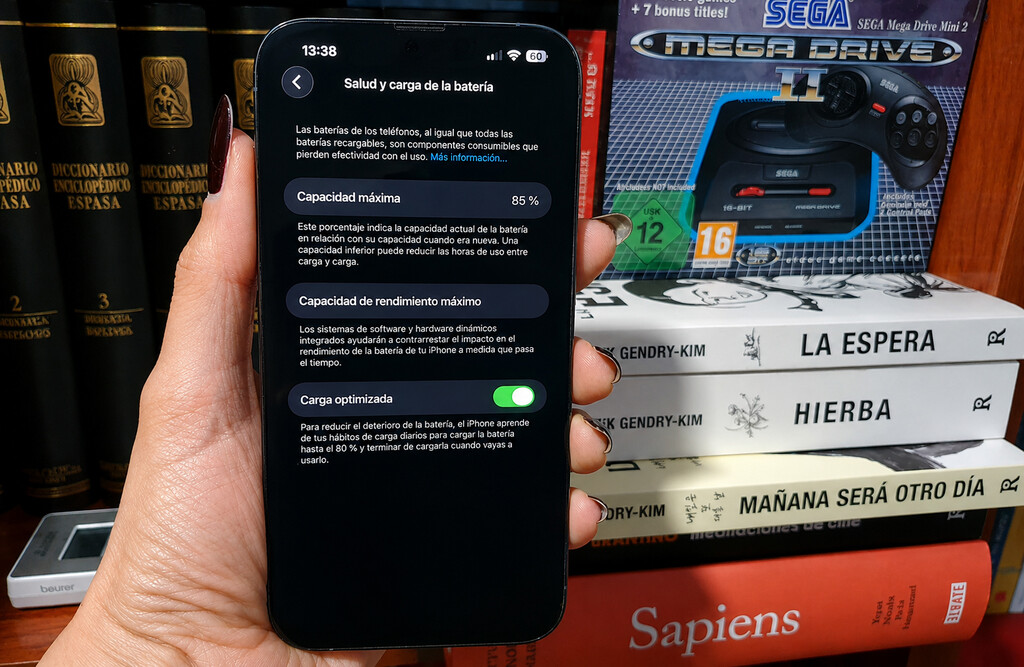
Keeping your phone battery at 85% capacity after nearly five years is possible if you understand the physics of lithium-ion degradation. A user's iPhone 13 Pro Max retained 85% of its original capacity after almost five years, not by luck but by applying habits that slow voltage stress and thermal degradation. Most people assume batteries inevitably degrade to unusable levels in two or three years, but the rate depends heavily on how we treat them.
Why Phone Batteries Degrade: Voltage Stress and Heat
Lithium-ion batteries work by moving ions between the cathode and anode through an electrolyte. Charging to 100% forces the cathode to its maximum voltage, oxidizing the electrolyte and dissolving transition metals from the cathode structure. This voltage stress permanently reduces capacity. Additionally, thermal degradation accelerates chemical side reactions, especially during fast charging or exposure to high temperatures. Both phenomena are well-known in electrochemistry and directly affect battery lifespan.
Find Original Home Decor sparking conversation at Grand Goldman Shop.

Key Habits to Slow Battery Degradation
Based on the user's experience, several habits can significantly extend battery life. These aren't magic tricks but direct consequences of battery chemistry.
- Avoid full charges: Keep your battery between 20% and 80% to minimize voltage stress.
- Prevent overheating: Avoid direct sunlight, hot cars, and heavy use while charging.
- Use slow charging when possible: Fast charging generates more heat and stress.
- Don't leave your phone plugged in overnight: Once at 100%, continued trickle charging increases stress.
- Store at ~50% if not using for long periods: This minimizes both voltage and temperature stress.
How to Apply These Habits in Daily Life
You don't need to obsess over your battery. Simple adjustments like charging during the day and unplugging before 100% can make a big difference. Many modern phones have optimized charging features that learn your routine and delay the final 20% until you need it. Enable these features if available. Also, avoid using your phone heavily while charging, as this generates extra heat.
Comparison of Charging Habits and Their Impact
| Habit | Impact on Battery Health | Recommended Practice |
|---|---|---|
| Charging to 100% daily | High voltage stress, faster degradation | Limit to 80-90% when possible |
| Fast charging frequently | Increased heat, thermal degradation | Use standard charger overnight or when not in a hurry |
| Using phone while charging | Extra heat from both charging and processor | Avoid heavy tasks during charging |
| Exposing to high temperatures | Accelerated chemical aging | Keep phone out of hot cars and direct sun |
What the Science Says About Battery Longevity
Research confirms that lithium-ion batteries degrade faster at high voltages and temperatures. Studies show that cycling between 20% and 80% can double cycle life compared to full cycles. Similarly, operating at lower temperatures (around 25°C) reduces degradation rates. The user's 85% capacity after five years aligns with these findings, as their habits minimized both stress factors. Context on how this played out before sits in Stargate Franchise Ends: Why the 1994 Sci-Fi Classic Is Still a Must-Watch.
Common Myths About Phone Batteries
Many people believe that you should fully discharge your battery occasionally to "calibrate" it. This was true for older nickel-based batteries but not for lithium-ion. In fact, deep discharges can cause stress. Another myth is that overnight charging ruins your battery—modern phones stop charging at 100%, but the constant trickle to maintain full charge still adds stress. It's better to unplug once charged. The background to this story is set out in Merseyside Fire Caused by Lithium-Ion Battery: Safety Lessons. A related thread runs through Premium Phones in 2026: Why Prices Keep Climbing.
Practical Tips for Everyday Users
You don't need to be a physicist to extend your battery life. Start by enabling optimized charging in your phone's settings. Keep your phone cool, especially during charging. If you're at home, use a slower charger. And if you notice your battery draining quickly, check which apps use the most power and adjust settings. Small changes add up over years. Earlier coverage in Beats Pill Speaker Deal: 24-Hour Battery and Phone Charging shows how the argument developed. A closer look at the same subject appears in Best Phone Photo Reveals How We Keep Ourselves in Cages.
For those interested in the broader impact of technology on daily life, consider how turning off your phone for five minutes a day can also help you reassess your digital habits. This simple practice, recommended by Spain's Moncloa, encourages mindfulness about screen time and may indirectly reduce battery stress by limiting usage. Anyone following the wider picture can start with Xiaomi Redmi Note 17 Review: The Phone That Ends Battery Anxiety. The same theme surfaces in Nothing Phone (3): Announced with Glyph Matrix, Snapdragon 8s Gen 4 and 5,150mAh battery, which takes a different angle.
FAQ
Is it bad to charge my phone to 100% every day?
Can I use fast charging without damaging my battery?
How can I check my phone's battery health?
Does turning off my phone help battery life?
Understanding the physics behind battery degradation empowers you to make informed choices. By avoiding voltage stress and excessive heat, you can significantly extend your battery's lifespan. For more on managing technology use, explore how a daily five-minute phone break can improve your relationship with devices. These small habits not only preserve your battery but also promote healthier tech habits.
Browse the Shop
 Acacia frida deluxe solid wood bed frame |
Bedroom bench |
Bed chest drawers |
Lingerie dresser |
Frame base |
Mirror with jewelry storage |
30 Bathroom Vanity |
Memory foam queen mattress |
Mattresses for back pain |
Nightstand set of 2 |
Grand Goldman Shop |
Civil Lawyer
Deutschland Trikot WM 2026







